
Last updated October 16, 2026
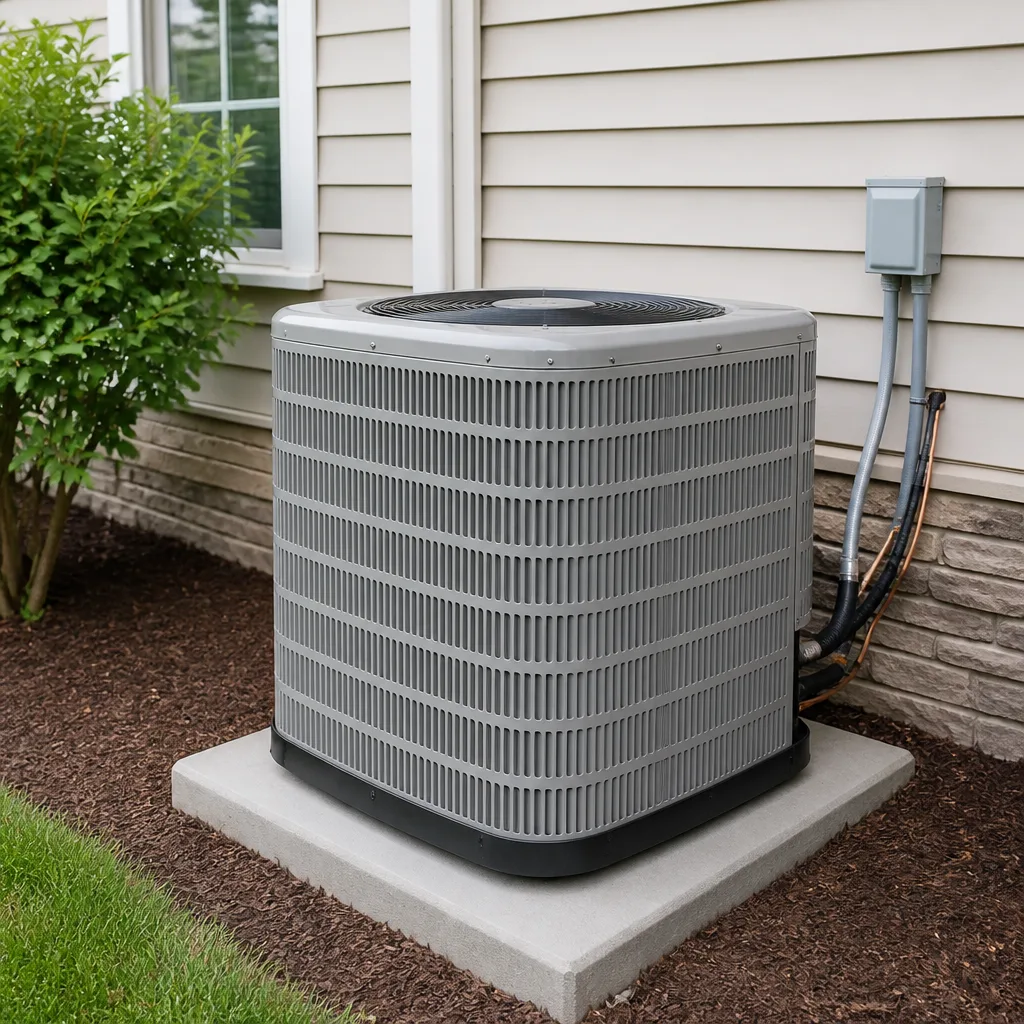 AC repair
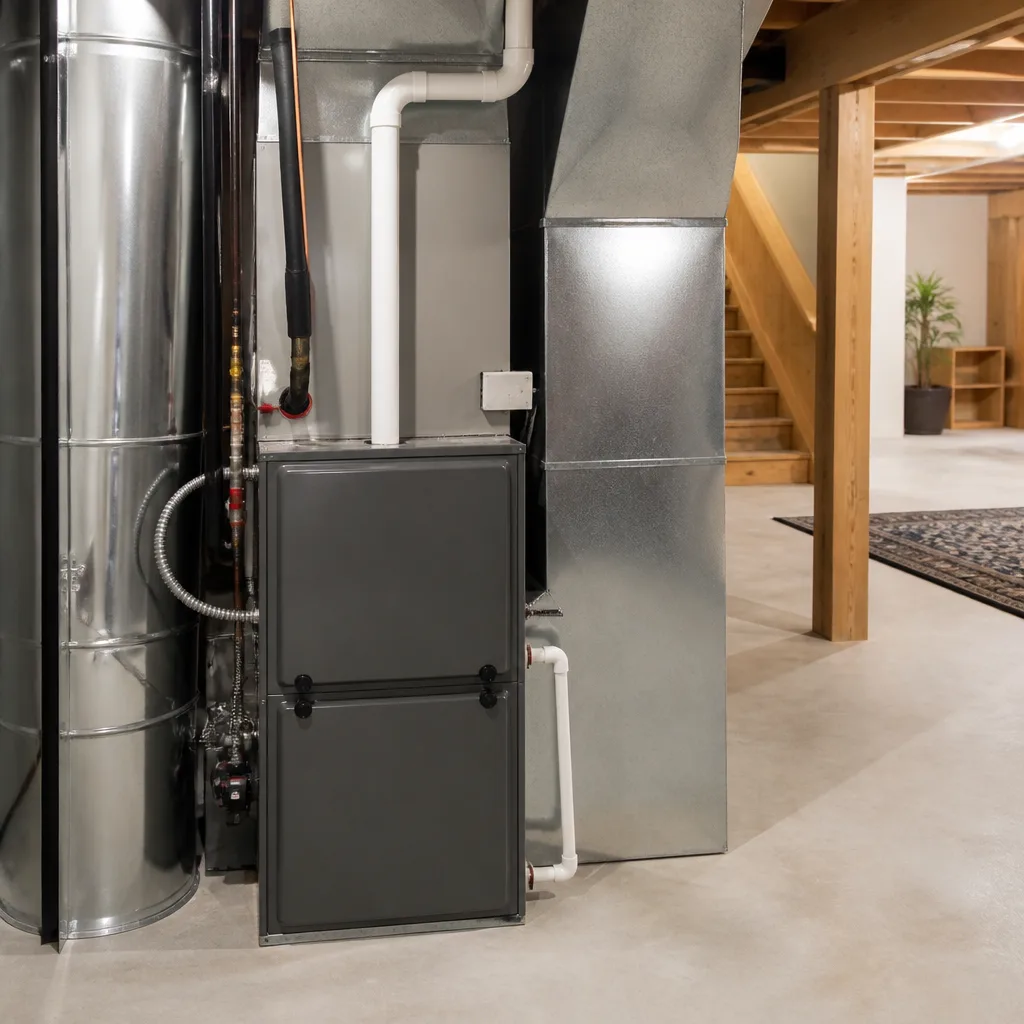 Furnace & heating
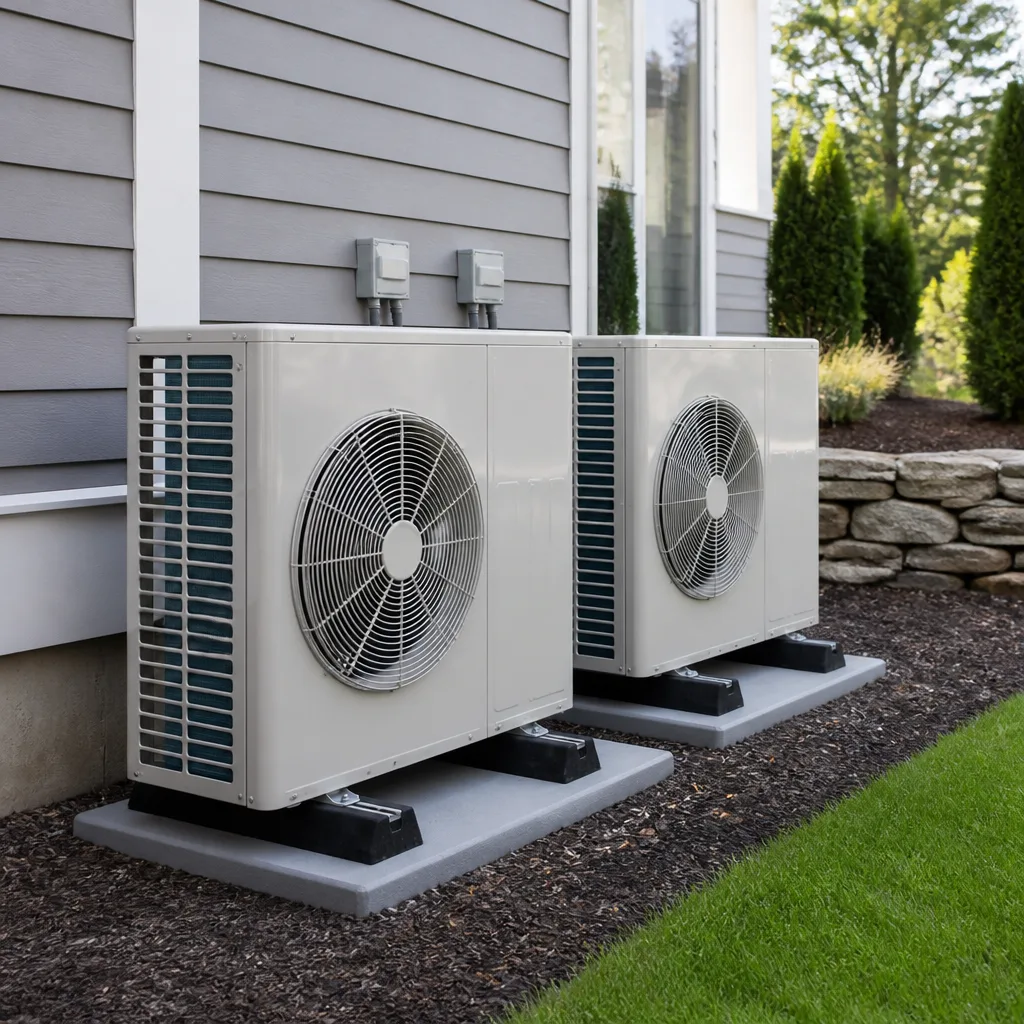 Heat pumps
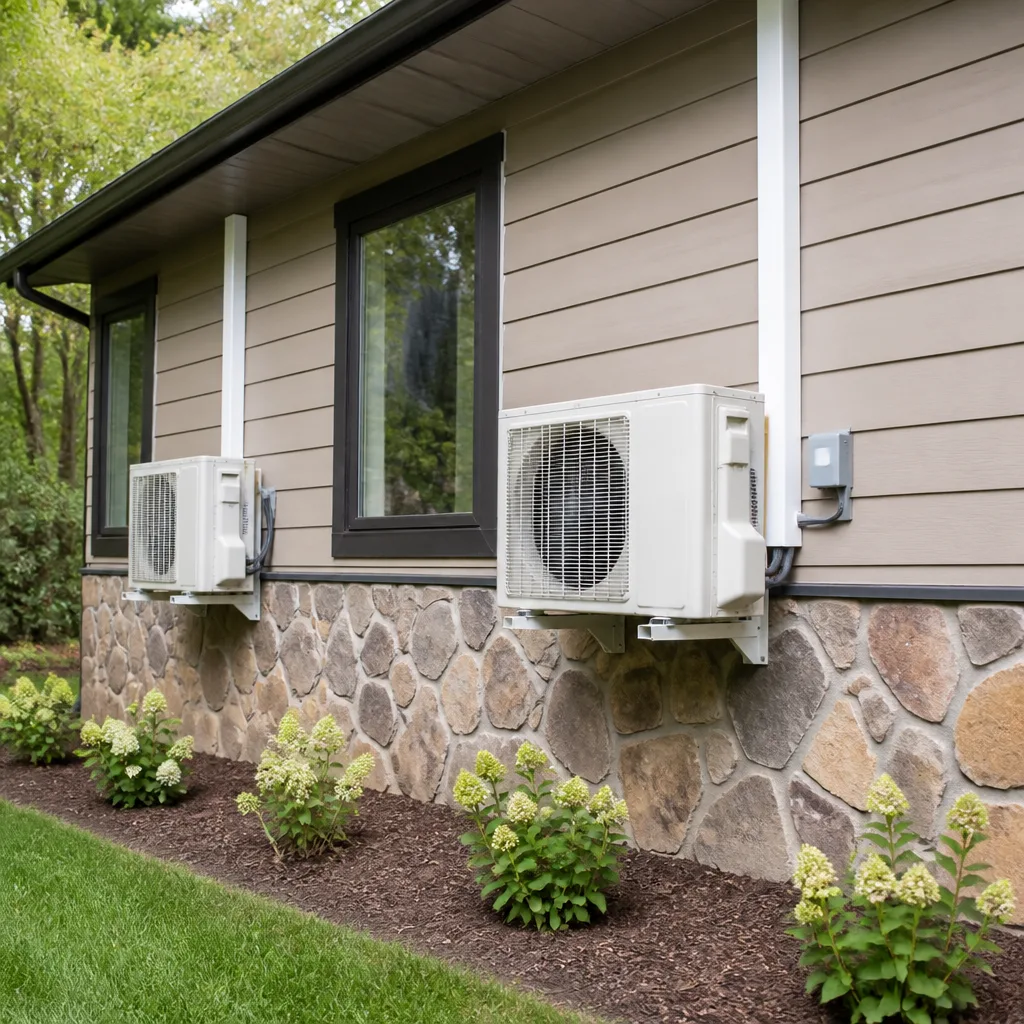 Ductless mini splits
 Carrier
 Trane
Trane Goodman
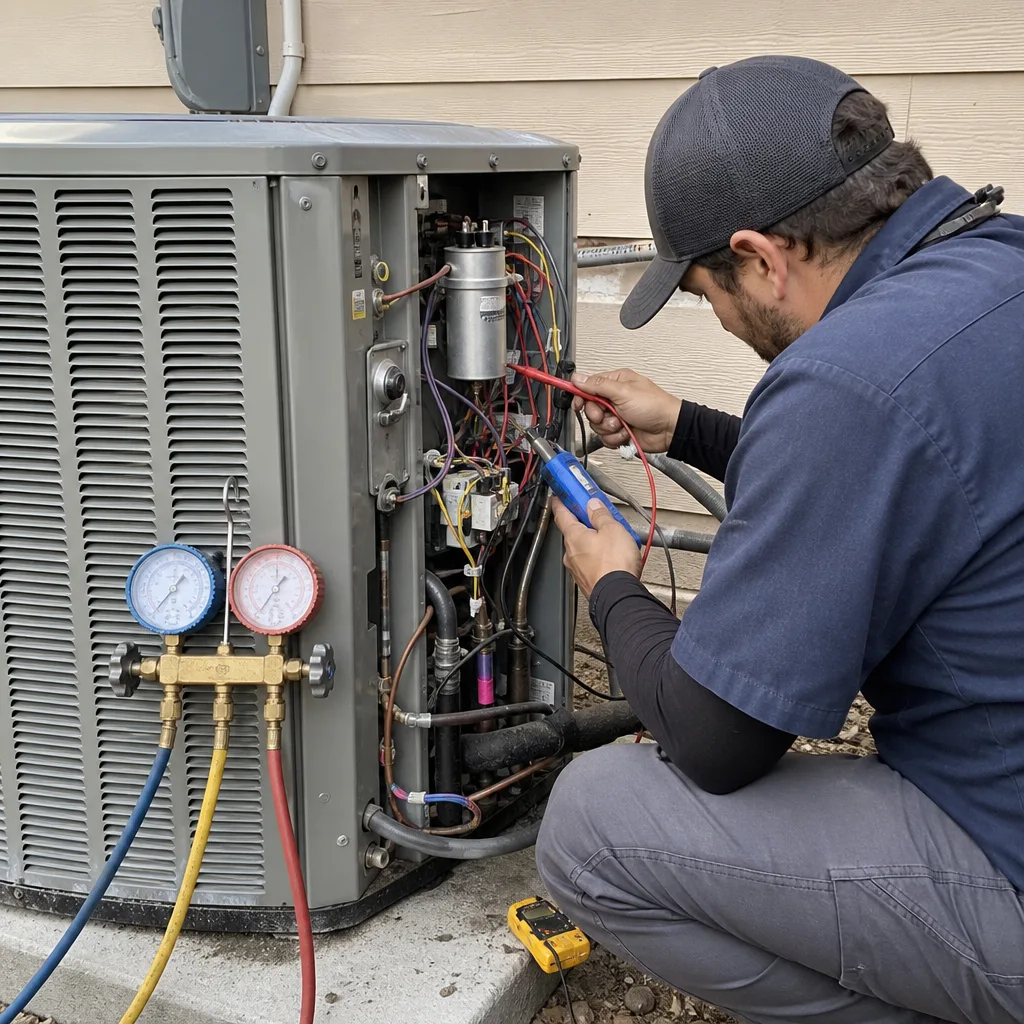
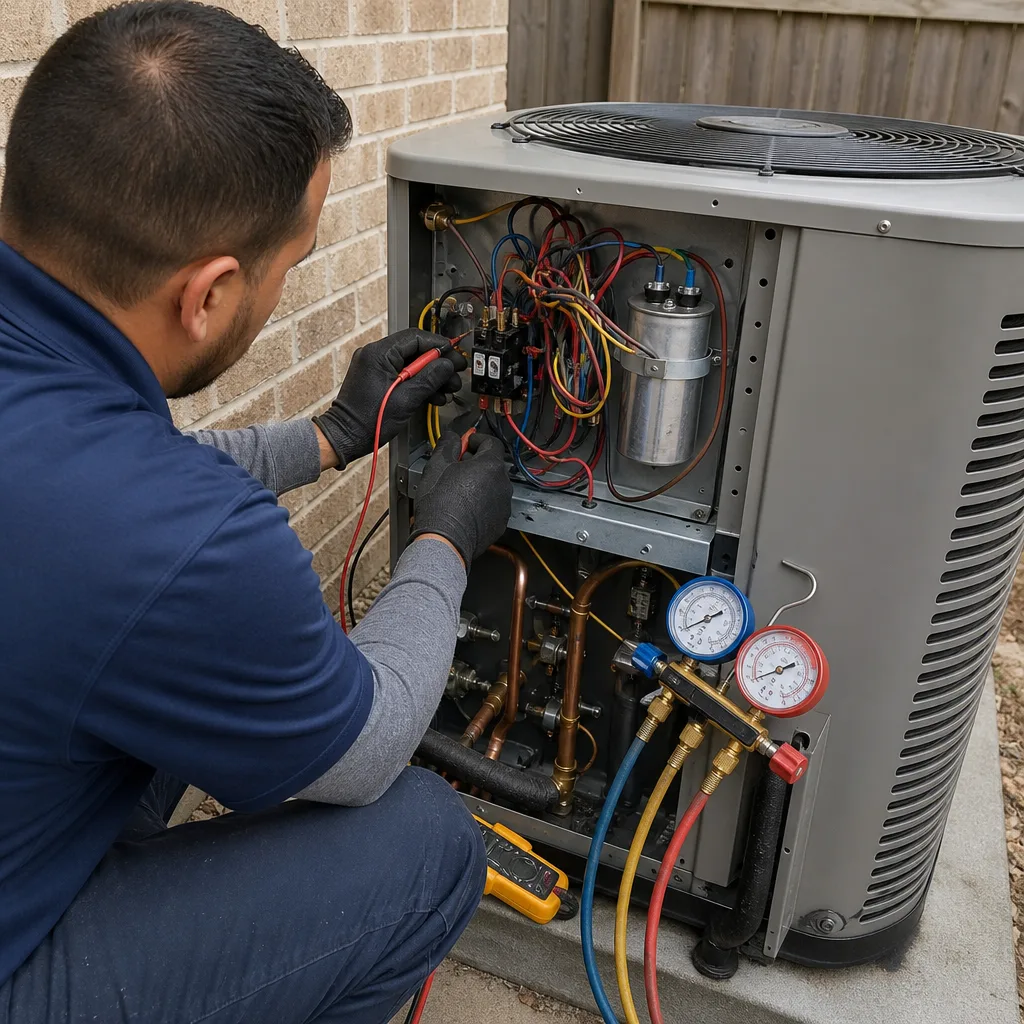
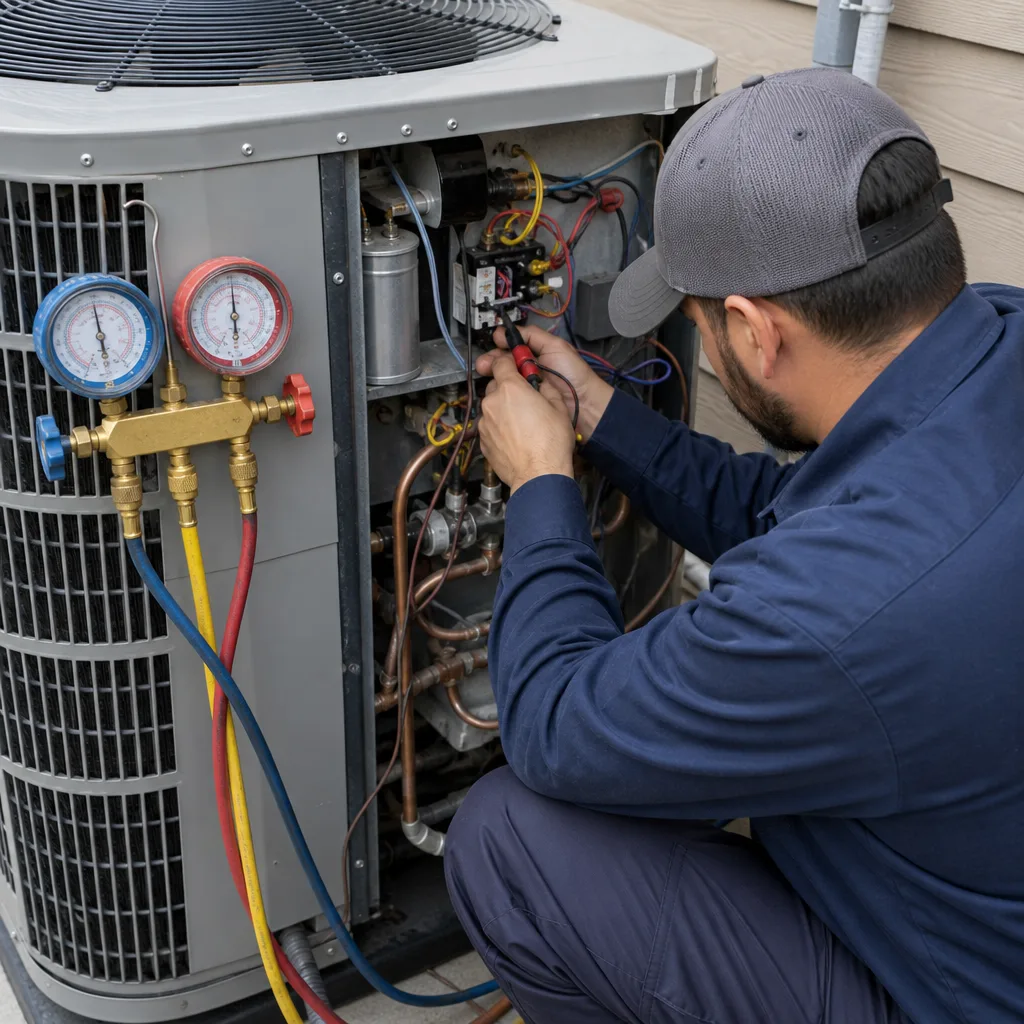
Seasonal tune-up and full diagnostic on your Carrier, Trane, or Goodman system - readings shown to you before any repair is proposed
Diagnosis first, numbers second - you approve the repair price before a single part goes in.
Get your free estimateAC Repair Maintenance Checklist for Houston Homeowners
The number-one cause of AC breakdowns in Houston isn’t a failed compressor. It’s a clogged condensate drain line that backs up into the air handler because humid air produces two to three times more condensate here than in drier climates. This guide walks you through a maintenance checklist built specifically for Houston’s heat, humidity, pollen calendar, and storm season, so every item on the list has a dollar reason behind it. You’ll learn what to do monthly, what to do seasonally, what you can safely handle yourself, and what needs a licensed technician.
Styles & brands we work with
Quick Answer
Houston homeowners should replace air filters every 30 to 60 days, flush the condensate drain line every 60 to 90 days, clear debris from the outdoor unit monthly, and schedule a professional inspection every spring before temperatures climb past 90°F. A proper Houston AC Repair services prevention routine costs roughly $150 to $350 per year in professional service and prevents the $600 to $2,400 breakdowns that peak in July and August.
Table of Contents
- Why Houston ACs Fail Differently
- The Condensate Drain Problem: Houston’s Worst Offender
- Monthly Maintenance Checklist
- Seasonal Maintenance Tied to Houston’s Pollen Calendar
- The Pre-Summer Stress Test
- What You Can Do Yourself vs. What Voids the Warranty
- Refrigerant and Houston’s Rainy Season
- Common Mistakes to Avoid
- When to Call a Professional
- Frequently Asked Questions
- The Bottom Line
Why Houston ACs Fail Differently
Houston air conditioners live harder lives than systems almost anywhere else in the country. The Gulf Coast climate forces a typical residential unit to run 2,500 to 3,000 hours per year. Compare that to a system in the Midwest, which might log 800 to 1,000 hours. Every hour of runtime pulls humid air across the evaporator coil, and that humidity becomes water. Lots of it.
We’ve seen systems in Cypress, Katy, and Sugar Land producing up to 20 gallons of condensate per day during August. That water has to go somewhere. When the drain line clogs, it goes into your ceiling, your walls, or your air handler cabinet. The repair for a backed-up drain can run $300 to $800, but the water damage to drywall, flooring, or the air handler itself can push the total past $2,000. In our experience, the drain line is the single most preventable failure point in a Houston AC system.
Heat plays its own role. When outdoor temperatures sit above 95°F for weeks straight, your system runs nearly nonstop. Weak components that would survive a milder summer fail under that load. A capacitor that’s been degrading quietly for months gives out on the hottest afternoon of the year, not on a mild Tuesday in October. That’s why Houston maintenance has to be proactive, not reactive.
The Condensate Drain Problem: Houston’s Worst Offender
National AC maintenance guides treat the condensate drain as a minor item. In Houston, it’s the first thing we check on every repair call we walk into. Here’s why: the air in Houston carries so much moisture that the condensate line stays wet almost year-round. Wet, dark, warm conditions are exactly what algae and mold need to grow. Over months, that growth combines with dust and insect debris to form a sludge that hardens inside the PVC drain pipe.
The fix schedule that national guides recommend, flushing the drain once a year, is not enough for Houston. We recommend every 60 to 90 days during cooling season, which runs roughly March through November. A simple flush takes five minutes and costs a few dollars if you do it yourself.
How to Flush a Condensate Drain Line
- Locate the condensate drain line. It’s the white PVC pipe coming off your indoor air handler, usually running to a floor drain or outside wall.
- Find the access point. Many Houston homes have a capped T-fitting near the air handler. If yours doesn’t, you can pour through the overflow pan opening.
- Pour one cup of white vinegar or a commercial drain treatment into the line. Vinegar is cheap and effective for routine prevention.
- Wait 30 minutes, then flush with two to three cups of warm water.
- Check the outside drain opening for steady flow. If water doesn’t come out, the line is clogged and needs a professional.
If you have a float switch installed on your drain pan, and many newer Houston homes do, a clogged line may shut your system down before it overflows. That’s a good thing. The system going silent is the float switch doing its job. But don’t ignore it. You still need to clear the clog or the system won’t run.
For homes in older Houston neighborhoods like Montrose, the Heights, and Bellaire, we often find drain lines that were undersized for today’s humidity levels or run at angles that let water pool. If your drain line clogs repeatedly, it may need to be re-pitched or replaced entirely. That’s a $150 to $350 fix that’s far cheaper than repeated water damage repairs.
Monthly Maintenance Checklist
These items take less than 20 minutes total and can be done by any homeowner. They’re the highest-ROI maintenance you’ll do all year.
- Replace or clean the air filter. In Houston, 30 days is the real interval for most households. If you have pets, do it every 30 days without exception. A dirty filter restricts airflow, which forces the evaporator coil to run colder than it should. That can cause the coil to freeze, and a frozen coil costs $150 to $400 to diagnose and thaw. A new filter costs $10 to $25.
- Inspect the outdoor unit for debris. Storms, wind, and kids’ balls all find their way into the condenser. Remove leaves, grass clippings, and anything else within two feet of the unit. The outdoor coil needs open airflow to reject heat. Blocked airflow raises head pressure, shortens compressor life, and can add 15% to 20% to your cooling bill.
- Run the system for 10 minutes and listen. You’re listening for metal-on-metal scraping, rattling, or a hard start sound. These sounds are early warnings of fan motor or compressor problems before they become breakdowns. If something sounds off, note it and call a pro while the repair is still cheap.
- Check the thermostat reading. If your set temperature and the room temperature disagree by more than two degrees, the thermostat or the system has a problem. Recalibrating or replacing a thermostat costs $80 to $250. Ignoring a failing thermostat eventually leads to a system that won’t run at all.
- Look at the drain pan under the air handler. Visible standing water in the pan means the primary drain is already clogged and the overflow pan is catching the overflow. Don’t wait on this one.
These monthly checks are what separates homes that get 12 to 15 years from an AC system in Houston from homes that need a replacement at year eight or nine.
Seasonal Maintenance Tied to Houston’s Pollen Calendar
Houston doesn’t have one pollen season. It has what feels like a rolling, year-round assault. Live oak pollinates in late winter and early spring, typically February through April. Cedar hits in January and February. Ragweed runs from August through November. Grass pollens are worst from April through June. Each of these peaks puts different stress on your AC system.
The connection between pollen and AC maintenance comes down to your evaporator coil and your air filter. Pollen that makes it past the filter accumulates on the coil. A coated coil loses efficiency fast. A coil that’s 10% dirty can reduce system efficiency by up to 20%. In Houston, that means real money on your electric bill in June, July, and August.
Season-by-Season Coil and Airflow Schedule
- February through April (live oak and cedar peaks): Replace filters every 30 days, even if they don’t look dirty. Pollen particles are small and don’t darken the filter media the way dust does. This is the most common filter mistake Houston homeowners make. The filter looks clean, so they leave it. But it’s loaded with particles too small to see.
- May through June (grass pollen and early summer humidity): Schedule your professional coil cleaning if you haven’t had one in the last two years. An evaporator coil cleaning runs $150 to $350 in the Houston market and pays for itself in efficiency. This is also the right time to have the outdoor condenser coil washed with the proper cleaning solution.
- August through November (ragweed season): Keep filters at 30-day intervals. Check the outdoor unit weekly for ragweed and grass buildup, especially if you mow near the condenser. Grass clippings are notorious for clogging the bottom third of the outdoor coil.
Homes near Houston’s big green corridors, Memorial Park, Buffalo Bayou Park, and neighborhoods with mature live oaks, see the heaviest pollen loads. If you live within a quarter mile of a bayou or large park, lean toward the shorter end of every maintenance interval in this guide.
The Pre-Summer Stress Test
Here’s a practice we recommend to every Houston homeowner: in late April or early May, before the first 95°F week arrives, run your AC through a controlled stress test. The idea is simple. You want to find weak parts before the weather makes them fail at the worst possible moment.
How to Run a Houston AC Stress Test
- Wait for a day when the outdoor temperature is forecast to hit at least 85°F.
- Set your thermostat 5 degrees below the current indoor temperature at around 2:00 PM, when outdoor heat peaks.
- Let the system run continuously for 45 minutes.
- Check the temperature at the supply register nearest the air handler and at the return. The temperature drop should be between 15°F and 20°F. If it’s less than 15°F, the system is underperforming.
- Go outside and listen to the condenser. Listen for the compressor struggling to start, a buzzing capacitor, or a fan that’s spinning slower than normal.
- Check the small copper line at the outdoor unit while the system runs. It should be cool to the touch and sweating lightly on a humid day. A warm suction line suggests low refrigerant.
What this test catches: weak capacitors before they quit in August, low refrigerant charge before it becomes an ice-up and a leak repair, and failing condenser fan motors before they overheat the compressor. A capacitor replacement in May costs $150 to $250. The same fix as an emergency in August can run $250 to $450, plus you’re without AC on a 98°F day while you wait for the part.
If your stress test turns up a problem, AC repair in Houston is one call away, and catching it in May means you’ll get scheduled faster than you would during the July rush.
What You Can Do Yourself vs. What Voids the Warranty
Here’s the part most generic checklists don’t tell you clearly: some DIY maintenance is safe and smart, and some voids the manufacturer warranty on your equipment. The line between the two matters-see our DIY vs Professional HVAC: The Houston Homeowner’s Decision Guide-because an accidental warranty void on a five-figure system is a costly mistake.
Safe for Homeowners
- Air filter replacement. This is explicitly expected of you in every manufacturer’s warranty, whether you have a Rheem, a Bryant, a Daikin, or any other brand.
- Condensate drain flushing with vinegar or a commercial treatment. Safe and recommended.
- Clearing leaves, grass, and debris from around the outdoor unit. Just don’t use a pressure washer.
- Cleaning the outdoor coil with a garden hose at low pressure, from the inside out, when the breaker is off. Never use a pressure washer; it bends the thin aluminum fins beyond repair.
- Keeping the area around the indoor air handler clean and unobstructed.
Leave to a Licensed Technician
- Refrigerant charging. By federal law, you cannot legally buy or handle R-410A or R-454B without certification. Refrigerant work is not a DIY job, period.
- Electrical diagnostics. The capacitor inside your condenser holds a charge that can injure or kill. Even with the breaker off, capacitors can store electricity. This is not a YouTube project.
- Anything involving opening the sealed refrigerant loop, brazing lines, or replacing the compressor. Doing this without proper equipment and EPA certification voids warranty coverage instantly on most brands.
- Heat exchanger or gas line work on a furnace or heat pump. This is genuinely dangerous and requires a licensed pro.
We’ve walked into homes where a well-meaning homeowner voided a 10-year compressor warranty on a $5,000 outdoor unit to save a $250 service call. The math doesn’t work. When you’re unsure, call a licensed Houston HVAC company. The service call is cheap compared to what a voided warranty costs.
Refrigerant and Houston’s Rainy Season
Here’s a maintenance point almost no one makes, and it’s Houston-specific: check your refrigerant charge after the heavy rain season, not just on a calendar schedule. Here’s the reasoning. Houston’s clay-heavy soils expand and contract dramatically with moisture. After a dry spell followed by heavy rain, the ground shifts. That movement can flex the copper line set that runs from your outdoor condenser to your indoor coil.
Over years, repeated flexing creates microscopic leaks at the braze joints. These leaks are so slow that they don’t trip any sensor. The system just gradually loses cooling capacity. By the time you notice the house isn’t holding temperature in July, you’ve been running undercharged for months, wasting electricity and stressing the compressor.
We recommend having refrigerant checked every two to three years, and specifically after a spring with heavy flooding, like the floods Houston saw in 2016 and 2017. Homes in areas like Meyerland, Kingwood, and neighborhoods near White Oak Bayou deal with the highest soil movement. If your home has piers or a slab, the line set still runs through soil-settled ground in many cases.
A refrigerant check takes about 15 minutes and costs $80 to $150 as part of a maintenance visit. A refrigerant leak that goes undetected eventually turns into a compressor failure, and that’s a $1,500 to $3,000 repair in Houston depending on the brand on your pad.
Common Mistakes to Avoid
- Replacing filters by the calendar instead of the runtime. A household in Katy with four people, two dogs, and a system that runs 3,000 hours a year needs filters changed more often than a household in a milder climate. The calendar says 90 days. Your Houston AC says 30.
- Ignoring the condensate drain because the system still runs. A partially clogged drain builds sludge slowly. The system works fine until the day the float switch trips or the pan overflows. By then, the damage is done.
- Using a pressure washer on the outdoor unit. We see this one every spring. The pressure folds the aluminum fins flat, and a folded coil can’t reject heat. Fixing it costs $200 to $500 if it’s repairable at all.
- Closing supply vents in unused rooms. In Houston, this creates static pressure problems, forces the system to work harder, and can freeze the coil on humid days. Modern systems are designed for balanced airflow.
- Skipping spring maintenance because the AC ran fine all winter. In Houston, many systems run during winter for the occasional warm snap. But the real load starts in May. Problems you didn’t hear in February will show up in June.
- Assuming a new AC doesn’t need maintenance for a few years. Every Houston unit, even one installed last month, collects humidity, pollen, and condensate from day one. Maintenance starts in year one.
- Taking the lowest quote without checking what it includes. A $49 tune-up that doesn’t include a coil inspection or a refrigerant check isn’t a tune-up. It’s a sales visit. Ask what’s on the list before you book.
When to Call a Professional
Most of this guide covers what you can handle at home. But some situations require a licensed professional, and waiting makes them worse. Call a technician if you see ice on the copper lines or the indoor coil. That’s a refrigeration problem, not a weather problem, and running the system while frozen can destroy the compressor. Call if the system is making sounds you haven’t heard before, grinding, buzzing, or a hard bang on startup. Call if the drain line clogs repeatedly despite your vinegar flushes, because that means the line is undersized or pitched wrong. And call if your energy bill spikes 20% or more with no change in usage, because that’s your system telling you it’s losing ground.
Cold Harbour Heating and Air Houston home is here for exactly these calls. We serve all of Houston with free estimates, and our technicians are trained on every major brand including Rheem, York, Daikin, and Bryant. Call (832) 371-9862 and a live person will answer, 24 hours a day, every day of the year.
Frequently Asked Questions
Replace your filter every 30 to 60 days in Houston, with 30 days being the real number for households with pets, high pollen exposure, or a system that runs most of the day. Houston’s long cooling season and heavy pollen load clog filters faster than the national 90-day recommendation assumes. A $10 filter is the cheapest insurance your AC has.
A professional AC maintenance visit in Houston typically costs $100 to $250 depending on the time of year and what’s included. A full inspection with coil cleaning, refrigerant check, drain flush, electrical testing, and a written report runs on the higher end and is worth it before summer. For more guides & resources, explore our blog. For an exact quote, call (832) 371-9862.
Houston’s humidity produces two to three times more condensate than drier climates, which keeps your drain line permanently wet. The constant moisture plus Houston’s warm temperatures creates ideal conditions for algae and mold growth, and the growth is what clogs the line. Flushing every 60 to 90 days with vinegar usually prevents it.
No. Refrigerant handling requires EPA certification, and the refrigerants themselves are restricted substances. Attempting to add refrigerant without proper equipment and certification is illegal, dangerous, and will void the warranty on your equipment. This is a job for a licensed Houston HVAC company, no exceptions.
The general rule: if your system is over 10 years old and the repair costs more than 30% of a new system’s price, replacement usually makes more sense in Houston’s runtime-heavy climate. Houston systems age faster than the national average because they run more hours per year. AC installation in Houston is worth exploring if your repair estimate is climbing toward $2,000 or more.
For most Houston homeowners, yes. A properly maintained system lasts 12 to 15 years in this climate, while a neglected one often dies at 8 to 10 years. The cost of a maintenance visit is a fraction of what a single emergency repair runs in July. The math favors maintenance in Houston more than almost anywhere else in the country.
The Bottom Line
Houston’s AC systems don’t fail on a national schedule, and they shouldn’t be maintained on one either. The checklist that matters here is built around what the Gulf Coast actually does to your equipment: 20 gallons of condensate a day in summer, pollen that clogs coils before filters show any dirt, and soil that shifts under your line set after every heavy rain. Do the monthly items yourself. Run the pre-summer stress test in May. Keep the drain line moving. And when something’s beyond what you can safely handle, call a licensed Houston professional. For furnace work, see furnace repair in Houston. For anything else, we’re at (832) 371-9862, around the clock, with a live person on the line and a written guarantee on every repair we make.
Written by Victor Mancini, Owner at Cold Harbour Heating and Air Houston, serving Houston since 2003.
See the difference
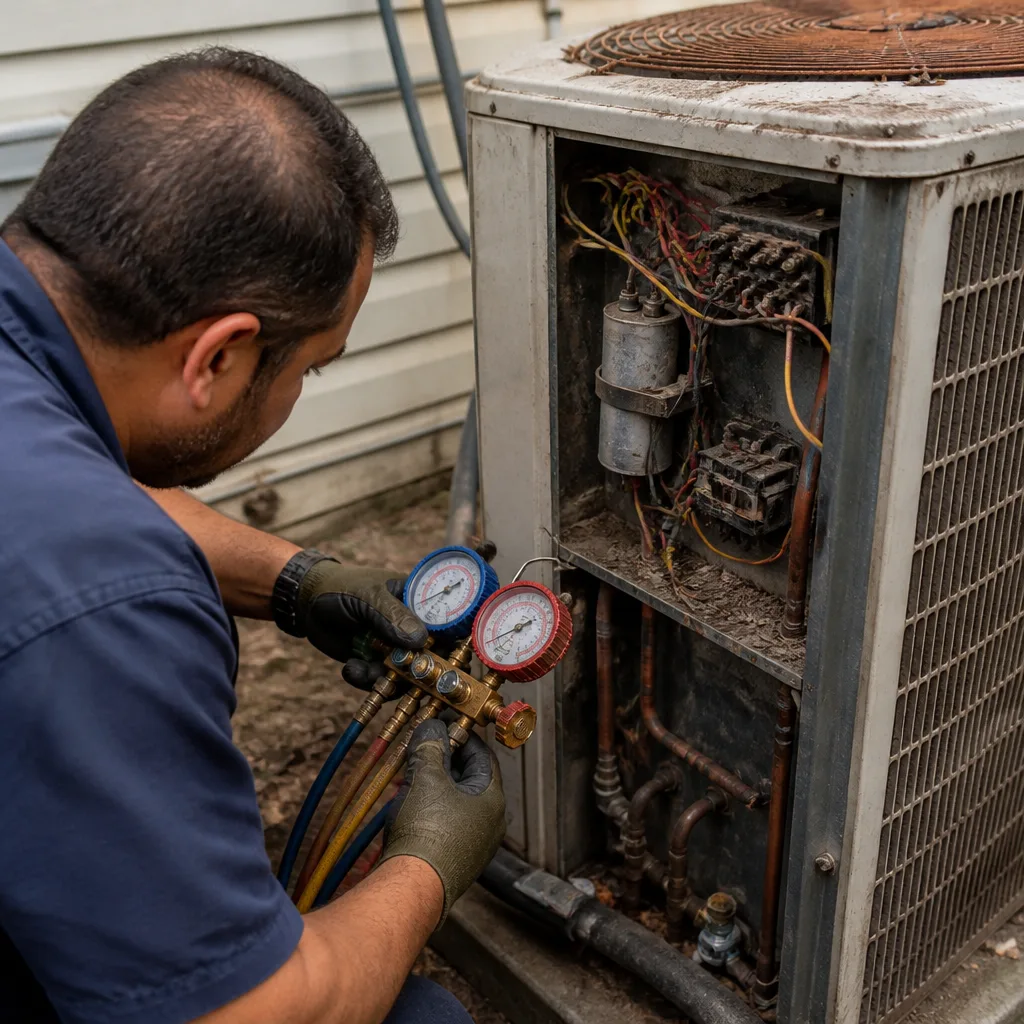 Before
 After
After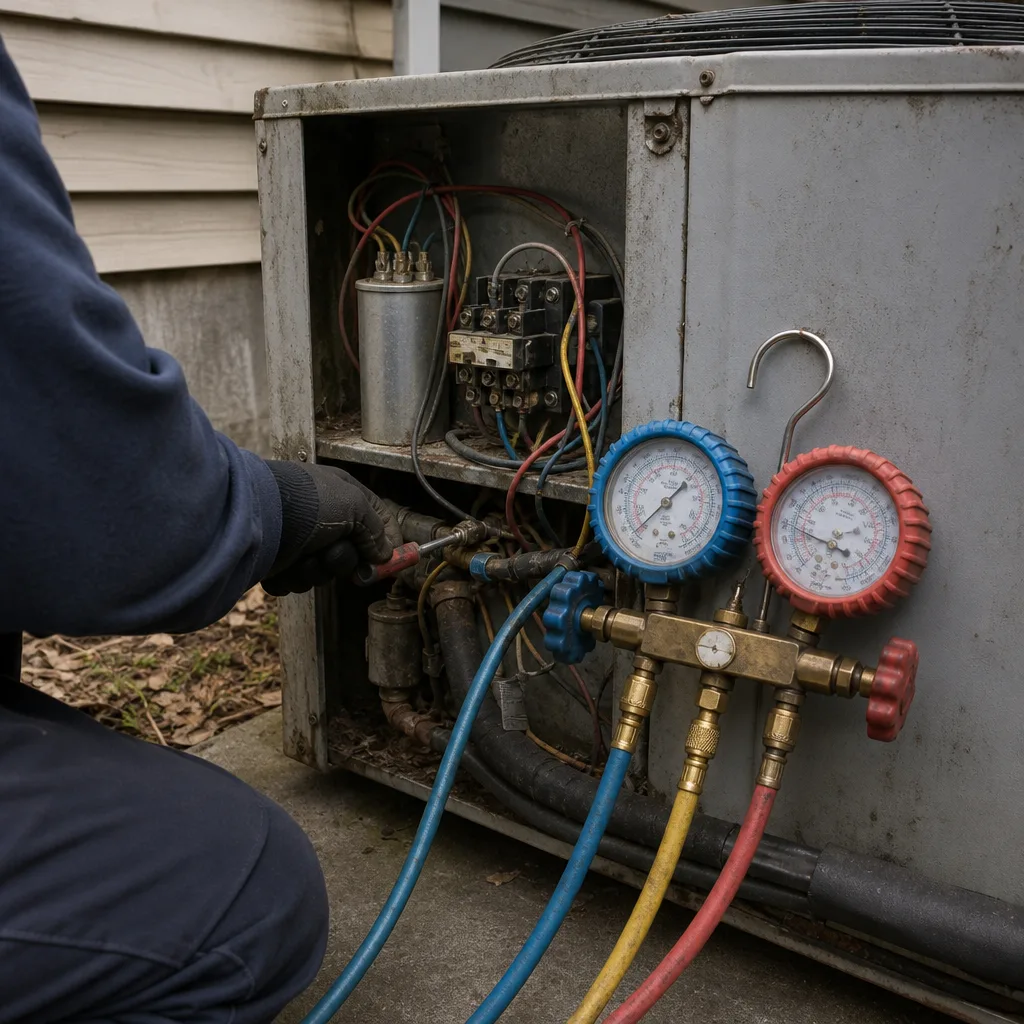 Before
 After
After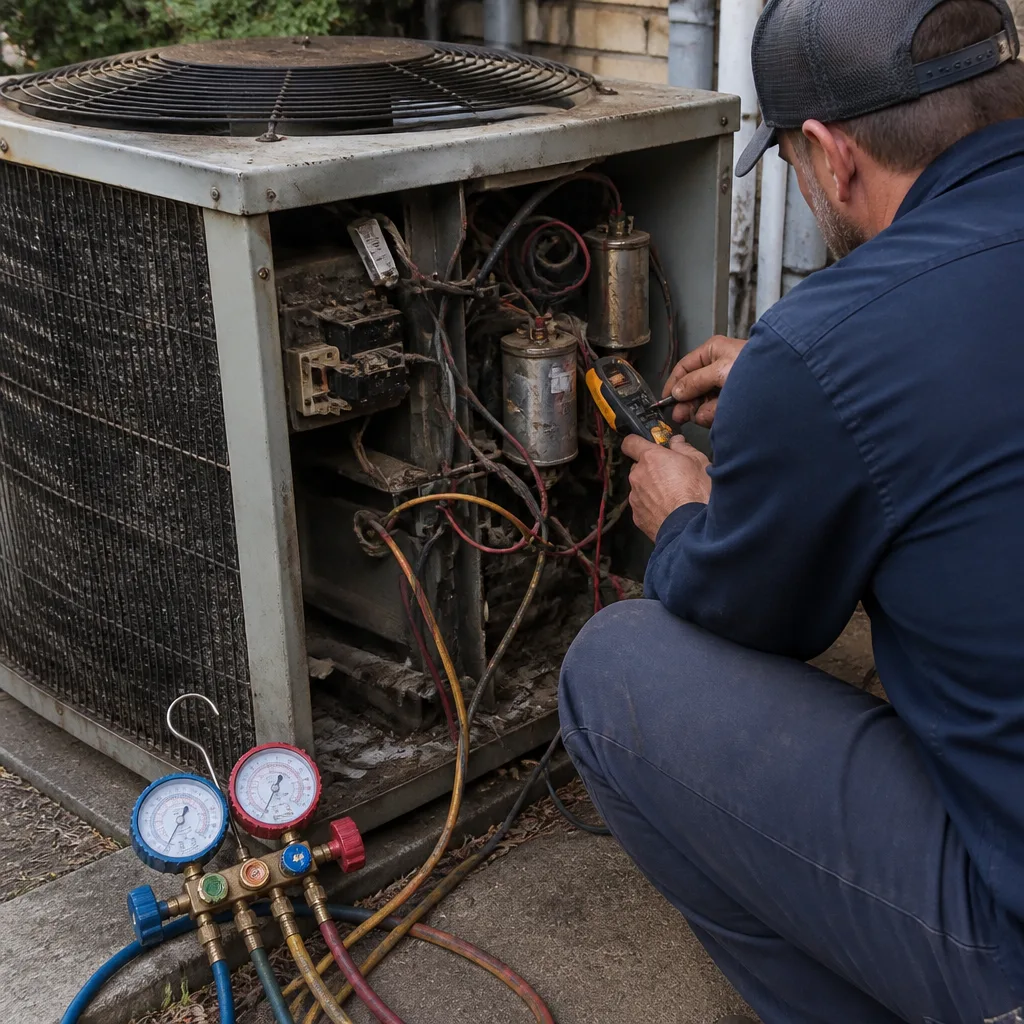 Before
 After
After