
Last updated October 16, 2026
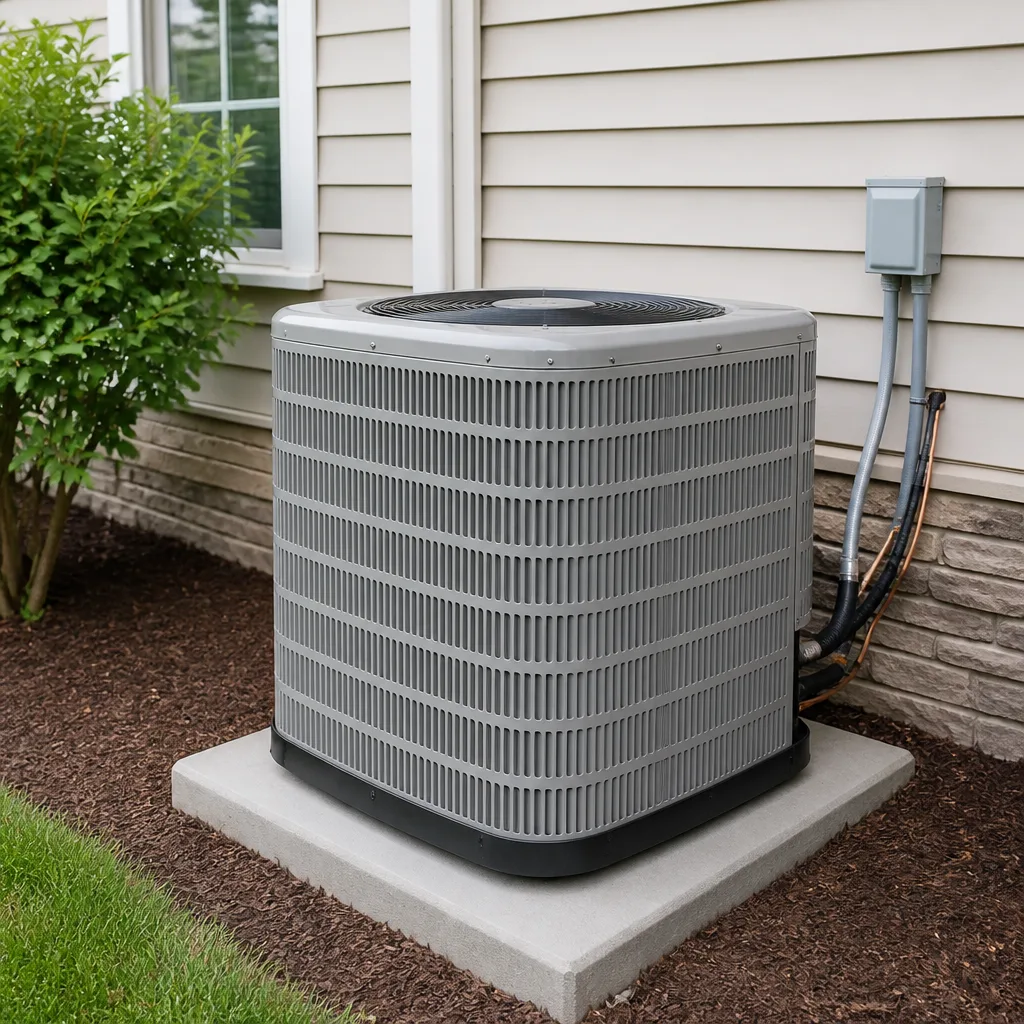 AC repair
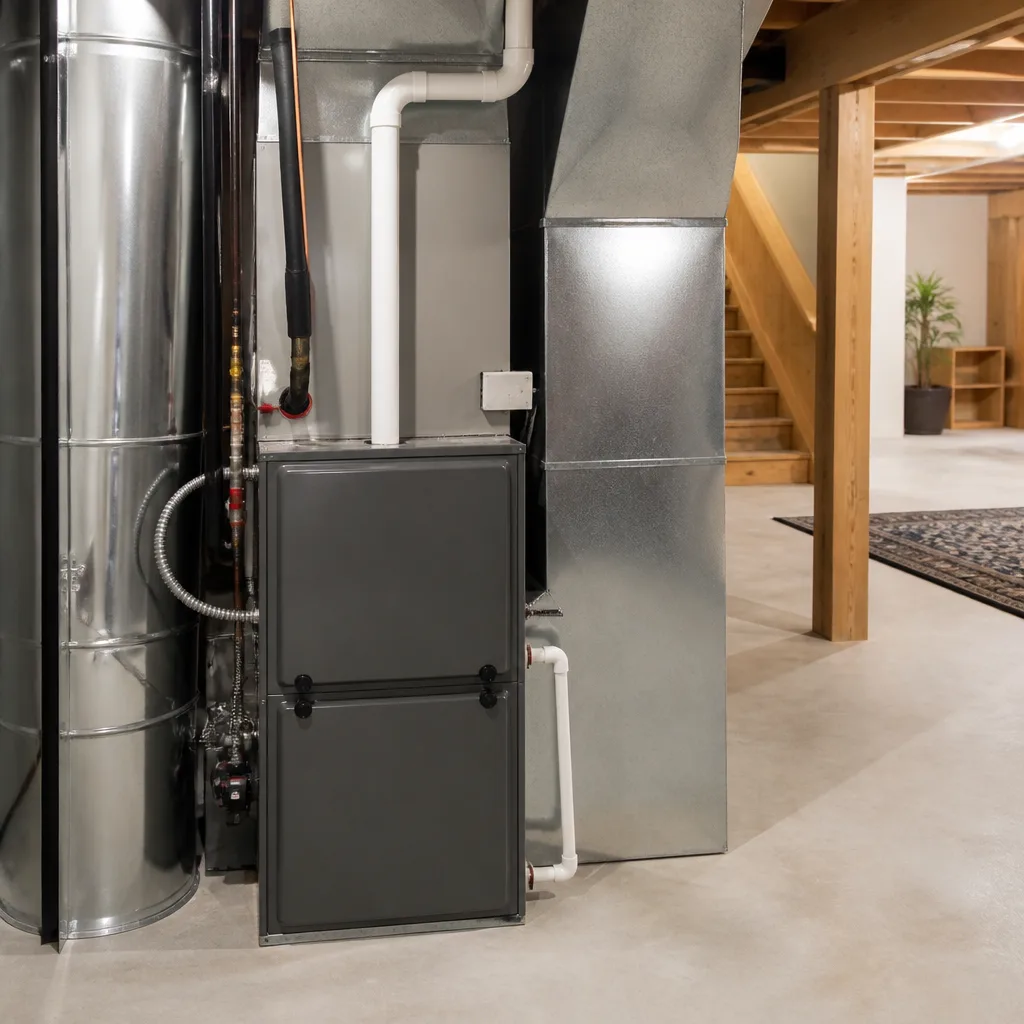 Furnace & heating
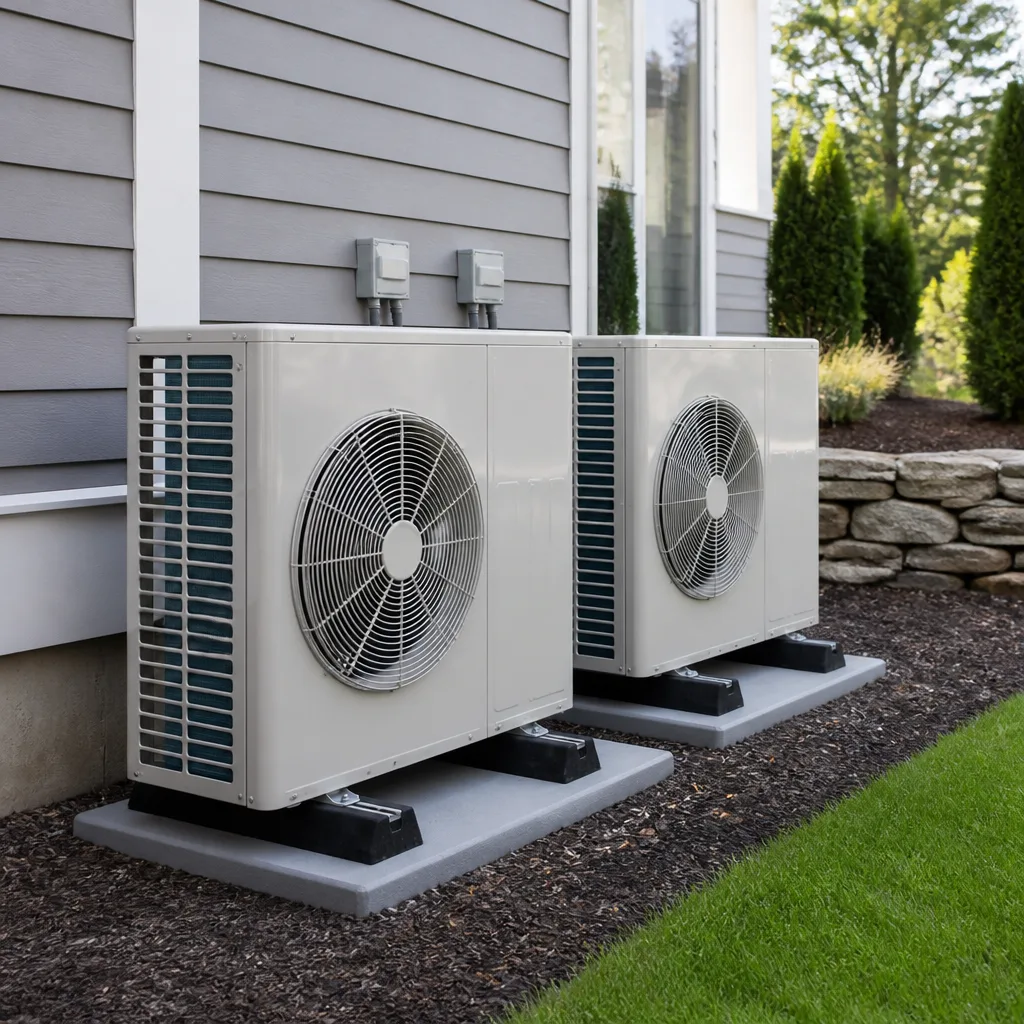 Heat pumps
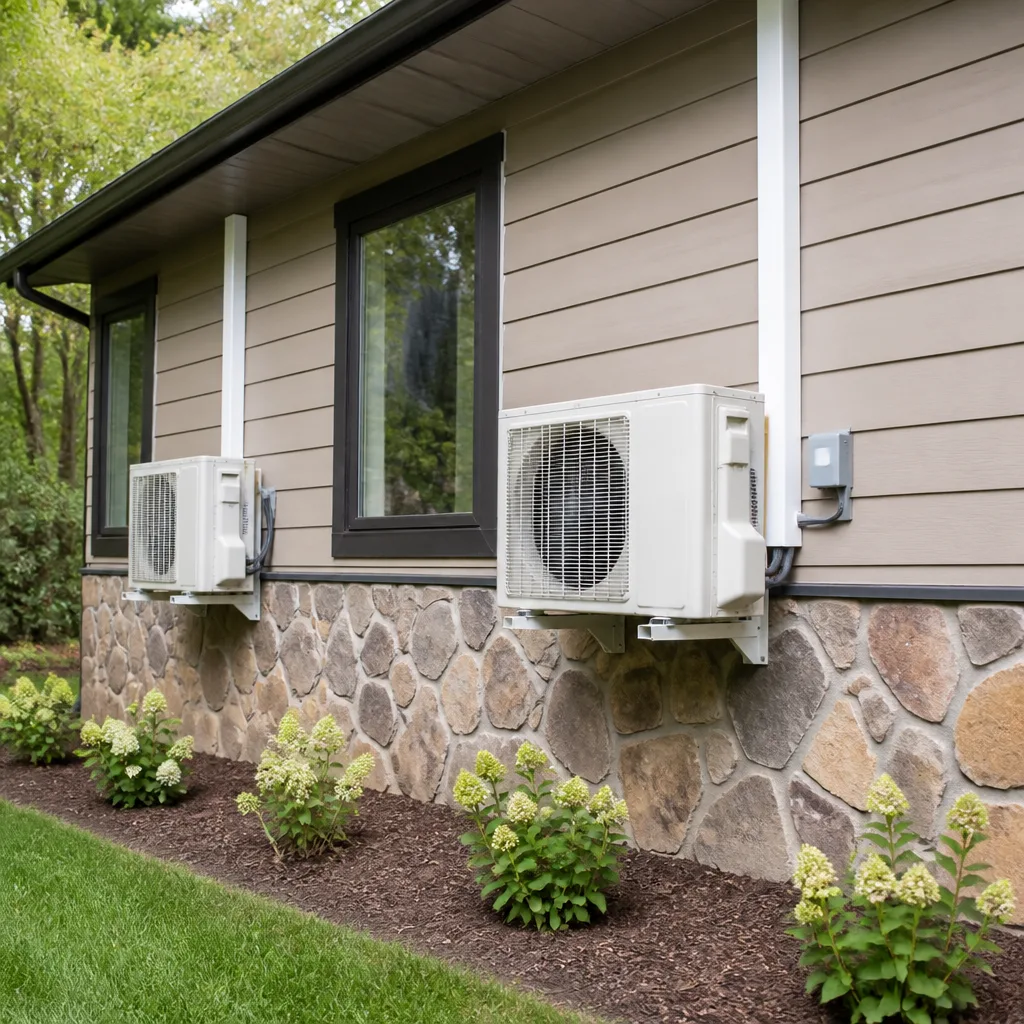 Ductless mini splits
 Carrier
 Trane
Trane Goodman
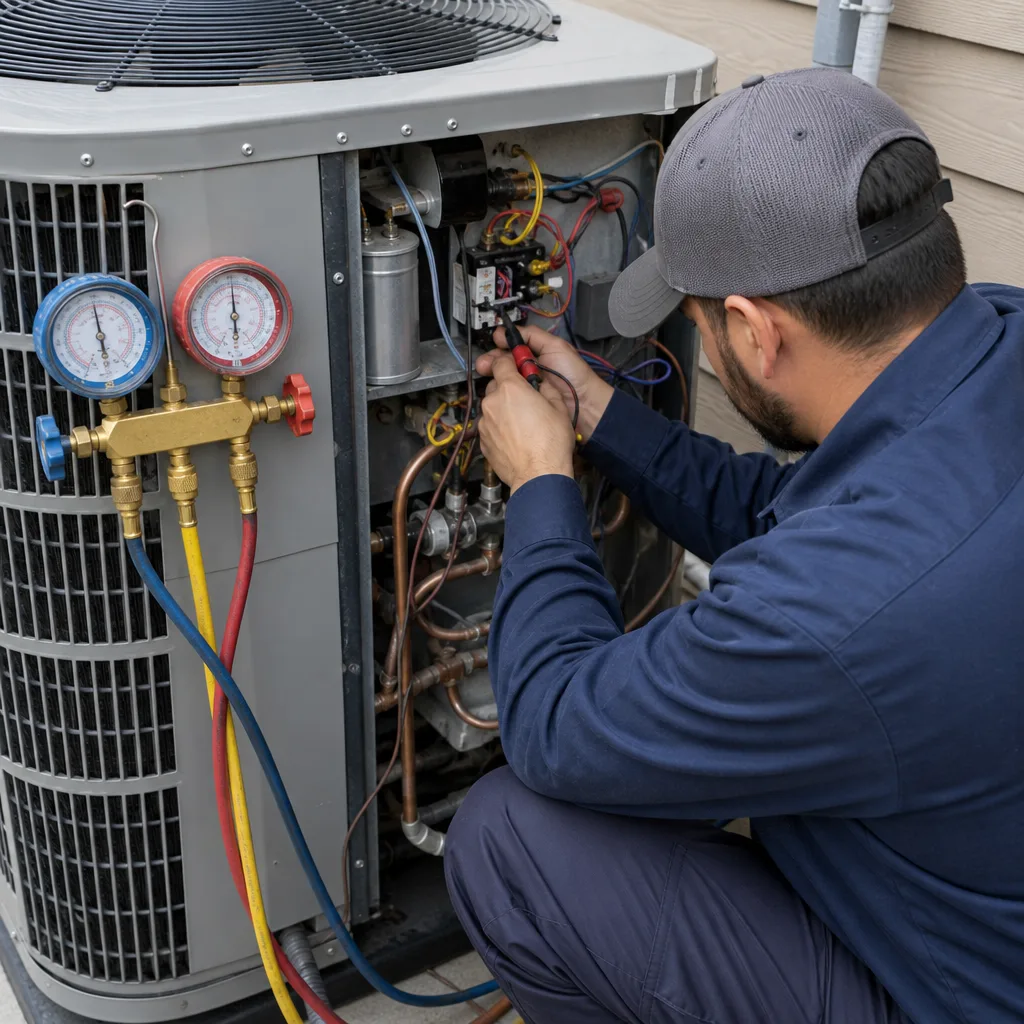
Seasonal tune-up and full diagnostic on your Carrier, Trane, or Goodman system - readings shown to you before any repair is proposed
Diagnosis first, numbers second - you approve the repair price before a single part goes in.
Get your free estimateHVAC Cost Breakdown: The Houston Homeowner’s Reference for 2026
Two homeowners on the same street in Cypress can get quotes for identical Trane systems that differ by $2,400. Same equipment, same house size, same week. The gap isn’t dishonesty. It’s that labor, permit, and disposal fees are almost never itemized, and most Houston homeowners don’t know which line items to ask about. This guide walks through every major cost category so you can read a Houston HVAC quote the way an estimator does: line by line, with the fat trimmed and the fixed costs left alone. For more guides & resources on Houston home comfort, see our blog.
Styles & brands we work with
Quick Answer
In 2026, a full HVAC system replacement in Houston runs roughly $7,500 to $14,500 depending on tonnage, efficiency tier, and whether the duct system needs work. A common central AC repair runs $180 to $900 depending on the part. The spread between the low and high legitimate quote on the same job is usually $1,500 to $3,000, and most of that gap comes from equipment tier selection, labor market timing, permit handling, and whether a company bundles ductwork into the install whether you need it or not.
Table of Contents
- What Common Houston HVAC Repairs Actually Cost in 2026
- Full System Replacement Costs by Tonnage and Efficiency Tier
- Why Houston Labor Costs More in June and July Than in October
- What Duct Replacement Adds to a Houston Quote and When It’s Necessary
- How to Read a Houston HVAC Quote Line by Line
- The Financing Math Most Houston HVAC Companies Present Misleadingly
- Houston Permit Fees, HOA Requirements, and Other Fixed Costs
- Common Mistakes to Avoid
- When to Call a Professional
- Frequently Asked Questions
- The Bottom Line
What Common Houston HVAC Repairs Actually Cost in 2026
Most Houston AC repair calls fall into a small set of well-known failures. Here’s what we see in Houston homes across the metro, from Katy to Spring, along with the range a homeowner should expect when a licensed Houston contractor quotes the repair in 2026:
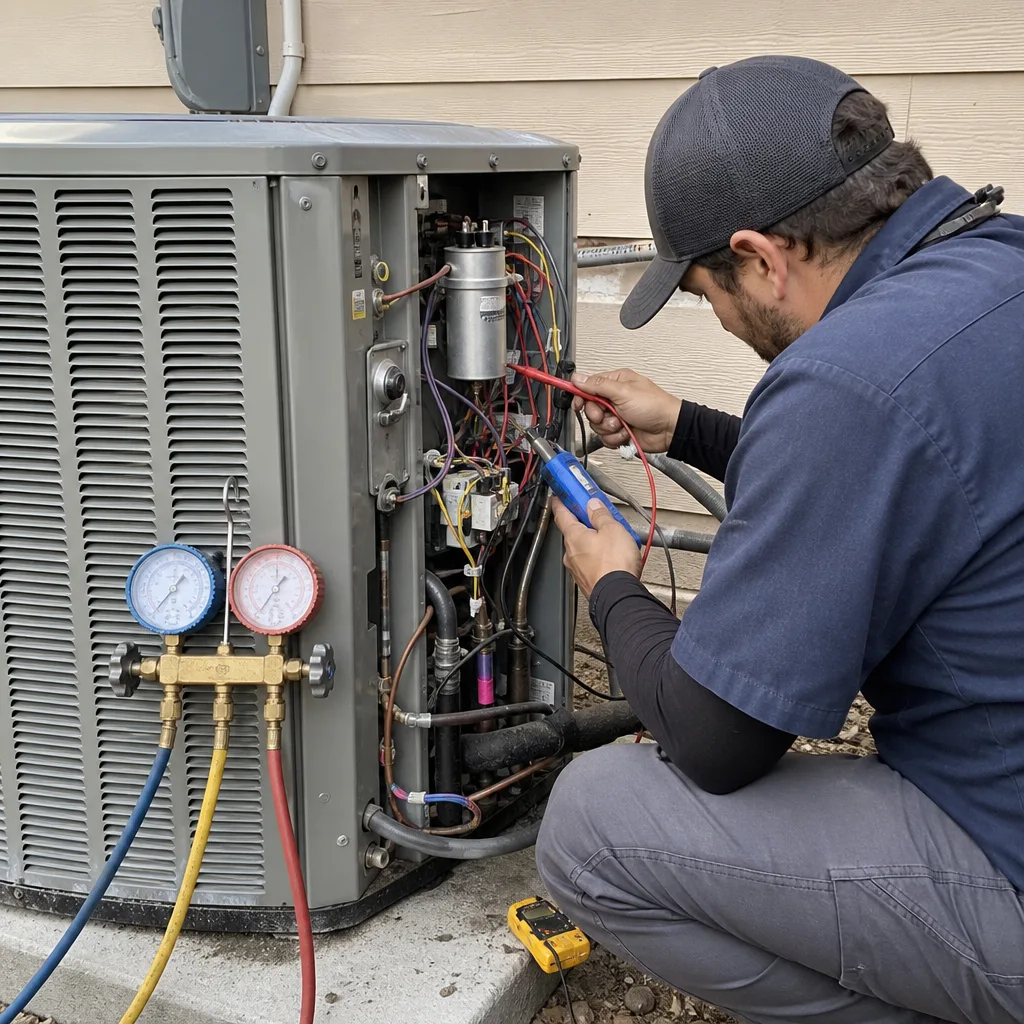
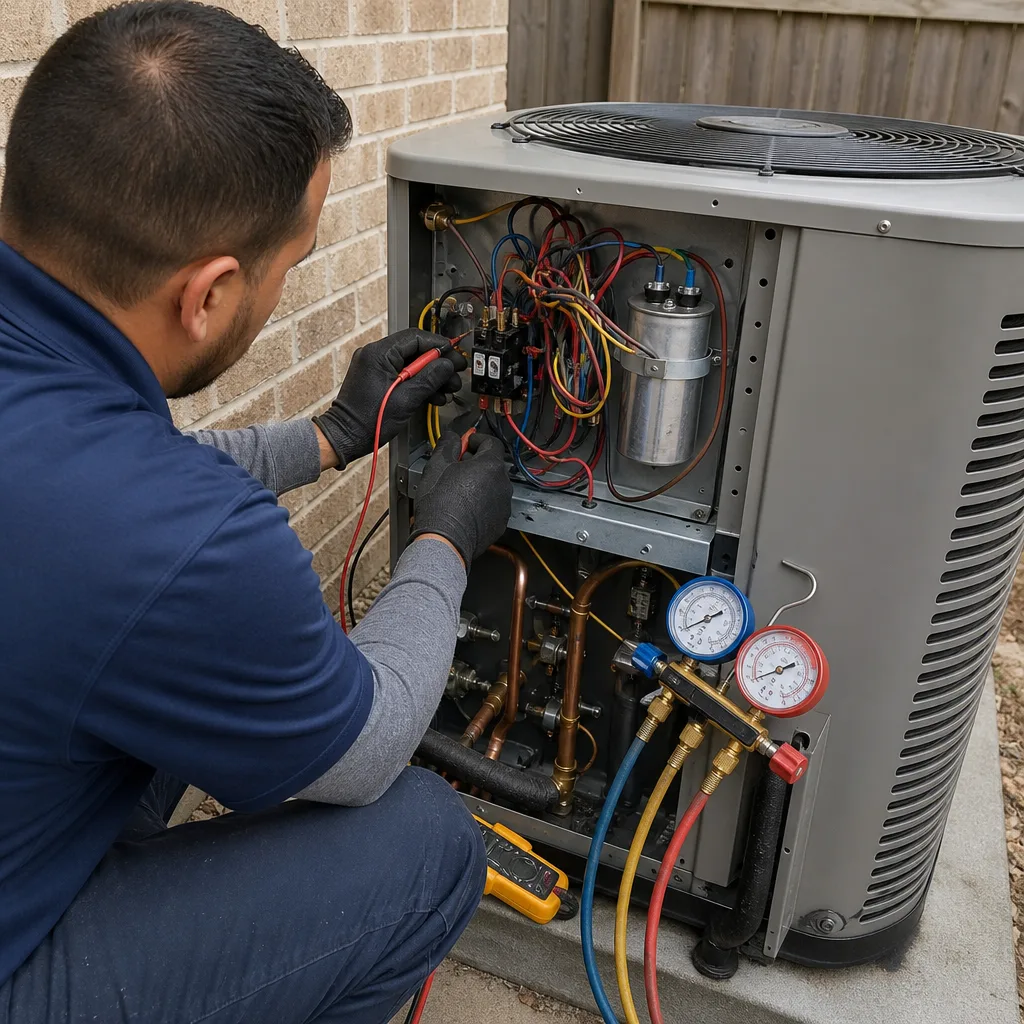
- AC capacitor replacement (the start component that gets the compressor running): $160 – $330. This is the single most common AC failure in Houston humidity because capacitors degrade faster when a condenser sits in direct Texas sun.
- Contactor replacement (the switch that tells the condenser to turn on): $140 – $280.
- Condensate drain line clearing (a blocked pipe causes water to back up and trip the safety switch): $120 – $260. Very common in Houston homes with attic units above finished ceilings.
- Refrigerant recharge (topping off the cooling fluid your AC needs to run): $180 – $420 for a top-off, plus leak repair if the system is losing charge.
- Evaporator coil replacement (the indoor coil that absorbs heat): $1,200 – $2,400 parts and labor, depending on coil match and whether the system is under parts warranty.
- Condenser fan motor replacement (the outdoor fan that rejects heat): $280 – $520.
- Compressor replacement (the heart of the system, the pump that moves refrigerant): $1,800 – $3,400 if not under warranty. On systems 10 years old or more, replacement of the entire outdoor unit is often the better financial call.
- Furnace igniter or flame sensor replacement (for gas heat, which most Houston homes still use): $150 – $280.
These are parts-and-labor-included ranges that assume a state-licensed Houston contractor with liability coverage, not an unlicensed handyman working from a pickup. The range exists because a York system and a Carrier system use different component prices, and because a shop with full-time technicians answering phones 24 hours a day carries overhead that shows up in the hourly labor rate. None of these repair prices should require a second mortgage. If a quote arrives at double the top of these ranges, ask the contractor to itemize why.
One note on repair versus replace: on a system older than 12 years, any repair over $900 should trigger a written replacement quote as well. A good Houston contractor will give you both numbers side by side so you can make the call on math rather than pressure. AC repair in Houston doesn’t have to be a guess.
Full System Replacement Costs by Tonnage and Efficiency Tier
The single number most Houston homeowners ask us for is: what does a new system cost? Here is the realistic range for 2026, broken down the way an estimator actually prices it. All figures include the equipment, installation labor, basic materials, refrigerant, and Houston permit fees. They do not include duct replacement, which is covered in its own section.
Central Air Conditioner Only (changeout of the outdoor condenser, matching the existing coil or furnace)
- 3-ton, 14 SEER2 entry tier: $6,800 – $8,500
- 3-ton, 16 SEER2 mid tier: $8,200 – $10,200
- 4-ton, 14 SEER2 entry tier: $7,800 – $9,500
- 4-ton, 16 SEER2 mid tier: $9,400 – $11,800
- 5-ton, 16 SEER2 mid tier: $10,800 – $13,200
Full Gas Furnace + AC System (indoor furnace, evaporator coil, and outdoor condenser, replaced together)
- 3-ton AC, 80% efficient single-stage furnace, 14 SEER2: $9,200 – $11,000
- 4-ton AC, 80% efficient two-stage furnace, 16 SEER2: $11,000 – $13,500
- 5-ton AC, 96% efficient variable-speed furnace, 16 – 17 SEER2: $13,000 – $16,000
Heat Pump Systems (heating and cooling in one outdoor unit, increasingly popular in Houston because of mild winters and federal efficiency rebates)
- 3-ton, 15 SEER2 heat pump with air handler: $9,500 – $12,000
- 4-ton, 16 SEER2 heat pump with air handler: $11,500 – $14,000
- 5-ton, 18+ SEER2 cold-climate certified heat pump: $13,500 – $17,500
The spread within each range is real and legitimate. A Bryant and an American Standard unit of the same SEER2 rating can differ in dealer cost by several hundred dollars. Two install crews doing the same job can differ in labor by $1,000 or more depending on how they handle code compliance, nitrogen purge during brazing, and proper evacuation. None of this shows up on a one-line quote.
For homeowners who want a specific brand, our technicians are trained on nine major residential lines including Carrier, Trane, Lennox, Goodman, Rheem, York, Daikin, Bryant, and American Standard. The brand matters less than the installation quality and the written guarantee behind it. A Houston AC installation is only as good as the crew that puts it in.
Here’s the 2026 rule of thumb that holds up in the Houston market: the installed cost of a system runs about $2,300 – $2,800 per ton for the equipment and basic installation. That gives you a quick sanity check on any quote. A 4-ton system should land between $9,200 and $11,200 on the equipment side before ductwork or significant electrical upgrades. If you’re being quoted $15,000 for a 3-ton base system with no ductwork, you’re being shown a number that either includes premium equipment you didn’t ask for or carries markup you should push back on.
Why Houston Labor Costs More in June and July Than in October
Houston’s HVAC labor market works like surge pricing, but nobody calls it that. In June and July, when temperatures sit in the mid-90s and humidity pushes the heat index past 105, every licensed shop in the metro is running 14-hour days. Technicians are working overtime, and most independent Houston contractors pay that overtime rather than lose a customer to a competitor. That cost lands on your invoice.
In October, the same technician costs less per hour because there’s no overtime premium and the schedule has gaps. The licensed crew is the same. The equipment is the same. What changes is availability and the contractor’s willingness to sharpen the pencil on labor.
Here’s the concrete difference we see in Houston year after year:
- June – July replacement labor: often $200 – $400 higher per install day than October rates, plus you may wait 7 – 14 days for an install slot.
- October replacement labor: quotes routinely come in 8 – 12% lower on the labor line, and a homeowner can typically get an install scheduled within 2 – 4 days.
- Repair calls in summer: same-day service is possible but evening and weekend slots fill by 10 a.m. In the shoulder season, you’ll get your pick of times.
If your system is limping along in August and you can get it through to October with a minor repair, the replacement math often gets better, as our Seasonal HVAC Care for Houston: Year-Round Homeowner’s Guide explains. We tell Houston homeowners exactly this: if the system is cooling, if the repair is under $500, and if you can tolerate another 8 weeks, wait for the shoulder season. The same licensed crew, the same equipment, a lower labor rate, and faster scheduling. That’s not a secret. It’s just how the calendar works in Houston.
One related note: Houston’s climate gives us two shoulder seasons, not one. October and November are the big one, but March and early April also work. Either window beats July. Our team at Cold Harbour Heating and Air Houston books installs year-round, but we’ll tell you plainly when waiting a few weeks will save you money.
What Duct Replacement Adds to a Houston Quote and When It’s Necessary
Ductwork is the line item on a Houston HVAC quote that homeowners understand least, and it’s where we see the most unnecessary upselling in this market. Here’s the honest version.
Replacing all the ductwork in a typical 2,000-square-foot Houston home runs $3,500 to $7,000 depending on whether it’s flex duct in an attic, sheet metal trunk lines, or a combination. When ductwork is included in a full system quote, that’s usually the difference between a $10,000 changeout and a $15,000 full replacement.
Genuinely necessary duct replacement in Houston usually comes down to one of three conditions:
- Water damage or mold. Houston attics are hot, humid spaces. A failed condensate line or a leaking coil can soak duct insulation, and once mold starts in fiberglass duct liner, cleaning doesn’t fix it. The duct has to go.
- Mismatched duct size. If the original home builder put a 3-ton duct system on a 4-ton AC, the new equipment can never perform to spec. Airflow is the biggest reason brand-new systems underperform in Houston homes.
- Collapsed or disconnected sections. Raccoons, squirrels, and 140-degree attic heat all take a toll. If your flex duct is kinked, crushed, or torn, the treated air is cooling your attic instead of your living room.
Before agreeing to a duct replacement quote, ask these three questions:
- “Can you show me the static pressure reading that says my ducts are undersized?” A real technician will have measured it.
- “Can I see the damaged sections in photos or in person?” If the contractor can’t produce a photo of the damage, ask why.
- “What exactly will the new duct system include: new plenum, new return, new supply runs, new insulation?” Some quotes say ‘duct replacement’ and mean only the supply runs, leaving the aging return untouched.
In our experience, maybe 4 in 10 Houston homes genuinely benefit from duct replacement at the time of a system changeout. The other 6 can go another 8 to 10 years with a well-sealed existing duct system. A good Houston contractor will show you the evidence either way before writing the number down.
How to Read a Houston HVAC Quote Line by Line
A Houston HVAC quote is not supposed to be a single number on a letterhead. Here’s what a properly itemized quote should show, and which lines are fixed versus negotiable.
The fixed costs, which should look similar across every legitimate quote:
- Houston permit fee: typically $80 – $250 depending on the scope of work and the county or municipality handling it. The City of Houston and Harris County both have mechanical permit requirements for system replacements. This is not a markup. It’s a pass-through.
- Refrigerant cost: R-410A has been phased down and is being replaced by lower-GWP refrigerants like R-454B in new 2026 equipment. The cost per pound has risen steadily, and that’s a market reality, not a contractor markup.
- Disposal and recycling fees: old R-410A must be recovered by certified equipment. Old units must be hauled and processed. $100 – $250 is normal.
The lines that vary by quality of work, which is where the legitimate spread comes from:
- Equipment (the condenser, furnace, or air handler itself): this is the same model number you can look up online. If the quote lists the exact model number, you can verify the dealer cost.
- Installation labor (the crew time): varies by crew experience, licensing level, overhead, and season. Not negotiable in the sense of haggling, but comparable across quotes if you get three.
- Sheet metal, electrical whip, disconnect, pad, lineset, drain line materials: a few hundred dollars in parts that every proper install includes. Quotes that skip these are cutting corners, not saving you money.
- Startup and commissioning: the technician should verify airflow, refrigerant charge, and temperature split, and document it. You want a commissioning report, not a “should be fine.”
The lines you can negotiate:
- Smart thermostat: quotes often bundle a $250 – $400 thermostat upgrade. If you don’t want it, ask for the line removed.
- Maintenance plan add-ons: some quotes include a first-year maintenance plan. You can accept it or ask for the same install price without it.
- Extended labor warranty: manufacturer parts warranties run 10 years on most new systems when registered. Extended labor warranties of 5 – 10 years cost $500 – $1,200. It’s optional insurance, not a required line item.
What should never appear on a legitimate Houston quote: a line that says “miscellaneous” or “as needed” with no dollar cap. A written price delivered before any work begins should define the scope so clearly that neither party has to guess. At Cold Harbour Heating and Air Houston, we hand over the written price before a single tool comes out, and that number doesn’t change at the door. That’s the way it should work everywhere.
The Financing Math Most Houston HVAC Companies Present Misleadingly
Houston HVAC companies love to present financing as “18 months same as cash!” The phrase is true and misleading at the same time. Here’s the math they don’t put in the brochure.
An 18-month same-as-cash deal is a deferred-interest loan. You make no interest payments for 18 months, but the interest accrues from day one. If you pay the full balance within 18 months, you pay zero interest. If you don’t, the accumulated interest, often at 25 – 29.9% APR, is added to your balance retroactively. Miss the payoff date by one day on a $12,000 system, and the back-interest can be $2,500 or more.
The manufacturer rebate alternative is different. Manufacturers like Carrier and Trane run seasonal rebates. Depending on the equipment tier and the time of year, that might be $300 – $1,000 paid to you as a prepaid card or a bill credit. If you have the cash to pay outright, you take the rebate, you pay the contractor, and you’re done. No deferred interest, no retroactive penalty, no fine print.
Here’s a real Houston example from 2026 pricing:
- System quote: $11,500 installed, after a $600 manufacturer rebate taken as cash.
- 18-month same-as-cash financing: you pay $11,500 over 18 months. If you pay on time, you’re out $11,500 and the dealer pays the financing origination fee, which is why some contractors mark up financed deals slightly.
- Miss the payoff: the accumulated interest at 27.99% APR on $11,500 over 18 months is about $4,800. Your system cost just became $16,300.
Our guidance to Houston homeowners: if you can pay outright, pay outright. Take the rebate, skip the financing risk. If you need financing, look for a fixed-rate installment loan from a credit union or a contractor that offers true fixed-rate terms, not deferred interest. And read the payoff date on the contract like it’s the most important sentence on the page, because it is.
Houston Permit Fees, HOA Requirements, and Other Fixed Costs
Houston is not one permitting jurisdiction. The City of Houston handles permits inside city limits. Harris County handles unincorporated areas. Fort Bend County, Montgomery County, and the smaller municipalities like Sugar Land, Pearland, and Pasadena each have their own mechanical permit requirements. The fee varies from about $80 to $250 on a typical residential system changeout.
What does the permit actually get you? A city or county inspector verifies that the installation meets the current mechanical code: proper electrical disconnect, proper condensate drainage, proper gas line connection on a furnace, proper equipment clearances. When a Houston contractor tells you they’ll “skip the permit to save you money,” they’re offering to skip the one independent check that the work was done to code. You don’t want that savings. A permit also creates a public record of the work, which matters when you sell the house.
HOA requirements are separate. Many Houston-area HOAs, especially in master-planned communities like Sienna, Bridgeland, and Kingwood, have architectural review rules for condenser placement, equipment screening, and even brand appearance. If you’re replacing a system and moving the condenser location at all, check with your HOA before installation day. A properly permitted and HOA-compliant install takes a few extra days of coordination and costs a small amount more. It’s worth it.
Other fixed costs that should appear as line items: the electrical disconnect replacement, which is required by code when it’s corroded or outdated; the equipment pad, where needed; and the lineset if the old one is the wrong size for the new refrigerant type. None of these are upsells. They’re requirements that a licensed Houston contractor should quote up front.
Common Mistakes to Avoid
- Taking the lowest quote without checking what’s missing. In Houston, we’ve seen low quotes that omitted the permit, skipped the commissioning, or reused an undersized lineset. Get three quotes, itemize the differences, and ask about every gap.
- Assuming the brand name does the heavy lifting. A Trane installed badly will fail sooner than a Goodman installed meticulously. The install crew and the written guarantee matter more than the logo.
- Replacing the AC without considering the furnace. In Houston, the furnace and AC share a blower and air handler. Replacing one without checking the other often leads to a mismatched system with airflow problems.
- Accepting “same as cash” financing without reading the payoff terms. The deferred-interest trap is the most expensive financial mistake in the Houston HVAC market.
- Ignoring static pressure and duct condition. Houston attics are unforgiving on ductwork. A new system on old, leaky ducts will satisfy exactly no one.
- Skipping the seasonal window when you have the chance. If your system is working in September, get the replacement quoted and booked for October. You’ll pay less in labor and get an appointment faster.
- Not getting the guarantee in writing. A verbal promise to “come back if anything fails” is worth nothing. A written 365-day repair guarantee is enforceable. Ask for it on paper before the technician leaves.
When to Call a Professional
Some Houston HVAC problems are DIY-fixable: a clogged condensate drain line, a dirty filter, a tripped breaker that stays reset. Others are not. If you’re seeing ice on the evaporator coil, hearing a compressor that hums but won’t start, smelling gas near the furnace, or seeing water stains spreading across a ceiling under the attic unit, it’s time for a licensed technician. Electrical, refrigerant, and gas work carries real risk. A trained professional with the right meters, recovery equipment, and code knowledge is the safe call. Cold Harbour Heating and Air Houston offers free estimates across the Houston metro, call (832) 371-9862 and a live person will pick up, day or night.
Frequently Asked Questions
A complete system replacement in Houston typically runs $7,500 to $14,500 depending on tonnage, efficiency tier, fuel type, and whether ductwork is included. A basic 3-ton central air changeout starts around $6,800 on the low end. Call (832) 371-9862 for a written, itemized quote, free of charge.
Yes, Houston labor rates for HVAC work are typically lower in October and November than in June and July because the summer overtime premium disappears and schedules open up. You’ll often save 8 – 12% on labor and get an install slot within days instead of weeks.
The most common AC repair in Houston is a failed capacitor, followed closely by a clogged condensate drain line and a worn contactor. These three repairs account for the majority of no-cooling calls in the Houston metro, and they’re all repairable the same day in most cases.
A capacitor replacement in Houston should run $160 – $330 parts and labor. If you’re quoted much more than that, ask for an itemized explanation. The part itself costs $25 – $60 at wholesale, and the rest is the service call, diagnostic time, and installation labor.
At 12 years old, a repair over $900 usually signals that replacement is the better Houston financial decision. A new system with a 10-year parts warranty, a higher SEER2 rating, and a written installation guarantee will typically outperform a repaired unit and pay back the difference in comfort and repair avoidance.
No, we provide free, written estimates across the Houston metro with no obligation. The price you’re quoted is the price you’ll pay, in writing, before any work starts. Call (832) 371-9862 to schedule a visit.
The Bottom Line
Houston HVAC pricing is knowable. The variables that move the number are equipment tier, seasonal labor timing, permit costs, and whether ductwork rides along. When you know the realistic ranges for a 3-ton versus a 5-ton, when you understand the October discount, when you can read a quote and tell a fixed cost from a negotiable one, you’re no longer negotiating from hope. You’re negotiating from knowledge. Get three itemized quotes. Ask for the permit. Ask for the guarantee in writing. And if you’re in Houston, call (832) 371-9862 for a free, itemized estimate from a company that puts its promises on paper.
Written by Victor Mancini, Owner at Cold Harbour Heating and Air Houston, serving Houston since 2003.
See the difference
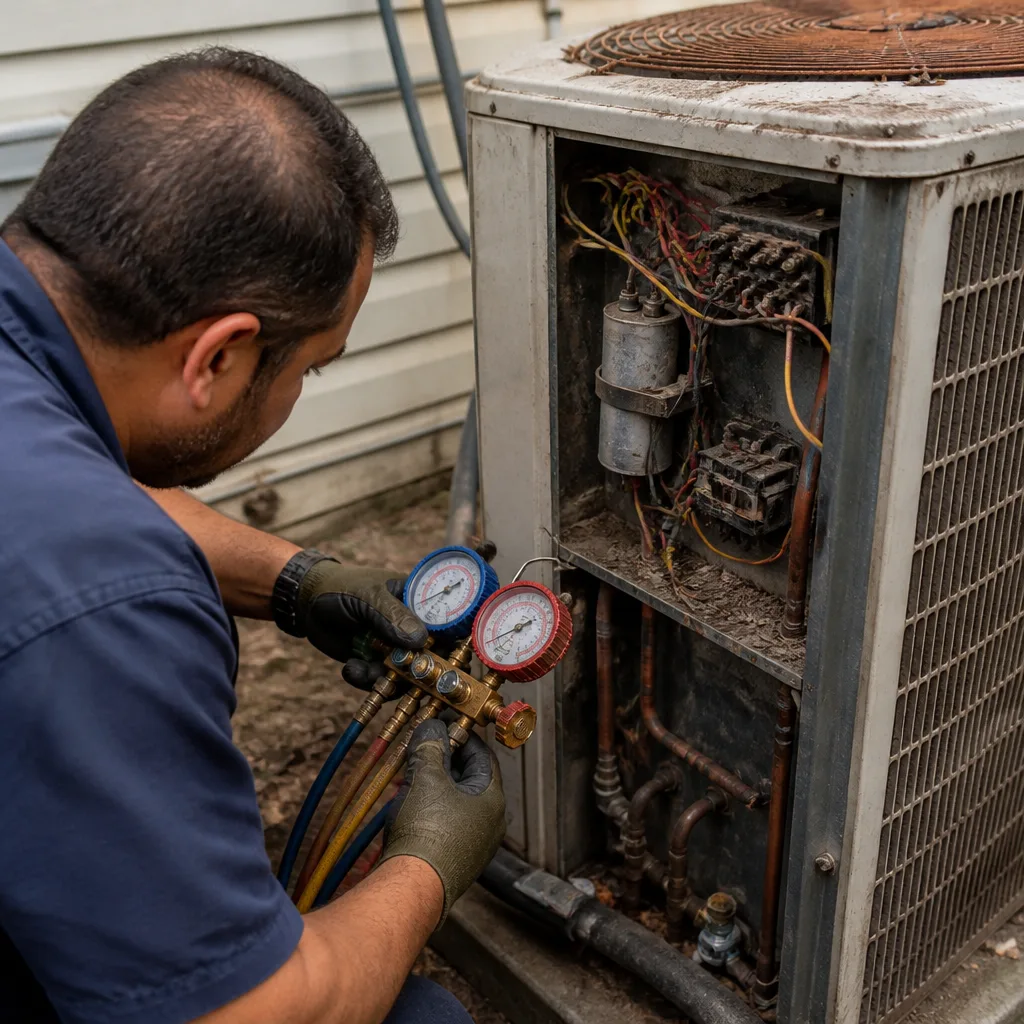 Before
 After
After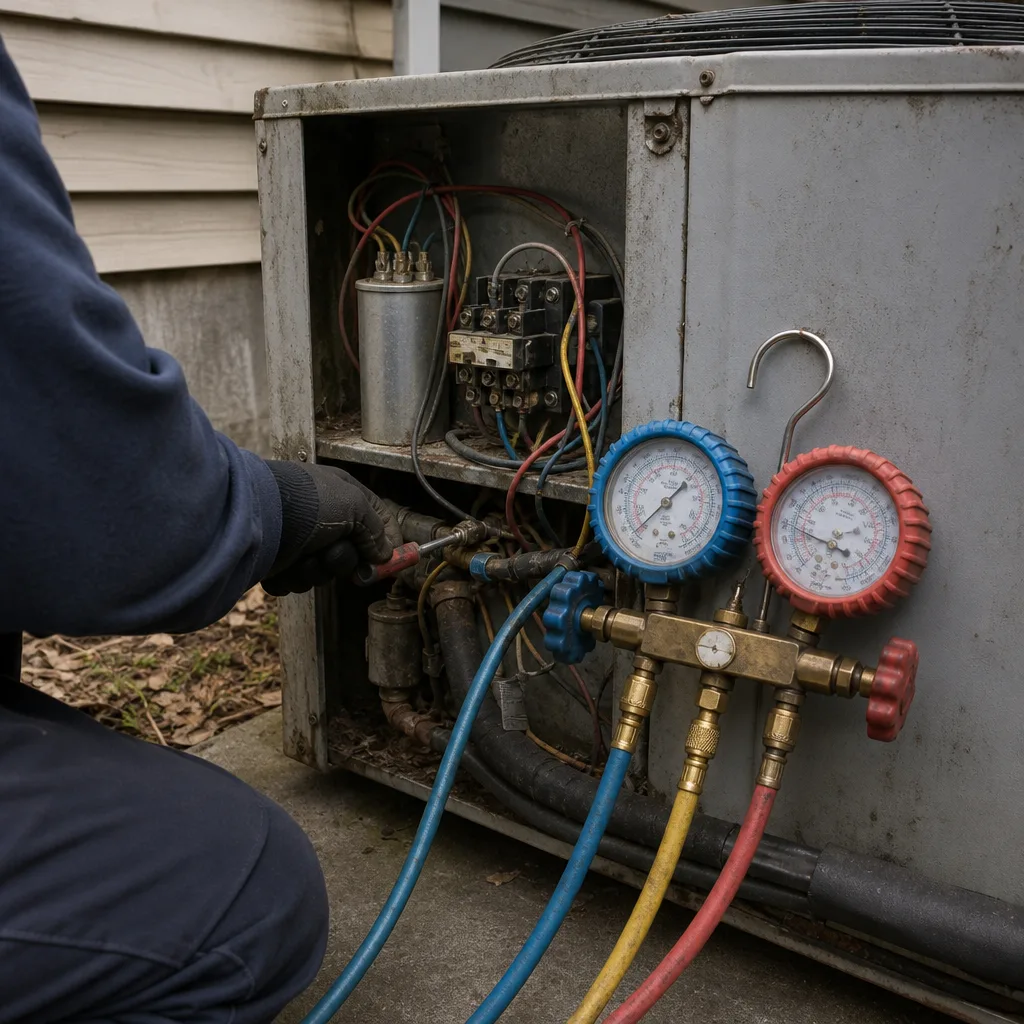 Before
 After
After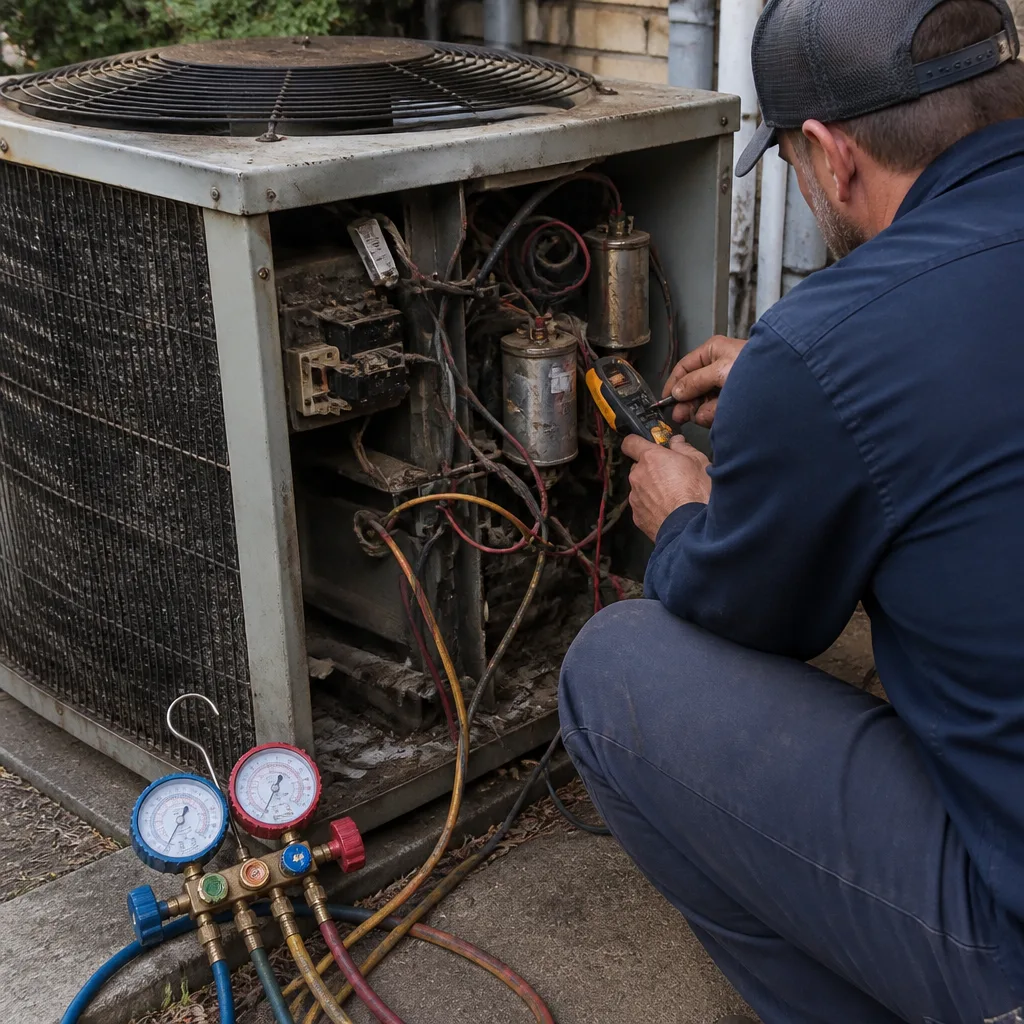 Before
 After
After