
Last updated October 16, 2026
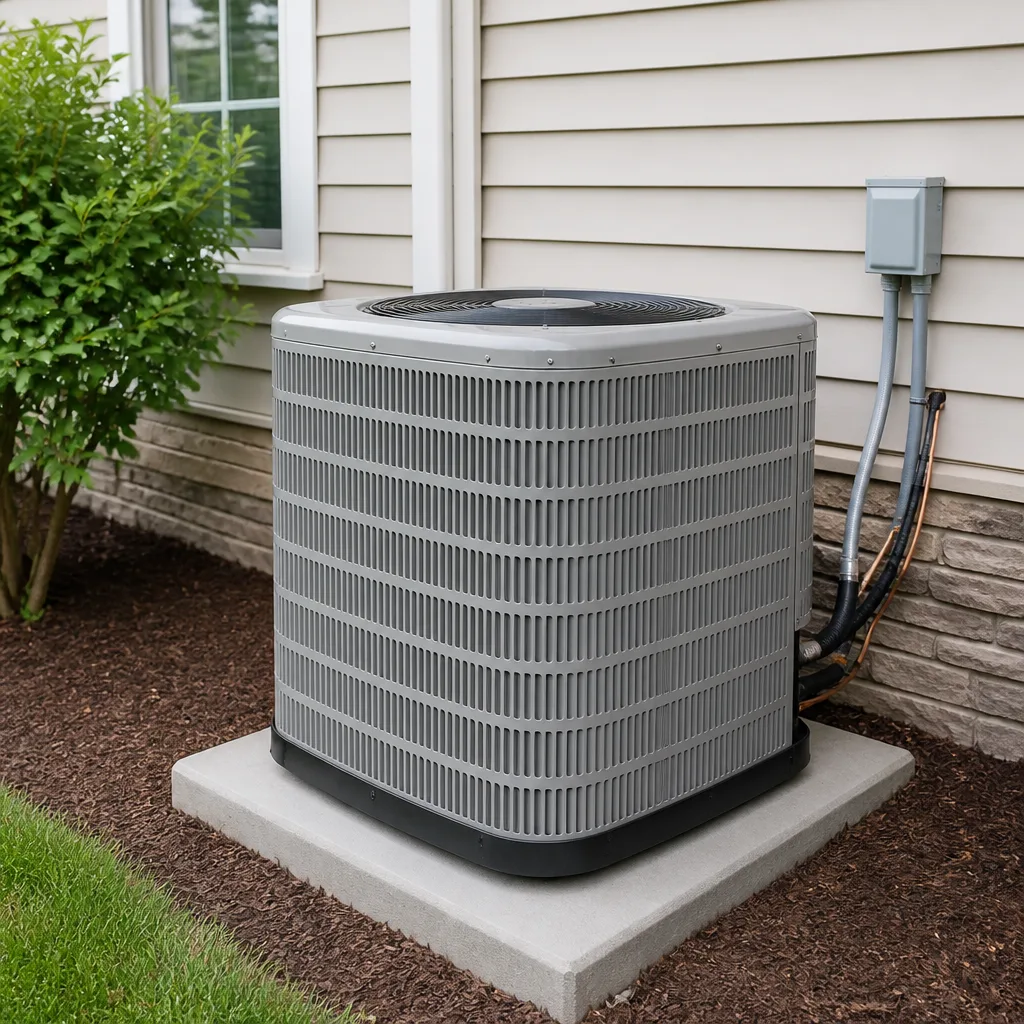 AC repair
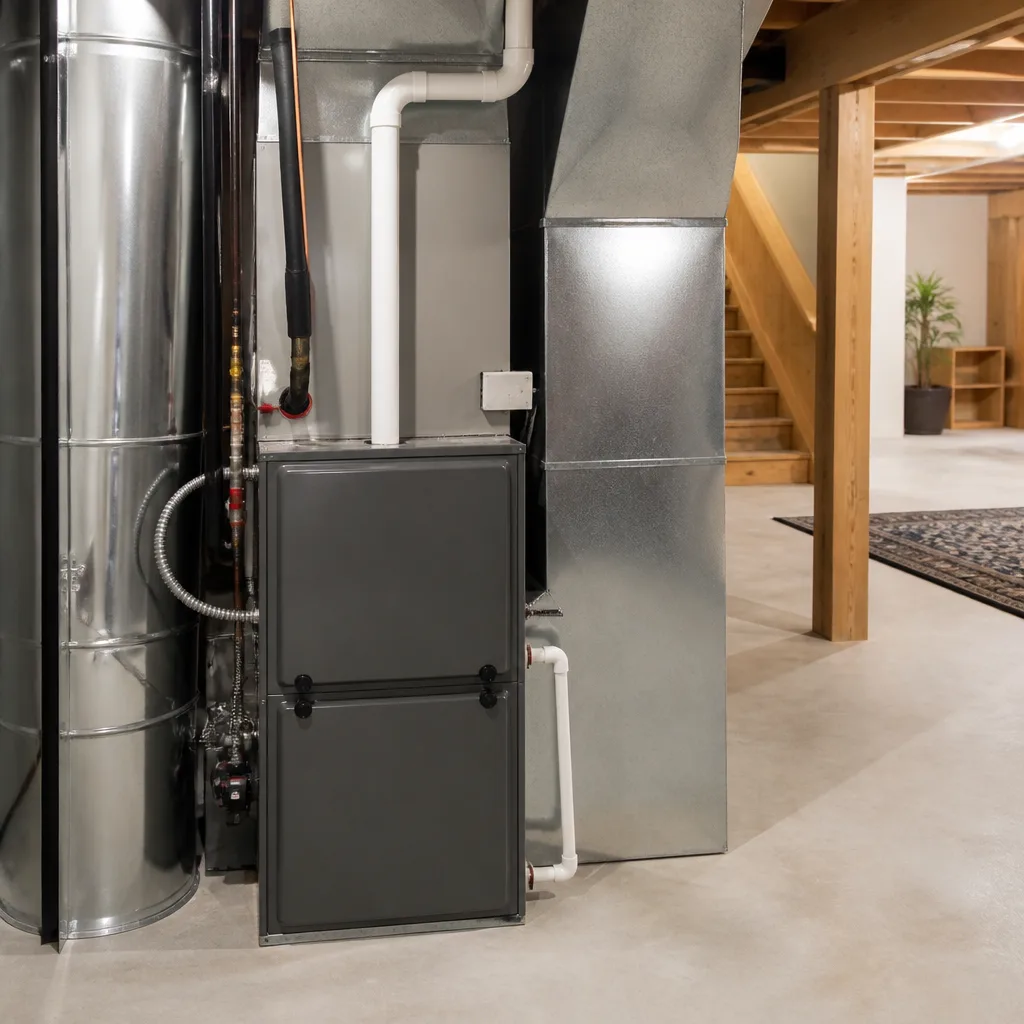 Furnace & heating
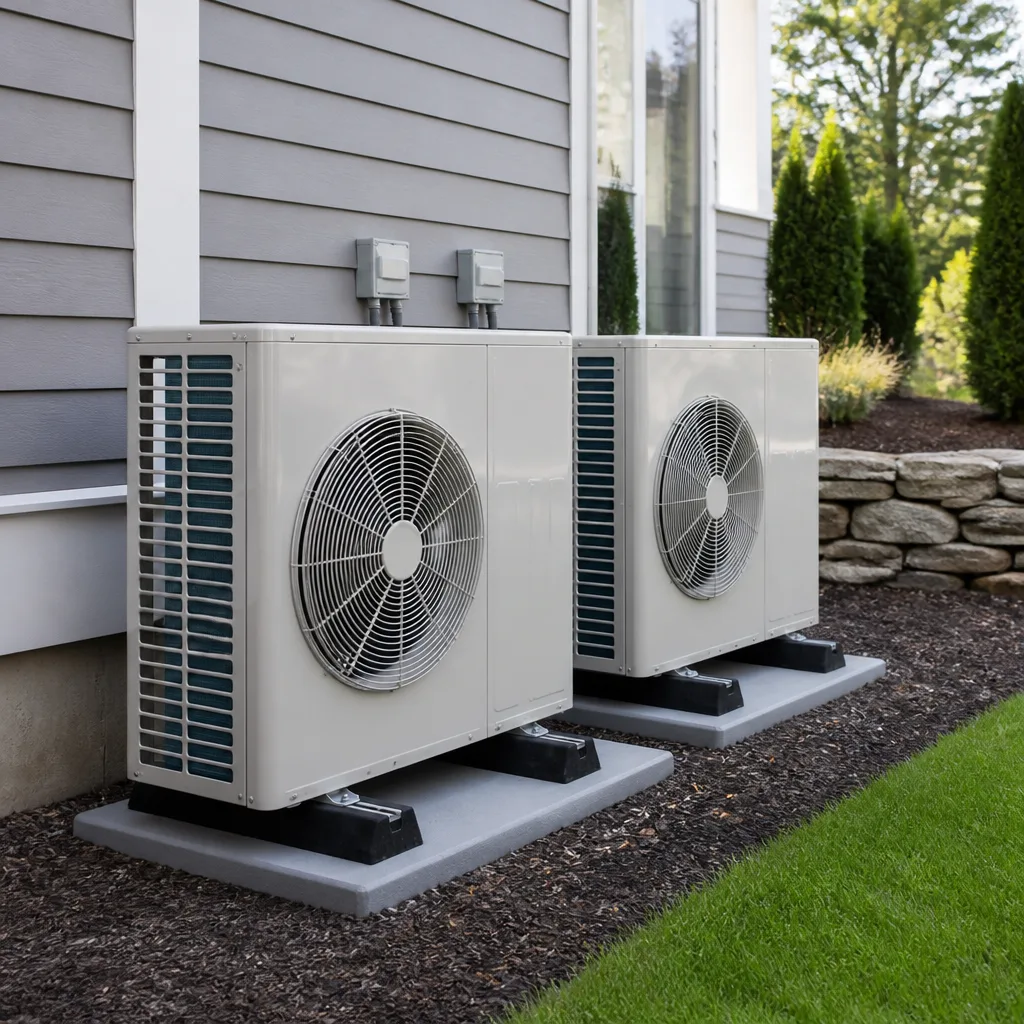 Heat pumps
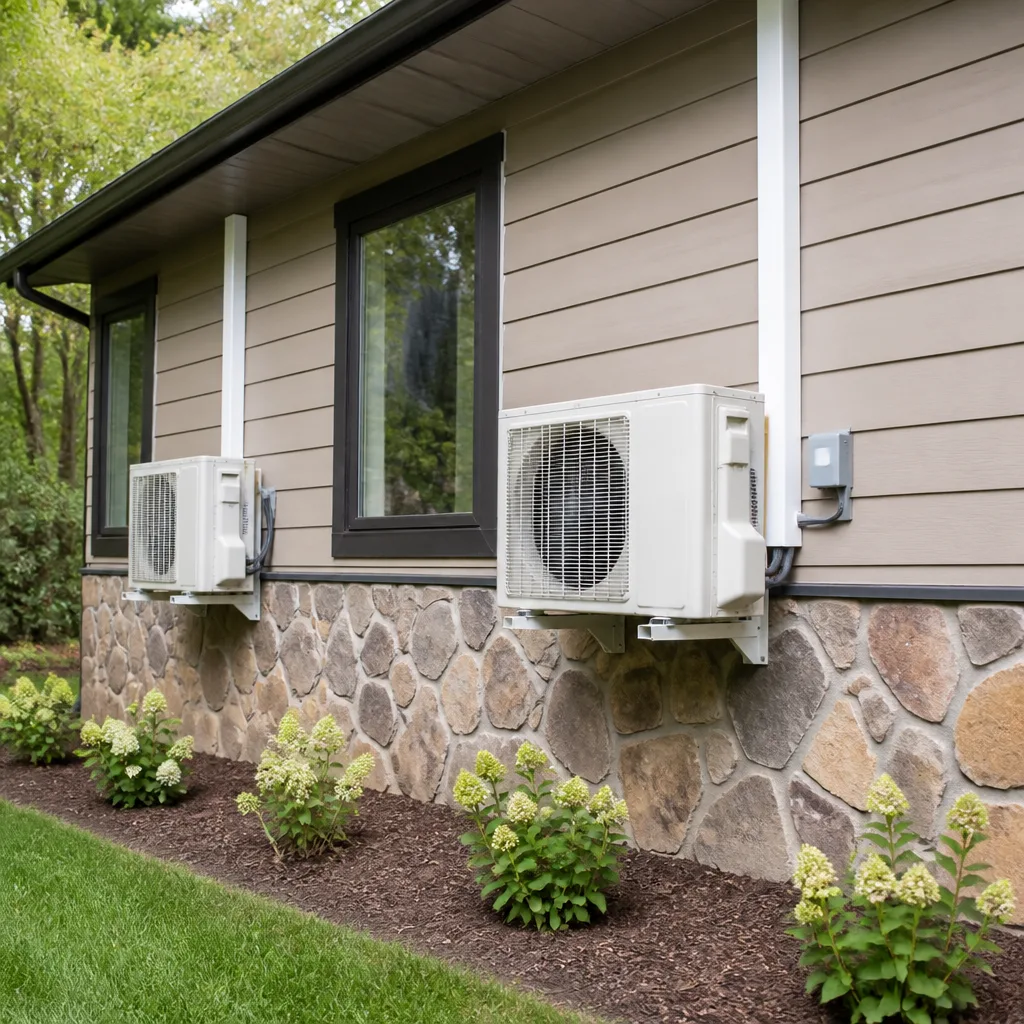 Ductless mini splits
 Carrier
 Trane
Trane Goodman
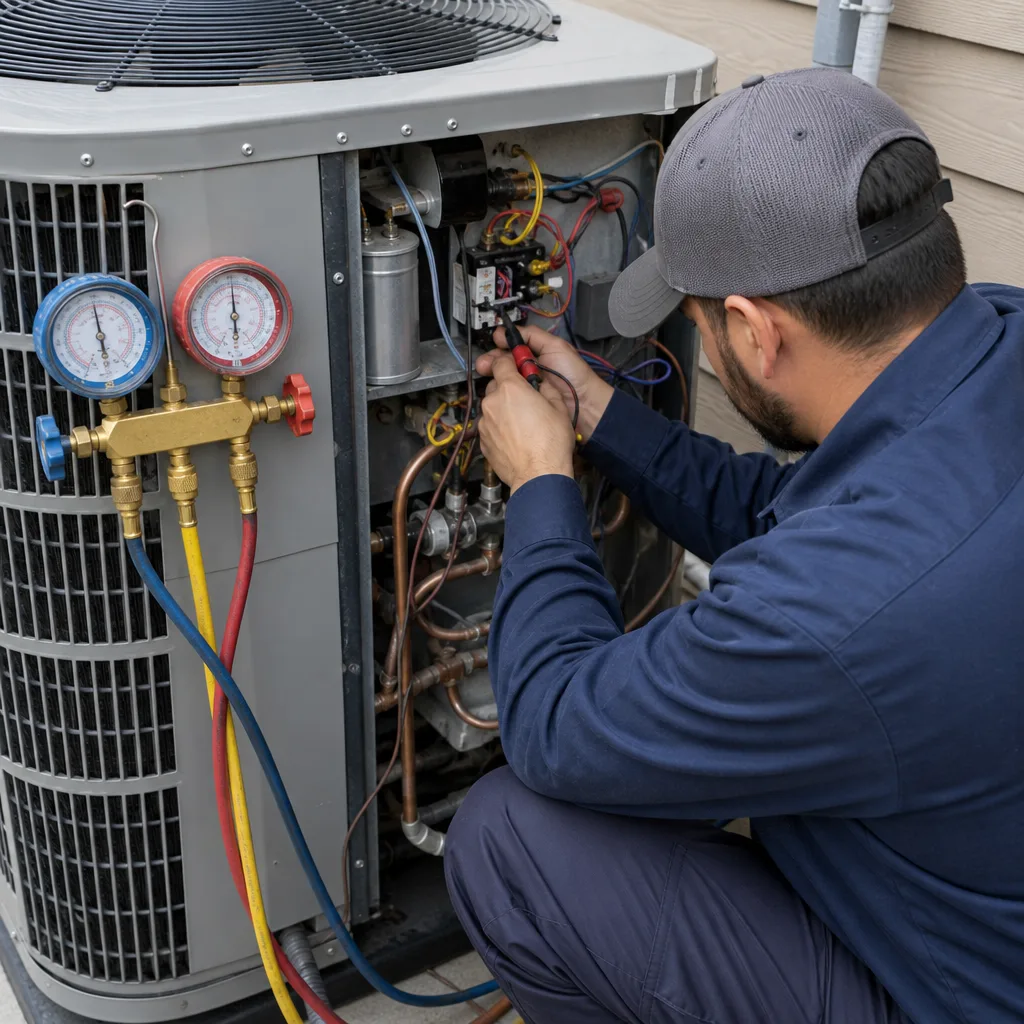
Seasonal tune-up and full diagnostic on your Carrier, Trane, or Goodman system - readings shown to you before any repair is proposed
Diagnosis first, numbers second - you approve the repair price before a single part goes in.
Get your free estimateHVAC Warning Signs: A Houston Homeowner’s Reference Guide
A Houston AC that starts short-cycling in June isn’t just annoying. It’s a refrigerant charge or airflow problem that, left alone for two weeks of 95°F weather, typically ends in a compressor replacement costing five times what the original fix would have. This guide walks through the subtle symptoms most homeowners miss, the ones that show up weeks before a hard breakdown, while a repair is still cheap, and points you to The Complete Guide to HVAC in Houston for deeper system knowledge. You’ll learn what each warning sign actually means mechanically, why Houston’s specific climate makes certain symptoms appear earlier here than elsewhere, and how to tell the difference between a nuisance and a genuine emergency.
Quick Answer
The earliest HVAC warning signs in Houston are a rising indoor humidity level above 55% while the AC runs, a utility bill that spikes during a consistent-weather month, short cycling (the system turning on and off every few minutes), and any new electrical odor that repeats on multiple startup cycles. If you notice any two of these together, schedule a service call before the failure cascades into the compressor or heat exchanger, where repair costs jump from $150 to the $2,000-plus range; our AC Repair Maintenance Checklist for Houston Homeowners can help you track these signs.
Styles & brands we work with
Table of Contents
- The Humidity Warning: Why 55% Indoor Humidity Is a Diagnostic Signal, Not Just a Comfort Complaint
- Electrical Smell vs. Burning Dust: How to Tell a One-Time Startup Odor From a Failing Component
- The Utility Bill Spike: Why Your CenterPoint or Reliant Bill Is the Most Honest Diagnostic Tool You Own
- The Ice Paradox: Why a Frozen Evaporator Coil Means the System Is Working Too Hard, Not Too Cold
- Uneven Cooling by Room: What It Actually Diagnoses and How to Tell Which of Three Causes You Have
- Short Cycling: The Compressor Killer That Houston Heat Makes Worse
- Sounds That Mean Something: Decoding HVAC Noises by Their Mechanical Cause
- Airflow Changes: When Weak Vents Signal a Duct Problem, a Blower Problem, or a Filter Problem
The Humidity Warning: Why 55% Indoor Humidity Is a Diagnostic Signal, Not Just a Comfort Complaint
Here’s the thing most Houston homeowners don’t realize: your AC has two jobs, and you can only feel one of them. It removes heat, which you feel as temperature, and it removes moisture, which you feel as stickiness. When the temperature holds steady but the house feels muggy, the system is telling you something specific. In our experience across Houston’s older subdivisions like Meyerland, Spring Branch, and Sharpstown, a running AC that can’t hold indoor humidity below 55% is usually signaling one of two mechanical conditions: a refrigerant charge that has drifted low, or an evaporator coil that’s partially fouled with biofilm and Houston’s ever-present dust.
Why does low refrigerant drive humidity up? Because the evaporator coil can’t get cold enough to pull moisture out of the air efficiently. It’s still cooling the air somewhat, so your thermostat reads 74°F and you think everything is fine. But the coil temperature is sitting at 55°F instead of the 40°F it should be, and moisture stays suspended in the air instead of condensing and draining away. A dirty coil causes the same symptom through a different mechanism: the insulating layer of grime keeps the coil from absorbing heat and moisture properly, so the air passes over it without giving up its water load.
In Houston, this matters more than in Phoenix or Dallas, because our dew points from May through September routinely sit in the 72 to 76°F range. That’s a huge moisture load. If your system is even 10% less effective at dehumidifying, you’ll feel it immediately, and you may also start seeing secondary signs: condensation on windows that never used to fog, a musty smell near return vents, or that feeling that 72°F inside feels warmer than it used to. If you’re tracking humidity and seeing numbers above 55% during a cycle, that’s not a preference issue. That’s data.
What to do: pick up a $12 hygrometer from any hardware store in the Houston area and set it near your main return vent. Note the reading while the AC runs. If it stays above 55% for an hour of continuous operation, call for a diagnostic visit. Most evaporator coil cleanings run $150 to $350, and a refrigerant recharge (topping off the cooling fluid your AC needs to run) typically lands between $200 and $450 if a small leak is repairable. Both are far cheaper than the $1,800 to $2,800 compressor replacement that follows when a low-charge system is run hard through a Houston July.
Electrical Smell vs. Burning Dust: How to Tell a One-Time Startup Odor From a Failing Component
Here’s how to distinguish the two smells, because they mean very different things. Burning dust smells like, well, dust on a hot surface: flat, papery, slightly musty. It happens when a system sits unused for weeks and the heat strips or heat exchanger burns off accumulated dust from the first few cycles of the season. It’s strongest at the supply vents, fades within 20 to 30 minutes, and doesn’t return until the system sits idle again. That one is annoying but harmless.
An electrical smell is sharper. It has a fishy or acrid, almost chemical edge to it, like hot plastic or ozone. In Houston, we see this pattern constantly: the smell appears on startup, goes away after a few minutes, then returns on the next cycle. A one-time event is usually dust. A recurring odor means something is overheating, and the two most common culprits are a run capacitor going bad (a $15 to $40 part bolted to the side of the motor, with a $150 to $280 replacement cost installed) or the insulation on a motor winding breaking down, which points toward a blower motor or condenser fan motor that’s on its way out.
The reason this warning sign matters so much in Houston specifically is that our systems run longer and harder than almost anywhere else in the country. A marginal capacitor that might limp along for another year in a cooler climate gets pushed past its thermal limits by August. The smell is the varnish and dielectric material beginning to cook. Run it long enough and the capacitor fails outright, which usually takes the compressor with it when the motor stalls and locks.
If you notice a recurring electrical odor, shut the system off at the thermostat and the breaker, then call a technician. Do not keep cycling it on and off to see if the smell persists. Every cycle you run with a failing capacitor is another heat spike on the compressor windings. The diagnostic visit typically runs $75 to $120, and finding the problem early keeps the repair on the affordable end of the scale.
The Utility Bill Spike: Why Your CenterPoint or Reliant Bill Is the Most Honest Diagnostic Tool You Own
A sudden spike in your CenterPoint or Reliant bill during a consistent-weather month is more reliable than any audible symptom as an early efficiency warning. Here’s why: your AC is a machine, and machines announce their declining health through increased energy draw before they announce it through noise. In Houston, where a typical single-family home burns through 1,800 to 2,400 kWh per month during peak summer, a 20% efficiency drop shows up as a $45 to $70 bill increase before you ever hear a rattle or feel a temperature difference.
The mechanism is straightforward. A system low on refrigerant has to run longer to hit the same setpoint, because each cycle removes less heat per minute. A dirty condenser coil on the outside unit does the same thing, because the system can’t reject heat to the Houston air efficiently, so the compressor works harder against higher head pressure. A blower motor with failing bearings draws more amperage to spin at the same speed. Every one of these problems shows up on your bill as additional kWh consumption weeks before it produces a service call symptom.
What to look for: pull your last 12 statements and compare the same billing period year over year, accounting for degree-days. If June of this year was within a degree or two of June last year, and your usage jumped 15% or more, something in the system is degrading. Don’t write it off as a rate increase, because rates don’t explain a kWh jump. The $250 to $500 in extra electricity you’ll pay over a Houston summer of running a degraded system often exceeds the cost of the repair that fixes it.
The Ice Paradox: Why a Frozen Evaporator Coil Means the System Is Working Too Hard, Not Too Cold
If you open your indoor unit and see ice on the evaporator coil, your first instinct might be to turn the AC down so it stops freezing. That’s backwards, and running the system on full blast to “melt the ice” makes the underlying problem worse. Here’s the actual mechanism: ice forms on a coil when the refrigerant inside it drops below 32°F and the airflow across the coil is too low to keep the coil surface above freezing. Low refrigerant pressure causes the first condition. A clogged filter, collapsed duct, or failing blower motor causes the second. In either case, the ice is a symptom of restriction, not excess cooling.
Why does running it harder make things worse? Because the ice layer keeps thickening. Each cycle, the ice insulates the coil a little more, cutting airflow further, which drops the coil temperature further, which freezes more condensation. Eventually the ice block becomes total. The blower motor strains against backpressure, the compressor keeps pumping against a coil that won’t absorb heat, and liquid refrigerant can start making its way back toward the compressor, which is a quick way to destroy it. We have seen this exact failure sequence in Houston homes in Katy, Pearland, and Clear Lake, and the repair bill at the end of it is never under $1,500.
What you should do: if you see ice, turn the system OFF at the thermostat and switch the fan to ON, which pushes unfiltered air across the coil and speeds up melting. Put a few towels or a shallow pan under the indoor unit, because the melt water can overflow the drain pan if the condensate line is partially blocked. Then call for service. The underlying fix is usually a refrigerant leak repair or a blower motor replacement, and catching it before the compressor floods keeps the repair in the $300 to $700 range instead of four figures.
Uneven Cooling by Room: What It Actually Diagnoses and How to Tell Which of Three Causes You Have
When one bedroom in your Houston home runs 6°F warmer than the rest of the house, the cause is almost always one of three separate problems: a duct system issue, an equipment issue, or an insulation/envelope issue. Each has a distinct diagnostic signature, and knowing which one you have before the technician arrives saves you from paying for a diagnostic visit that chases the wrong problem.
Here’s how to tell them apart in practice.
- The duct test: Go to the warm room and feel the airflow at the supply register. Then go to a room that cools properly and feel the airflow there. If the warm room is getting noticeably less air, the problem is in the duct system: a collapsed flex duct, a disconnected boot, or a damper that has drifted shut. In Houston’s attic-heated homes, this is the single most common cause of uneven cooling we see. Attic temperatures here exceed 130°F in summer, and flex duct that was marginal at installation sags, kinks, and separates. A duct repair typically runs $200 to $600.
- The equipment test: If airflow at the registers feels equal but the room is still warmer, check where the room sits relative to the sun. A west-facing room in a Houston August absorbs hours of direct sun through the wall and windows, and if the return air path to the hallway is poor, the AC can never win that fight. This is an equipment or return-air issue: the system may be sized fine for the house but the air in that room has no path back to the return. A jump duct (a passive vent that connects the room to the return side) costs $150 to $400 and often fixes it.
- The envelope test: If the room has equal airflow, a normal sun load, and no obvious return path problem, the issue is the envelope: poor attic insulation above the room, leaking windows, or unsealed penetrations. This is a building science problem, not an HVAC problem, and the fix is insulation and air sealing, not equipment adjustment.
While you work through these tests, remember that running the system colder or longer doesn’t fix a duct or envelope problem. It just over-cools the rooms that were already fine and sends your bill up. The AC repair in Houston side is where duct and equipment work lives; the insulation side is a different trade entirely.
Short Cycling: The Compressor Killer That Houston Heat Makes Worse
Short cycling is the term for a system that starts, runs for three to five minutes, shuts off, and restarts ten to fifteen minutes later. It’s one of the most common early warning signs of a failing AC, and Houston’s climate makes it more damaging here than almost anywhere else. Here’s the mechanism: the compressor experiences its highest current draw and greatest wear during the first 30 seconds of each startup cycle. It’s the electrical equivalent of starting a car in cold weather, every time. Every startup pours heat into the windings and every startup accelerates bearing wear.
A healthy system in peak Houston summer should run 15 to 25 minutes per cycle. If yours is cycling every five to ten, the cause is usually one of three things: an oversized system (common in Houston tract housing from the 1990s and early 2000s, where builders installed 3-ton units where 2 tons would do), a thermostat placed in a hot spot that satisfies too quickly, or a refrigerant pressure switch tripping intermittently due to a low charge.
The cost of ignoring short cycling compounds weekly through the summer. Every extra startup cycle adds heat stress to the compressor, and compressors that short-cycle through a full Houston summer often fail outright the following spring, when the heat load returns. That’s a $1,800 to $2,800 replacement. The fix for short cycling, when caught early, ranges from a $150 thermostat relocation or adjustment to a $300 to $500 refrigerant leak repair, far less than the cost of a new compressor. If your system is short cycling and you’re in an older Houston subdivision like Westbury, Meyerland, or Inwood Forest, have the system evaluated before the heat of July sets in.
Sounds That Mean Something: Decoding HVAC Noises by Their Mechanical Cause
Most Houston homeowners learn to ignore the background sounds of their HVAC system, which is rational up to a point. But specific noises map to specific mechanical failures, and learning the code lets you catch problems early. Here’s what each sound actually means.
- A buzzing or humming from the outside unit that continues when the fan is spinning: This usually means a failing contactor (the relay that energizes the compressor and fan). The contactor’s coil chatters as it struggles to hold closed. Replacement cost is $120 to $220, and catching it before the contactor welds itself shut saves the compressor.
- A loud bang or thump at startup: This is often a compressor hard-starting: the compressor is stalling momentarily because the run capacitor can’t provide enough torque. The hard-start kit costs $30 to $80 and takes an hour to install. Ignoring it leads to compressor failure.
- A metallic grinding or squealing from the indoor unit: This is the blower motor bearings failing. The motor is seizing, and the grinding is the shaft running dry. Replacement costs $300 to $700 depending on the motor type. Run it until it locks, and you add a circuit board replacement to the bill.
- A hissing or gurgling sound from the indoor coil area while the system runs: This is refrigerant boiling off at the wrong point in the system, usually due to a low charge. The hissing is the tell-tale sign of a system that’s losing refrigerant, and every week it runs low is a week of added compressor stress.
- Rattling or vibrating from the outside unit that changes when you press on the top: This is typically a loose or failing condenser fan blade or motor mount. Left alone, the imbalance destroys the motor bearings.
One note from our time in the field: sounds that appear seasonally, like a rattle that only happens in the first 30 seconds after the system sits overnight, are often thermal expansion of the ductwork or housing. Those are usually harmless. Sounds that happen every cycle and don’t resolve are the ones to act on. If you own a Cold Harbour Heating and Air Houston home system, use this list to triage before you pick up the phone.
Airflow Changes: When Weak Vents Signal a Duct Problem, a Blower Problem, or a Filter Problem
Weak airflow at the supply registers is one of the most frequent complaints we hear from Houston homeowners, and it has a useful diagnostic hierarchy. Here’s the order to check things in, because each step is cheaper than the next.
- The filter. A clogged filter is the most common cause of weak airflow, full stop. In Houston, with the dust, pollen, and construction debris that fill the air, we recommend checking the filter every 30 days during the cooling season. A $10 filter change fixes more airflow complaints than any other single intervention. Check this first, always.
- The supply registers and return grilles. In many Houston homes, particularly older ones with original register placement, furniture or rugs partially block one or more returns. Blocking the return is the same as choking the system: the blower can’t pull enough air in, so it pushes less out. Make sure every return grille has at least 6 inches of clearance on all sides.
- The evaporator coil. If the filter has been neglected long enough, the coil itself is now caked with the dust that slipped past. A fouled coil cuts airflow dramatically and requires a $150 to $350 cleaning. This is also the condition that leads to the ice paradox described earlier.
- The blower motor and wheel. If the coil is clean and the filter is fresh, and airflow is still weak, the blower motor is the prime suspect, especially if the airflow has declined gradually over months. A blower wheel caked with grime moves far less air than one that’s clean, and a motor with worn bearings spins slower under load. Expect $300 to $700 for a blower motor replacement, and $150 to $250 for a wheel cleaning.
- The ducts themselves. If airflow is weak at some registers but strong at others, the problem is in the duct run serving those rooms: a kinked flex duct, a disconnected boot, or a crushed section in the attic. Houston attics are brutal on ductwork, and this failure mode is extremely common in single-story homes built in the 1970s through 1990s.
One diagnostic trick: if airflow is weak everywhere, look at the system side (filter, coil, blower). If airflow is weak in specific rooms only, look at the duct side. That single distinction saves you hours of troubleshooting. For furnace repair in Houston, the same diagnostic applies in winter, with the added wrinkle that a failing heat exchanger can also reduce airflow by creating excess backpressure. Either way, weak airflow is never a condition to live with; it cuts system efficiency, drives up runtimes, and accelerates wear on everything downstream.
Common Mistakes to Avoid
- Assuming a higher bill is just “the summer rate.” Houston electricity rates don’t cause 20% kWh jumps. If your usage is up sharply against the same period last year, the system is telling you something, and ignoring it means paying for the repair twice: once in wasted energy, once in the mechanical failure.
- Running a frozen system to melt the ice. We covered this in the ice paradox section, but it bears repeating: the ice is a symptom of an underlying restriction. Running the system harder thickens the ice and risks sending liquid refrigerant into the compressor. Shut it off, switch the fan to ON, and call a technician.
- Ignoring a recurring electrical smell because “it goes away.” The smell goes away because the component cools down between cycles. The failure mode doesn’t go away; it’s accumulating damage every cycle. Recurring is the operative word. One-time startup dust smell is fine. Repeated odor is not.
- Closing supply registers in unused rooms to save energy. This is a false economy in Houston. Closing registers raises static pressure in the duct system, reduces airflow across the coil, and can trigger the exact freeze-up and short-cycling failures described in this guide. The system was designed to move a specific air volume, and choking registers fights the design.
- Setting the thermostat to 68°F when the system can’t even hold 75°F. The thermostat is not an accelerator pedal. If the system is struggling at 75°F, lowering the setpoint just makes it run longer with the same underlying problem, and in Houston, that extra runtime through a low-charge system is exactly what kills compressors.
- Delaying a diagnostic because “it’s blowing cold.” Every failure in this guide starts with a system that, at the moment of first symptom, is still blowing cold. By the time it’s not blowing cold, the cheap repair window has usually closed. The skill is in acting on the subtle signal before the system goes quiet.
- Overlooking the return side. Most homeowners focus entirely on supply vents and ignore returns. In Houston homes, blocked or undersized returns are one of the top three causes of uneven cooling, poor humidity control, and premature blower motor failure. Check the returns before you replace anything.
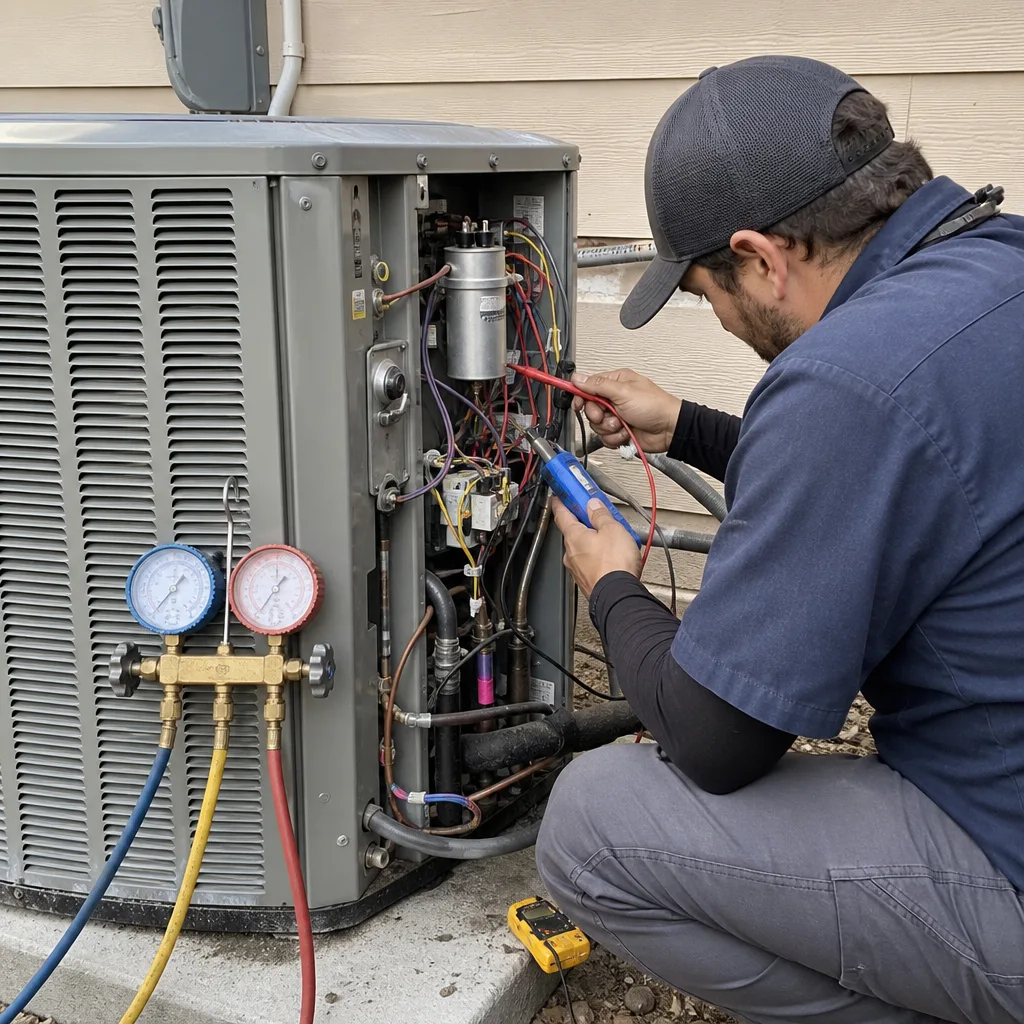
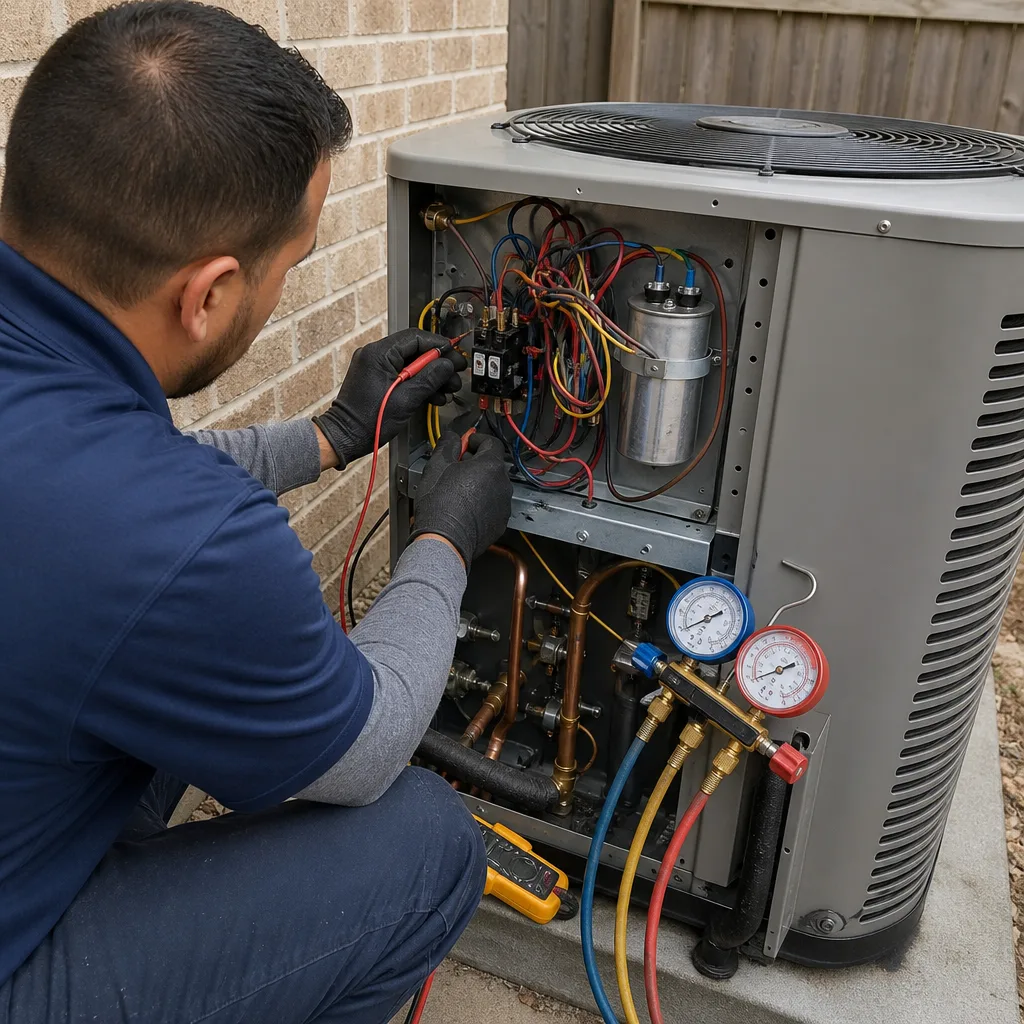
See the difference
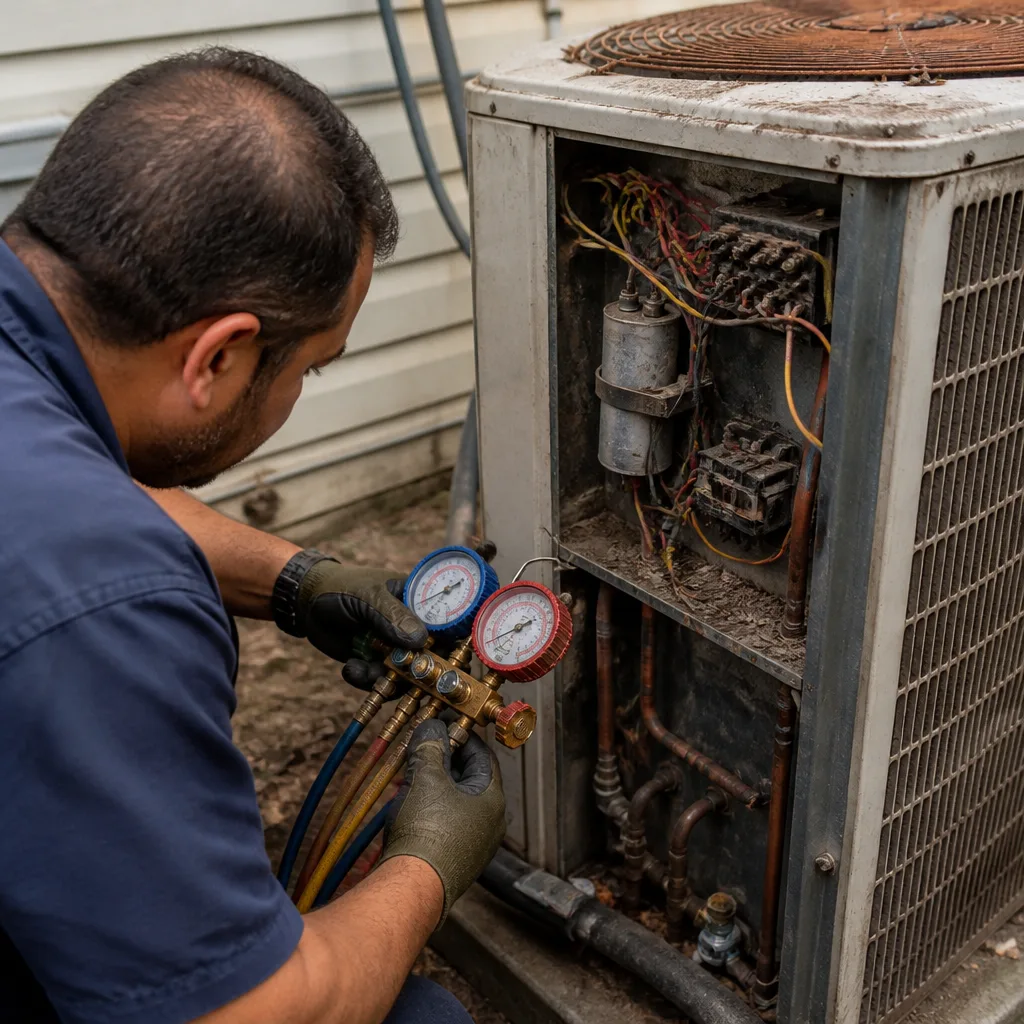 Before
 After
After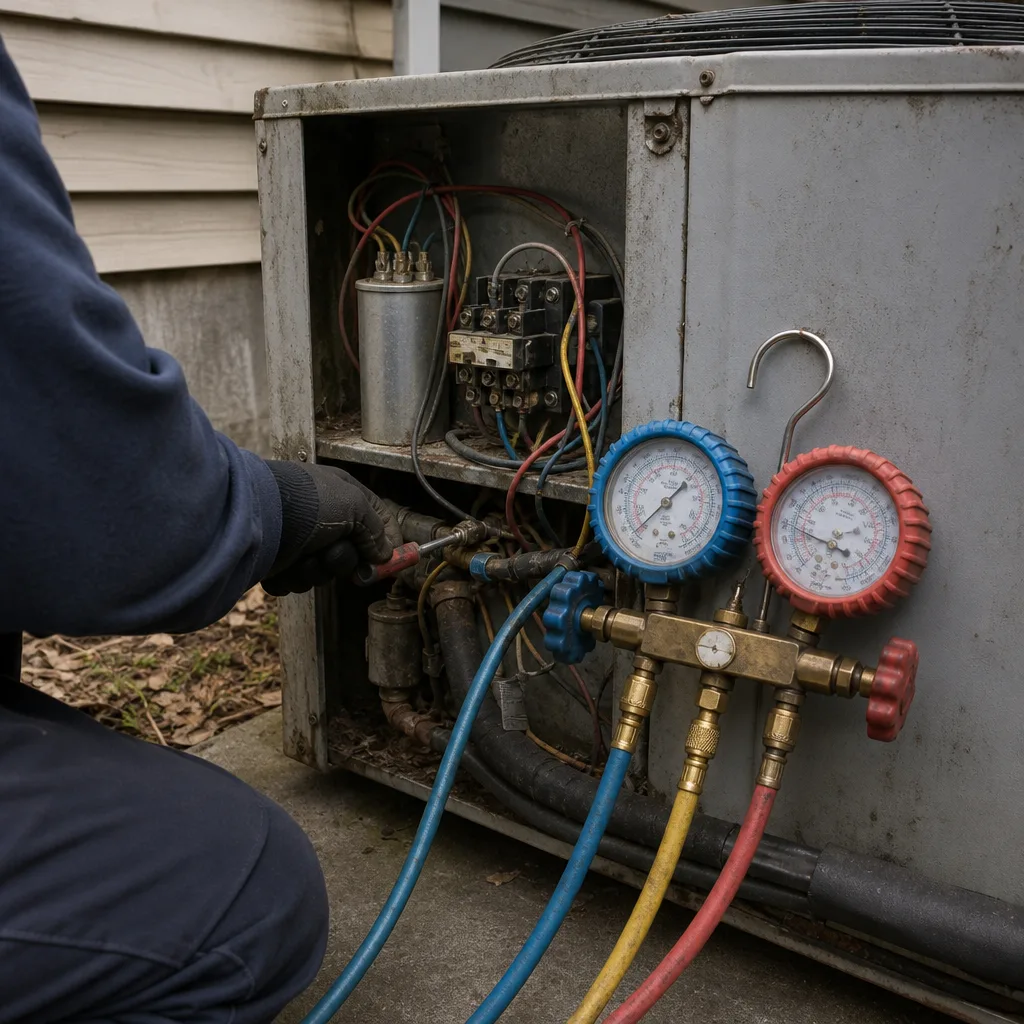 Before
 After
After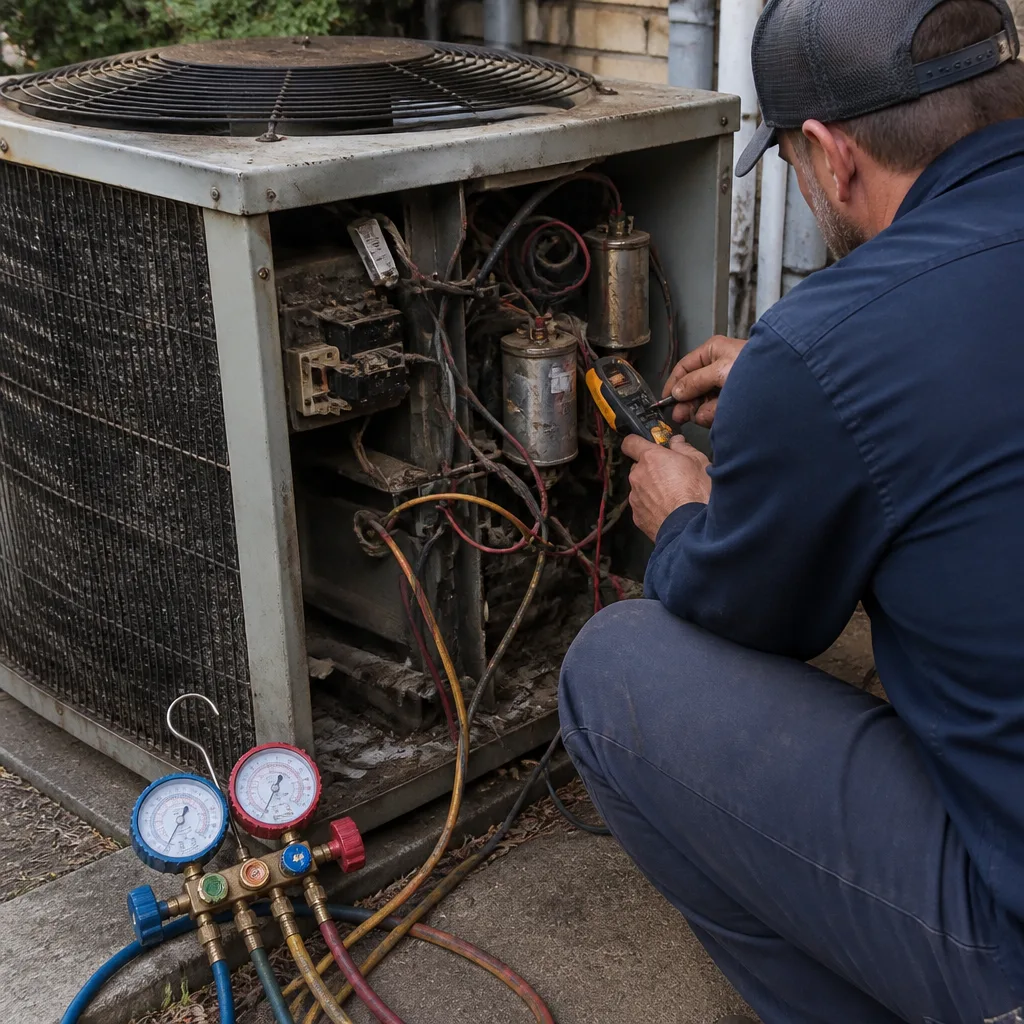 Before
 After
AfterWhen to Call a Professional
Call a technician immediately if you see ice on the indoor coil, smell a recurring electrical odor, hear a grinding sound that doesn’t resolve, or measure humidity above 55% for more than an hour of continuous operation. These are the four symptoms most likely to precede a catastrophic failure, and in Houston’s climate, the window between early symptom and compressor death is often measured in weeks, not months. Less urgent but still worth a call this week: a utility bill spike with no weather change, short cycling under 10 minutes per cycle, or a room that suddenly runs 5°F warmer than the rest of the house. Cold Harbour Heating and Air Houston offers free estimates in Houston. Call (832) 371-9862 and a live person answers, any hour, any day, no voicemail tree.
Frequently Asked Questions
The most commonly missed warning sign is a rising indoor humidity level while the AC is running, because the thermostat still reads a comfortable temperature and the homeowner assumes everything is working. In Houston’s climate, humidity is usually the first measurable sign of a low refrigerant charge or a fouled evaporator coil, and it appears weeks before the system stops cooling properly. Call (832) 371-9862 for a diagnostic if you notice mugginess that wasn’t there before.
A diagnostic visit from a Houston HVAC company typically costs $75 to $120, and many companies apply that fee toward the repair if you proceed. At Cold Harbour Heating and Air Houston, the written price is handed to you before a single tool comes out, and the diagnostic fee is waived when we complete the repair. That’s the Kingswell Way: say the price before the work, show up in the window given, put the guarantee in writing.
Most common repairs, including capacitor replacement, contactor replacement, blower motor swaps, and refrigerant leak repairs, can be completed the same day, and Cold Harbour Heating and Air Houston stocks parts for Carrier, Trane, Lennox, Goodman, Rheem, York, Daikin, Bryant, and American Standard systems. If the repair fails within 365 days, we come back and fix it at no charge, guaranteed in writing.
The answer depends on the age of the system, the cost of the repair, and the SEER rating of the current unit. As a rule of thumb, if your system is under 10 years old and the repair is under $1,000, repair usually makes sense. If the system is over 12 years old and facing a compressor or heat exchanger replacement, the repair often approaches 40 to 50% of the cost of a new, higher-efficiency system. For a no-pressure evaluation with written pricing either way, call (832) 371-9862.
Yes. Our technicians are trained to service nine major residential HVAC brands: Carrier, Trane, Lennox, Goodman, Rheem, York, Daikin, Bryant, and American Standard. If your system was installed by another company, that doesn’t matter; we work on whatever is already in the home, from a 2008 Goodman in Katy to a 2022 American Standard in The Heights. Get an estimate for AC installation in Houston or service on your existing system.
In Houston’s climate, a maintenance plan usually pays for itself. Our systems run 2,500 to 3,500 hours per year, compared to under 1,000 in northern climates, and that accelerated duty cycle means coils foul faster, capacitors degrade faster, and components reach their wear limits sooner. Two service visits per year catch the early signals described in this guide before they become compressor replacements, as detailed in our Seasonal HVAC Care for Houston: Year-Round Homeowner’s Guide.
The Bottom Line
Houston HVAC systems fail in patterns, not randomly, and most failures announce themselves weeks in advance through rising humidity, spiking energy bills, short cycling, and the subtle smells and sounds described in this guide. The homeowner who learns to read those signals is the one who pays $150 for a capacitor instead of $2,400 for a compressor. The homeowner who waits for the system to simply stop is the one who spends the last week of July in a 92°F living room waiting for a replacement unit. Cold Harbour Heating and Air Houston has been serving Houston since 2003, and every repair we make carries the 365-Day Done Right Promise, in writing, before the technician leaves; explore more guides & resources to protect your system year-round. Call (832) 371-9862 for a free estimate, and a live person will answer.
Written by Victor Mancini, Owner at Cold Harbour Heating and Air Houston, serving Houston since 2003.