
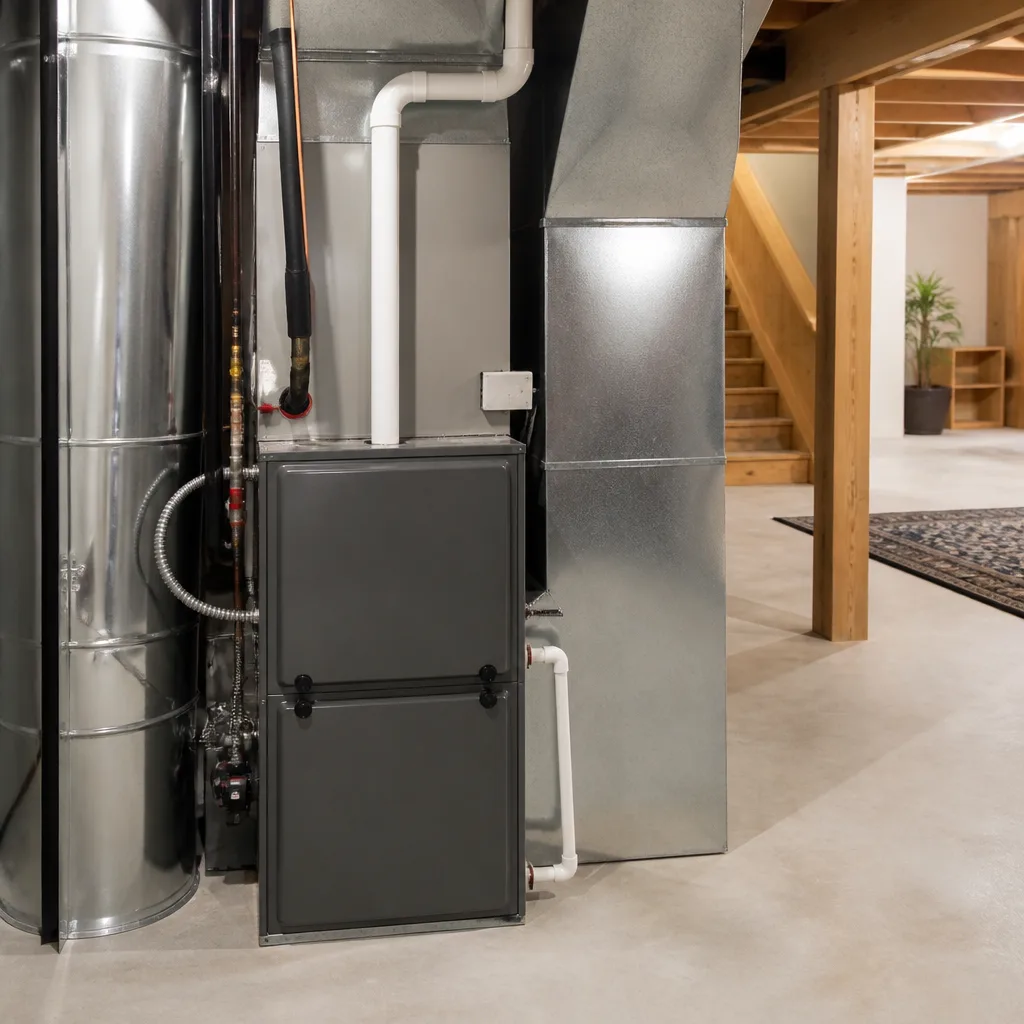
 Furnace & heating
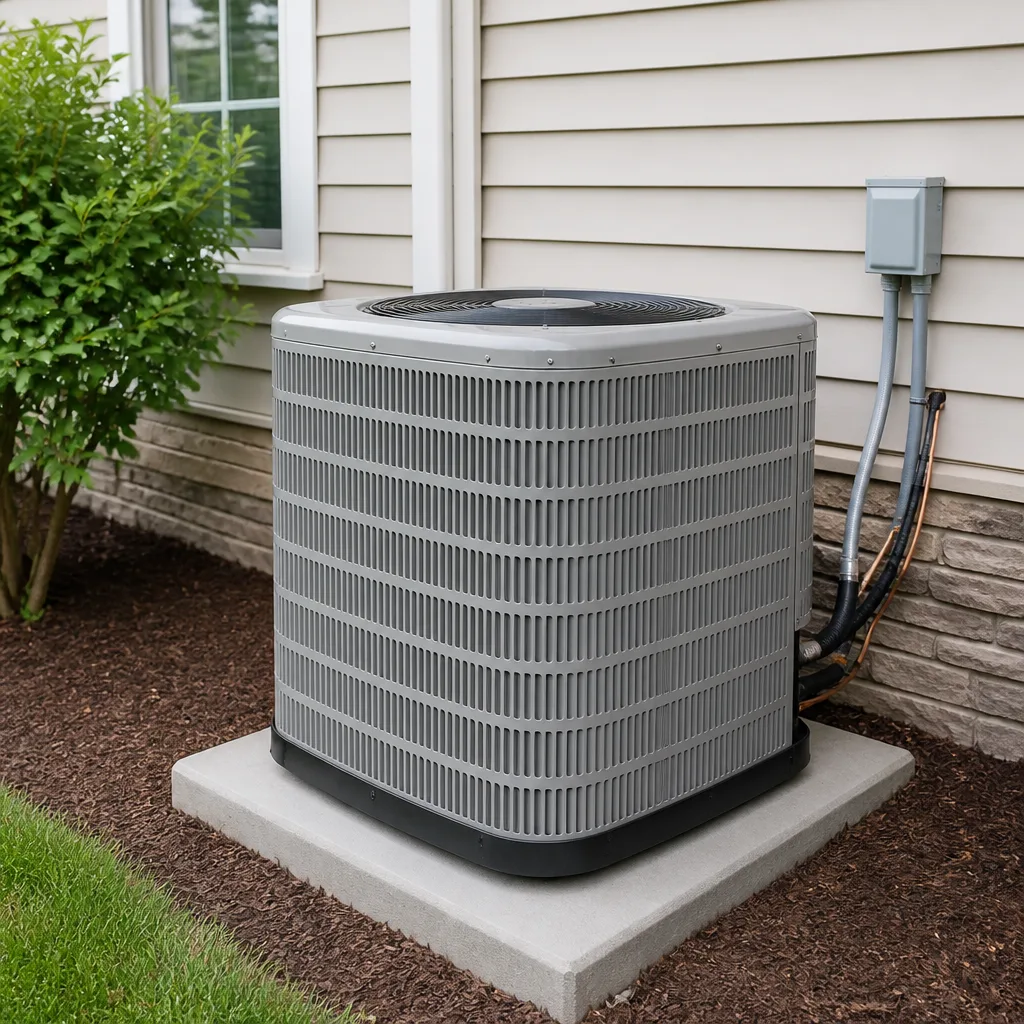 AC repair
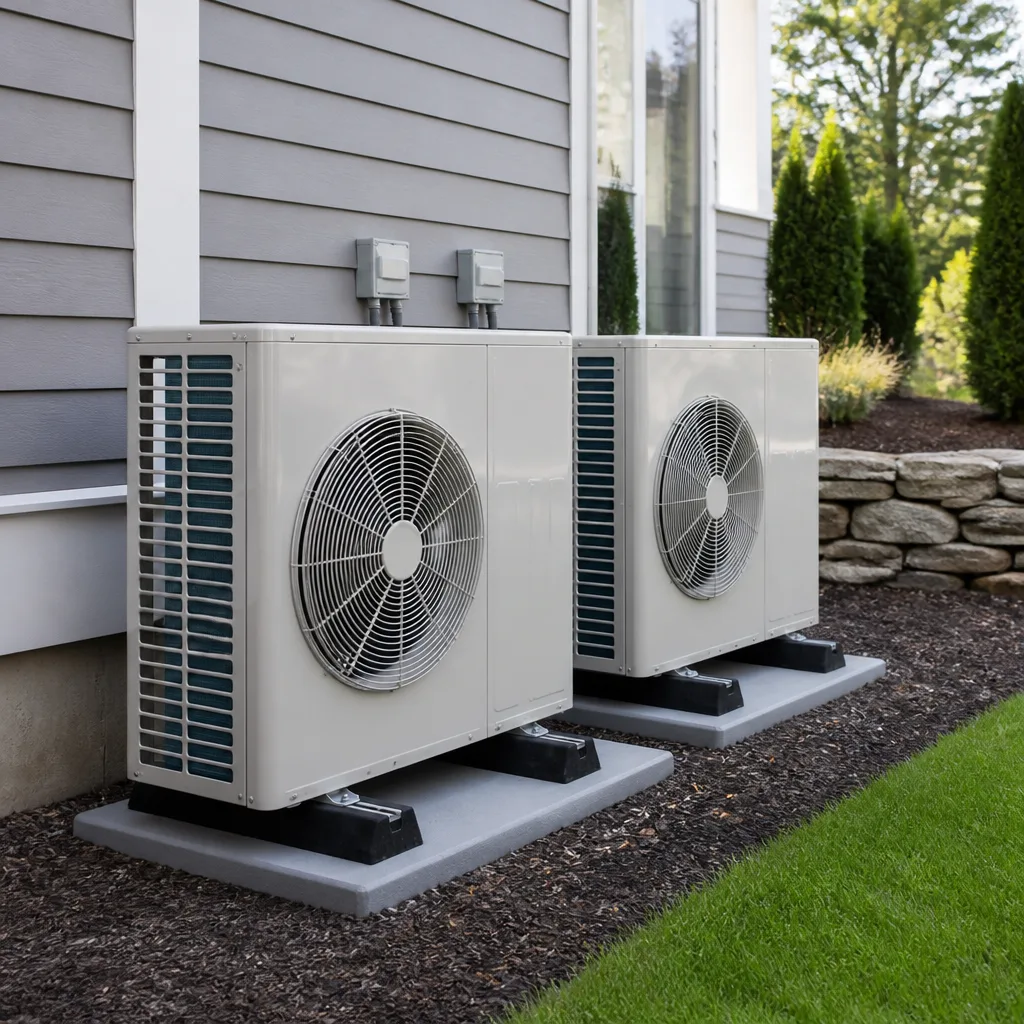 Heat pumps
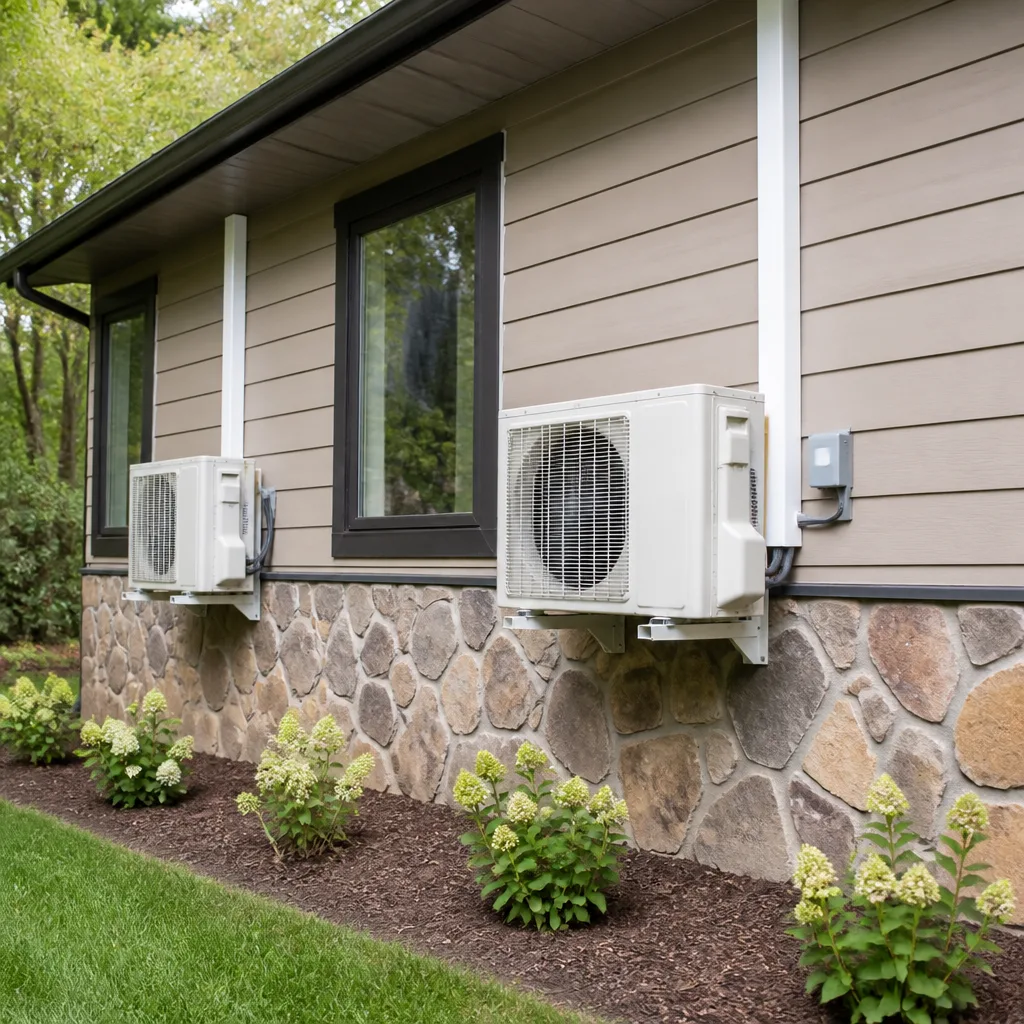 Ductless mini splits
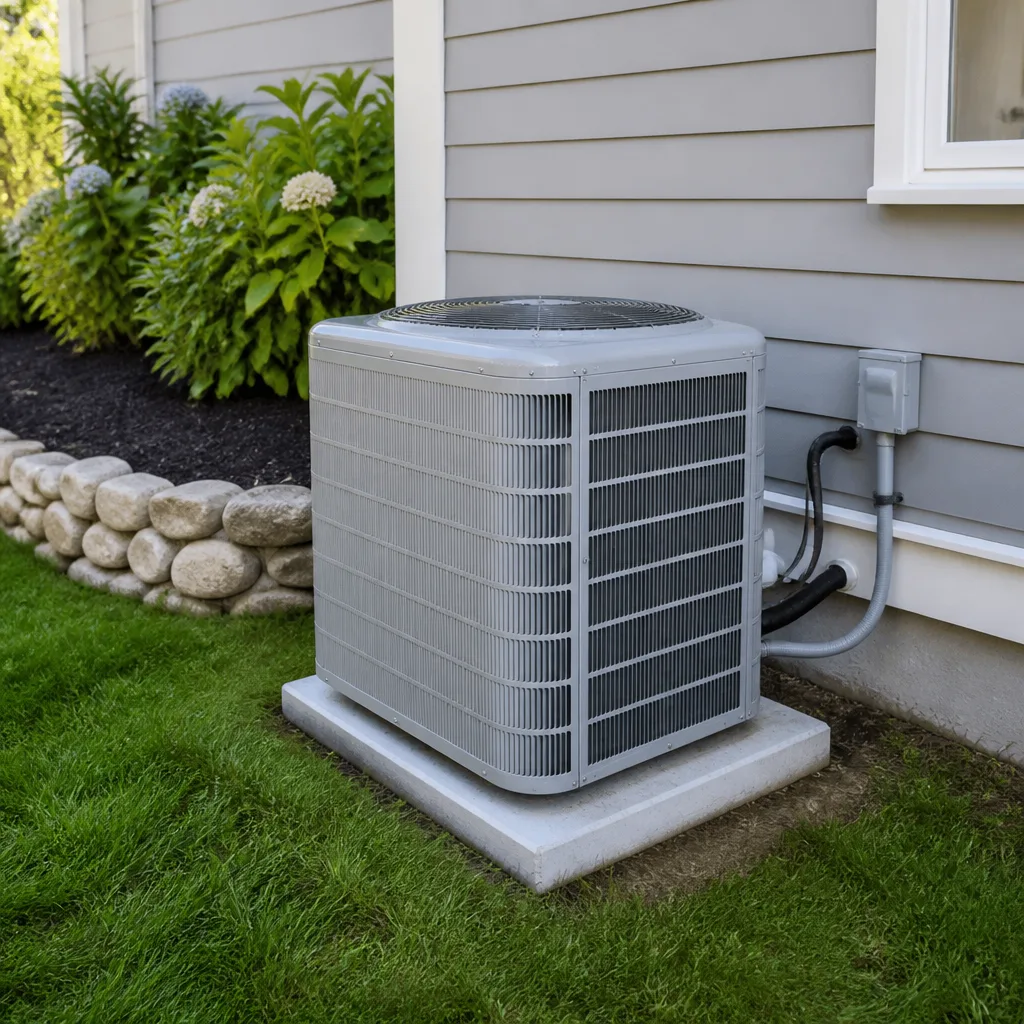 Carrier
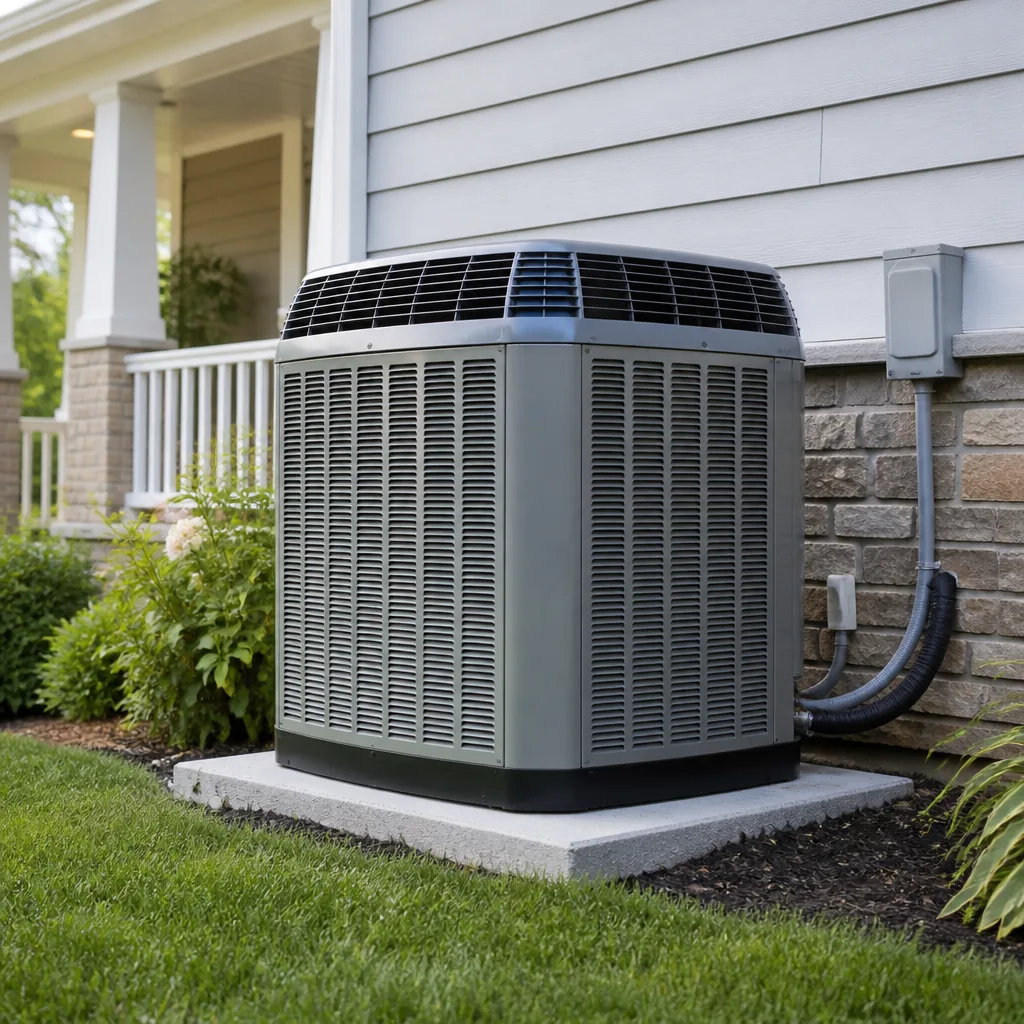 Trane
Trane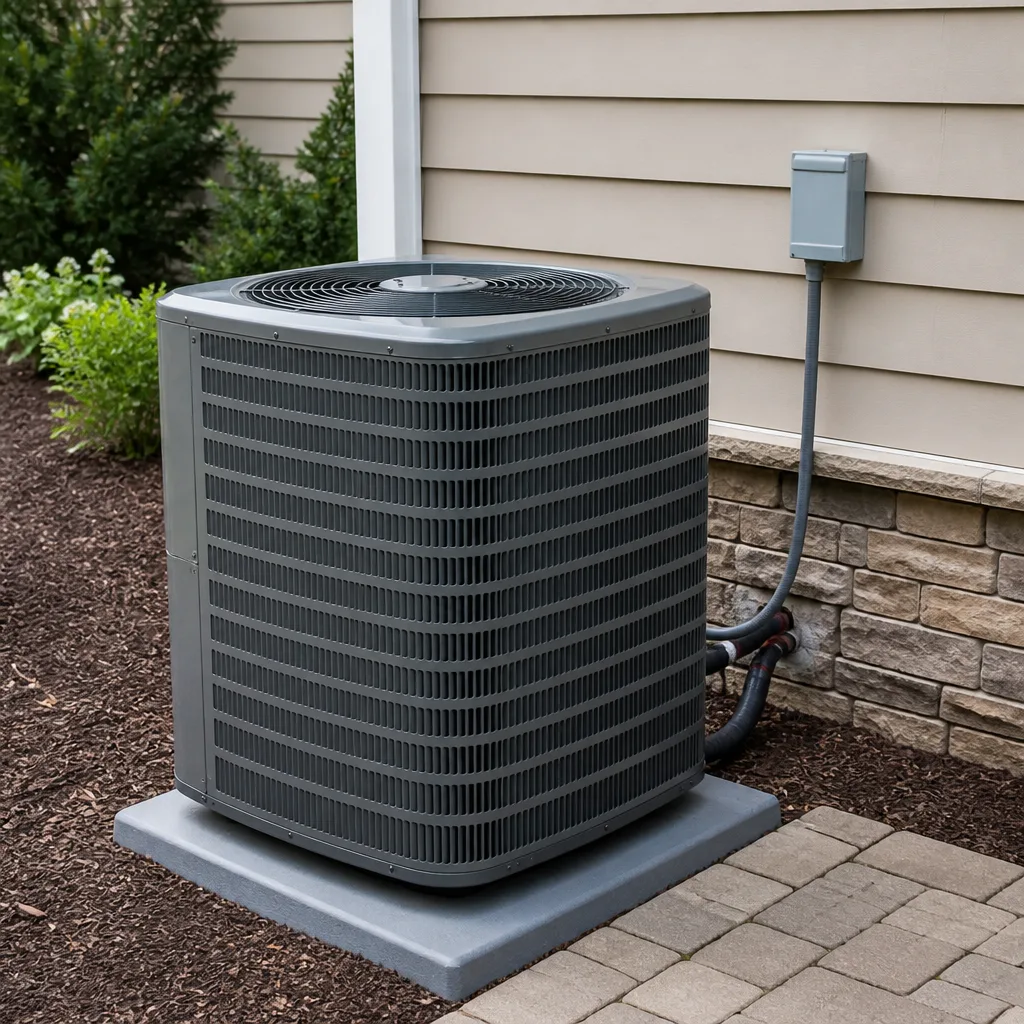 Goodman
Seasonal tune-up and full diagnostic on your Carrier, Trane, or Goodman system - readings shown to you before any repair is proposed
Diagnosis first, numbers second - you approve the repair price before a single part goes in.
Get your free estimateRheem Mini-Split Installation: The Houston Owner’s Guide
We install Rheem mini-split systems throughout the Houston area, with most installations running between $4,200 and $7,800 depending on system size, line-set distance, and whether you’re replacing an existing mini-split or adding a new zone to an older home. We stock Rheem-specific installation kits and line sets on our trucks, so we can typically begin work the same week you call, not three weeks out. Most Houston homeowners realize their mini-split installation is failing when they notice water staining on the drywall near the indoor head unit, a slow loss of cooling in one room, or a compressor that short-cycles on hot afternoons when the outdoor unit sits in direct sun against a west-facing wall. The installation itself, meaning the flares, the line-set routing, the condensate drainage, and the evacuation of the refrigerant lines, is the most common failure point we see, not the Rheem equipment itself.
Here’s what matters before you decide anything: a mini-split is only as good as the installation behind it. That’s true of Rheem, and it’s true of Carrier, Trane, and Lennox too. At Cold Harbour Heating and Air Houston, we come from the Kingswell tradition that says the job starts with a written price and ends with the guarantee on paper. Victor Mancini, our owner and lead technician, will tell you that in Houston the two things that kill mini-split installations faster than anything else are undersized line sets stuffed through hot attics and condensate lines pitched wrong. Both are installation problems, not equipment problems, and both are preventable.
Which Rheem Models This Applies To
Rheem builds mini-splits under several model families, and the installation requirements are not all the same. The most common units we install across Houston are from the Rheem Classic Series, which covers single-zone and multi-zone configurations from 9,000 BTU up to 36,000 BTU per indoor head. You’ll also see the Rheem Pro Series, sold through supply houses rather than big-box stores, which gives you higher SEER ratings, up to 22 or higher, and quieter outdoor units that matter if you sleep near the condenser. The newer Rheem air handler heads have model numbers that start with RPRH or RKMH, and the outdoor condensers start with RPRL or RKL. You’ll find the model number on a white label on the right side of the outdoor unit, printed in black. That number is what tells us the exact line-set size, the required breaker amperage, and whether you have a heat pump or cooling-only system.
One compatibility point Houston homeowners miss constantly: Rheem mini-splits use flare connections at both the indoor and outdoor ends, and those flares are factory-made. When a flare is over-tightened or re-used from an old unit, it will develop a slow refrigerant leak within 18 to 24 months, especially through Houston’s summer heat cycles where the copper expands and contracts daily against a 100-degree attic. We always cut new flares with an eccentric flaring tool, and we torque them to spec with a torque wrench, not by feel. Another gotcha is line-set sizing: a 12,000 BTU Rheem head needs a 1/4-inch liquid line and 3/8-inch suction line, but a 24,000 BTU head jumps to 3/8-inch on the liquid side. Some installers run one size for everything, and the unit never cools right. We’ll match the line set to the model plate, every time.
One more thing in the interest of honesty: Cold Harbour Heating and Air Houston is an independent service provider. We are not a Rheem factory affiliate, and we don’t pretend to be. What we are is a crew that has installed and serviced Rheem mini-splits across Greater Houston for years, and we stock the installation parts those jobs actually require on our trucks: insulated line sets, flare nuts, condensate pumps for interior-wall heads, wall brackets, and R-410A refrigerant for charging after evacuation.
Styles & brands we work with
Signs Your Rheem Mini-Split Installation Is Failing
- Water dripping from the indoor head or staining the wall below it. This is almost always a condensate drain problem: the drain line is pitched wrong, has no trap, or the pump has failed. In Houston’s humidity, a mini-split can pull several gallons of water out of the air per day, so a bad drain shows itself quickly.
- The room cools, but never gets cold. This points to low refrigerant charge, usually from a slow leak at a flare connection or a rub-through point where the line set passes through a wall or cabinet edge. If the charge is low, the leak has to be found before any refrigerant goes back in.
- The outdoor unit short-cycles: it starts, runs a few minutes, and shuts off. On Rheem units this is frequently an airflow or overcharge issue. We also see it when the line set is undersized for the run, which forces the compressor to work against a pressure drop it was never designed for. Victor’s usual starting point is to ask, “Tell me what the system is doing, and I’ll tell you exactly what it needs.”
- A hissing or bubbling sound at the flare nuts. That’s refrigerant escaping. There is no safe way to tighten a leaking flare under pressure and call it fixed. The refrigerant has to be recovered, the flare re-made, the system evacuated with a vacuum pump, and only then recharged to the ounce.
- The head unit drips condensation inside the plastic casing. This usually means the drain pan inside the head is cracked or the unit is not level on its wall bracket. If the head is off-level by more than an eighth of an inch, water pools where it shouldn’t, and Houston’s summer humidity will find every weak point in a poorly hung head.
Replacement Cost & What’s Included
In Houston, a full Rheem mini-split installation on an existing or new wall mount typically runs from $4,200 to $7,800, and the range comes down to a few honest factors: the number of indoor heads, the BTU size, how far the line set has to travel from the outdoor unit to the indoor unit, and whether or not we’re dealing with an older Houston home with a slab foundation that limits line-set routing options. A single-zone 12,000 BTU install in a garage conversion or a sunroom will sit near the bottom of that range. A multi-zone system with two or three heads, or a line set that has to run through a hot attic with a condensate pump, will push toward the top. You’ll get the written price before we start, not after we open the wall.
Every installation we do in Houston includes the wall bracket or ground stand, the line set, the electrical disconnect and whip, the condensate drain, a nitrogen purge during brazing or flare connection, a proper deep vacuum, and the refrigerant charge weighed to the Rheem specification. What’s not included: surprises. If we find an electrical panel that can’t handle the new breaker, we’ll photograph it, show you what’s needed, and price that addition before we touch it. The price we hand you is the price on the invoice, full stop. That’s the Kingswell Way, and it’s non-negotiable in our shop.
See the difference
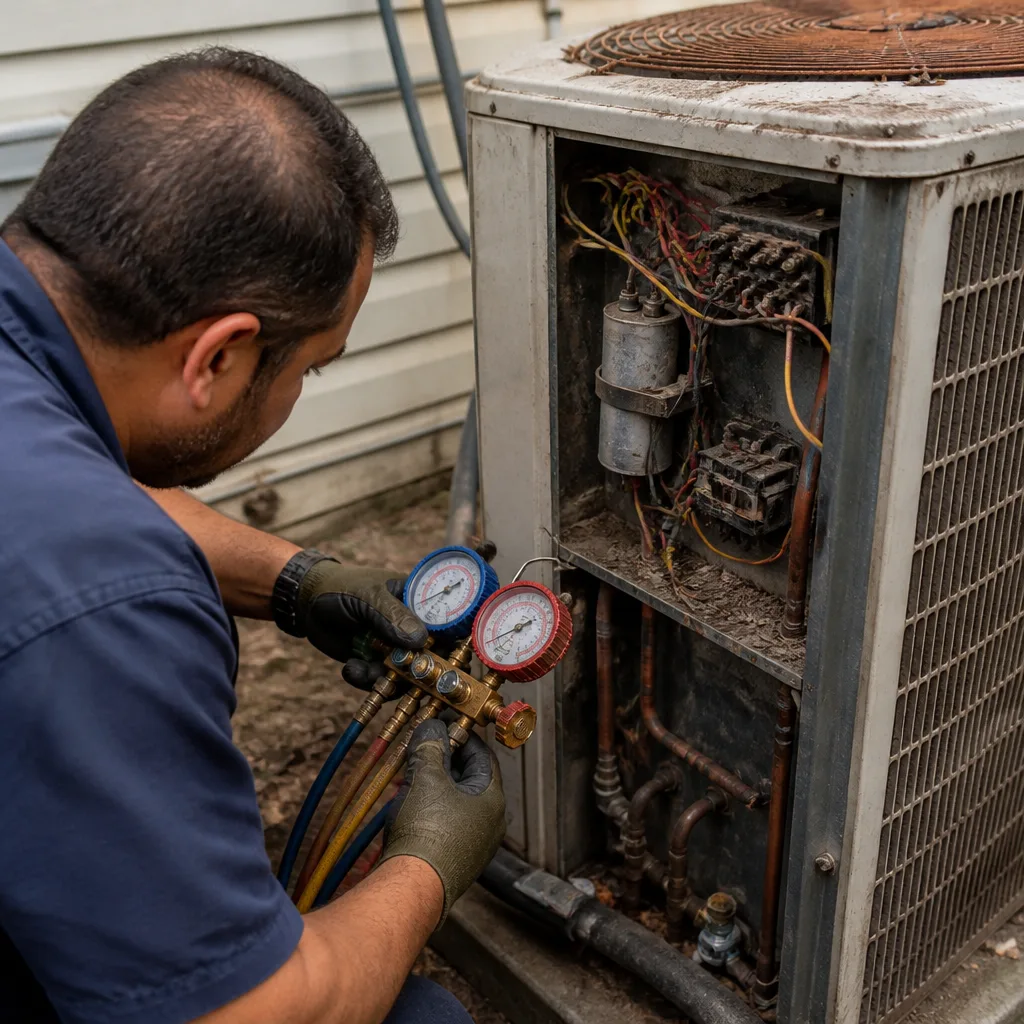 Before
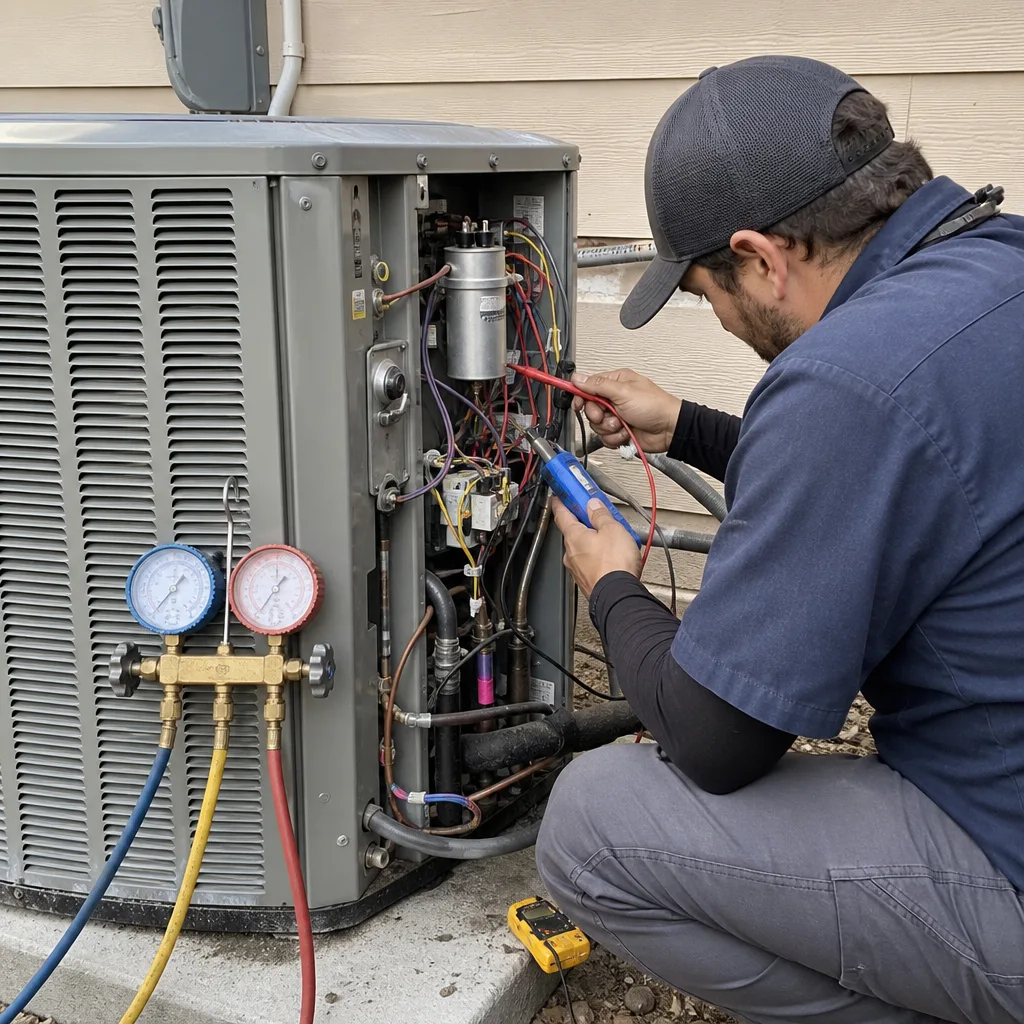 After
After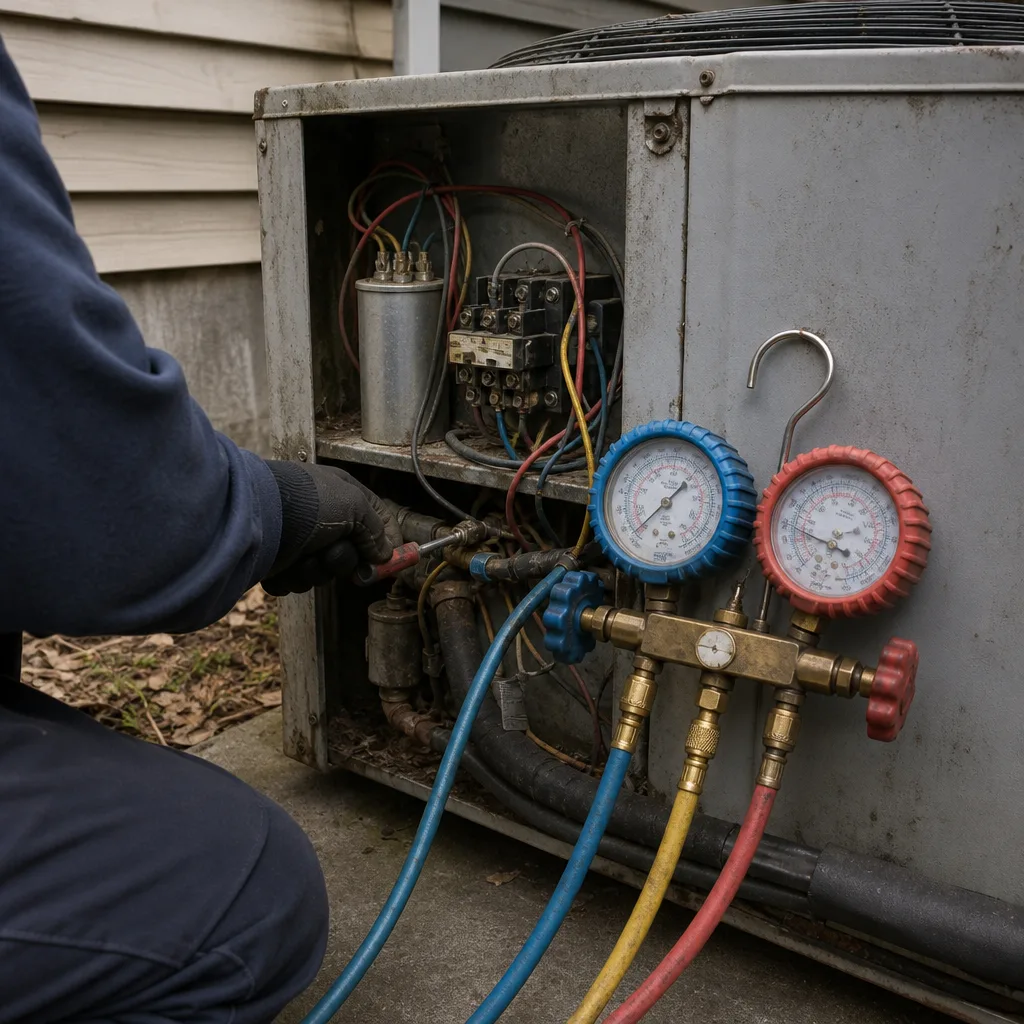 Before
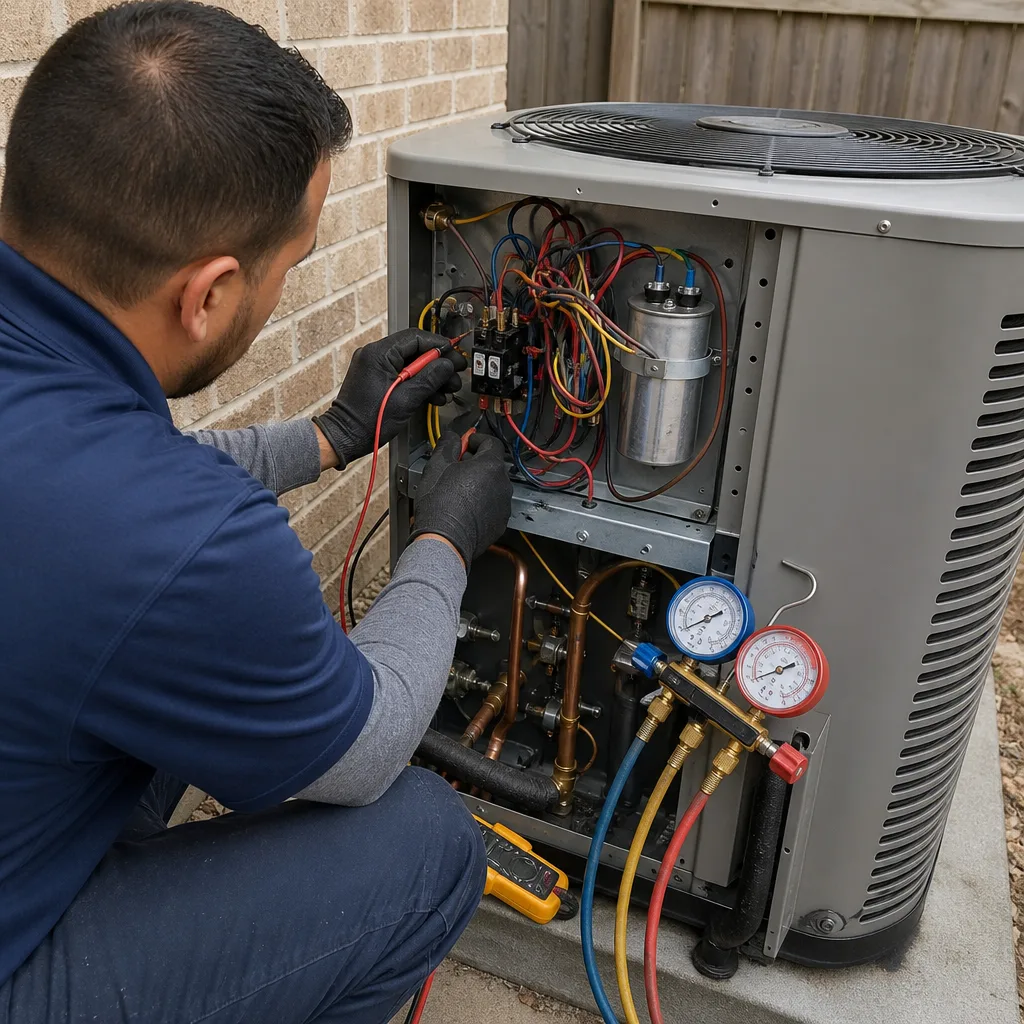 After
After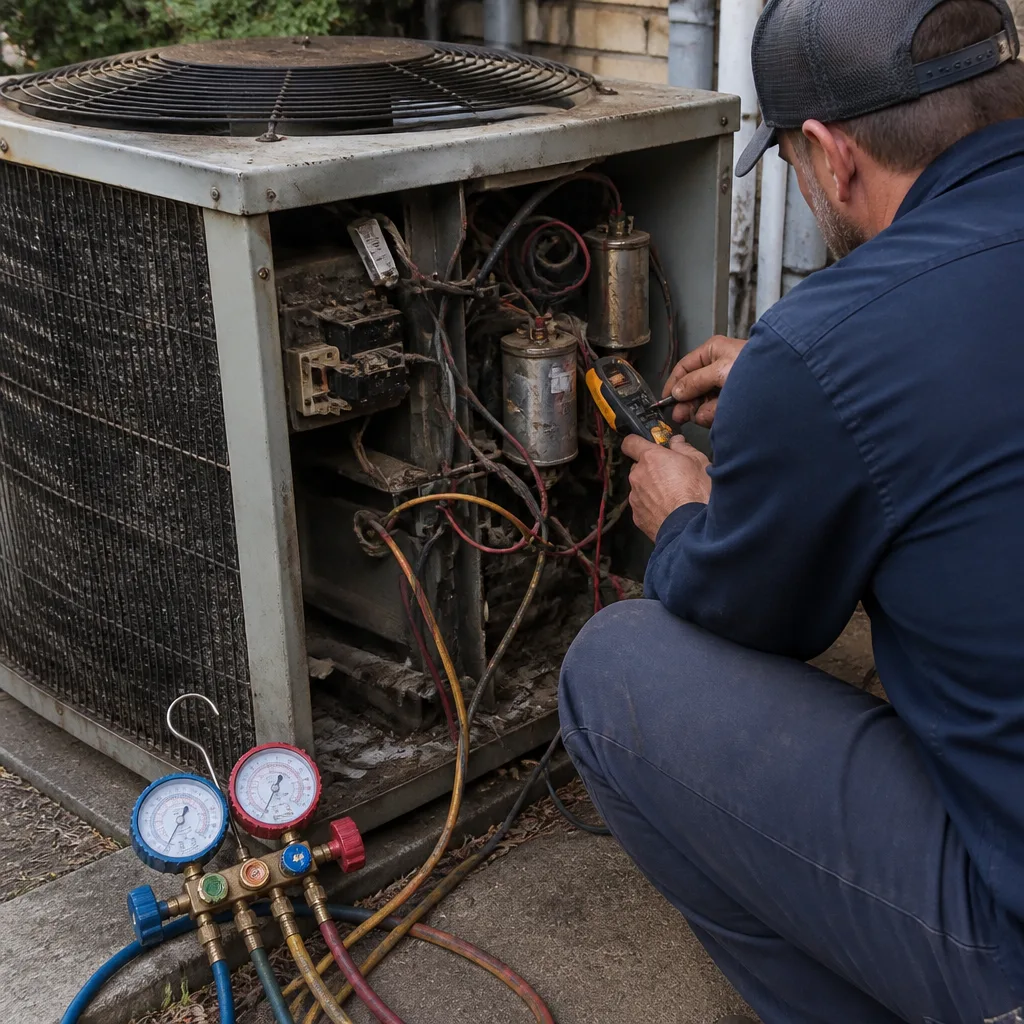 Before
 After
AfterDIY or Call Us?
There’s one thing you can safely check yourself: the air filter behind the front panel of the indoor head. A clogged filter will cause short-cycling and weak cooling, and it costs nothing to clean. You can also check that the outdoor coil isn’t blocked by leaves, cottonwood, or grass clippings. Everything after that, please don’t. Mini-split installation involves high-voltage electrical work, pressurized refrigerant lines, and a vacuum process that requires gauges and a micron gauge. If the line set is not evacuated properly before refrigerant is added, moisture in the lines will react with the compressor oil and form acid, and that acid eats the compressor from the inside out. We’ve replaced compressor units in Houston that failed within two years because someone skipped the vacuum step. There is no shortcut here that doesn’t shorten the life of the equipment.
If you’re standing in a hot room looking at a Rheem head that should be cooling and isn’t, call (832) 371-9862 and talk to a live person. We answer the phone around the clock, every day of the year, and we’ll tell you honestly over the phone whether it sounds like a simple fix or a re-install. The estimate is free.
FAQs
A properly installed Rheem mini-split in Houston should run 12 to 18 years with basic maintenance, with the caveat that our Gulf Coast humidity and salt air in coastal suburbs like Clear Lake or League City can age an outdoor unit several years faster than the national average. The installation work itself, meaning the flares, line set, and drain, should never be the thing that fails, and if we install it, it’s covered by our 365-Day Done Right Promise: if something on our installation fails inside a year, we come back and correct it at no charge, in writing before we leave.
Most of the time, yes, it can be repaired without replacing the Rheem equipment. A leaking flare can be re-made, a bad condensate drain can be re-pitched, and an undersized line set can be replaced without touching the indoor head or outdoor condenser. The only time we recommend a full re-installation is when the original work was so compromised, improperly sized line sets, no vacuum pulled, wiring not to code, that piecemeal fixes would leave you with a system that still underperforms. A repair visit on a mini-split installation typically runs $150 to $650 in Houston, and we’ll show you the problem before we fix it. Call (832) 371-9862 for an exact quote.
A single-zone installation on a standard exterior wall in Houston usually takes one full day from start to finish. A multi-zone system with two or three heads, or a job that requires running line sets through a hot attic with a condensate pump, may take a day and a half. We’ll give you a firm arrival window and a finish estimate before we schedule, and the crew will leave the area cleaner than they found it, including any drywall dust from the line-set penetration.
Our trucks carry the installation components we use most often on Rheem jobs in Houston: insulated copper line sets in 1/4-inch, 3/8-inch, and 1/2-inch sizes, flare nuts, wall brackets, condensate pumps, electrical whips and disconnects, and R-410A refrigerant. If your job needs a specific condenser or air handler, we’ll source it through our local supply houses, and we’ll give you a clear delivery timeline before you pay a deposit, not after.
Call for a Free Rheem Mini-Split Installation Estimate in Houston
If you have a Rheem mini-split that’s not doing its job, or you’re planning a new install in a room that’s never cooled right, call us at (832) 371-9862. A live person answers, day or night, and we’ll schedule a diagnostic or an estimate appointment at a time that works for you. You’ll get a written price before any work starts, you’ll see the problem with your own eyes, and if we can’t fix it, we’ll tell you that too. That’s how we’ve done it since 2003, and it’s the only way Victor Mancini and the Cold Harbour crew know how to work.
Written by Victor Mancini, Owner & Lead HVAC Technician, Cold Harbour Heating and Air Houston at Cold Harbour Heating and Air Houston, serving Houston and nearby areas.