
 Furnace & heating
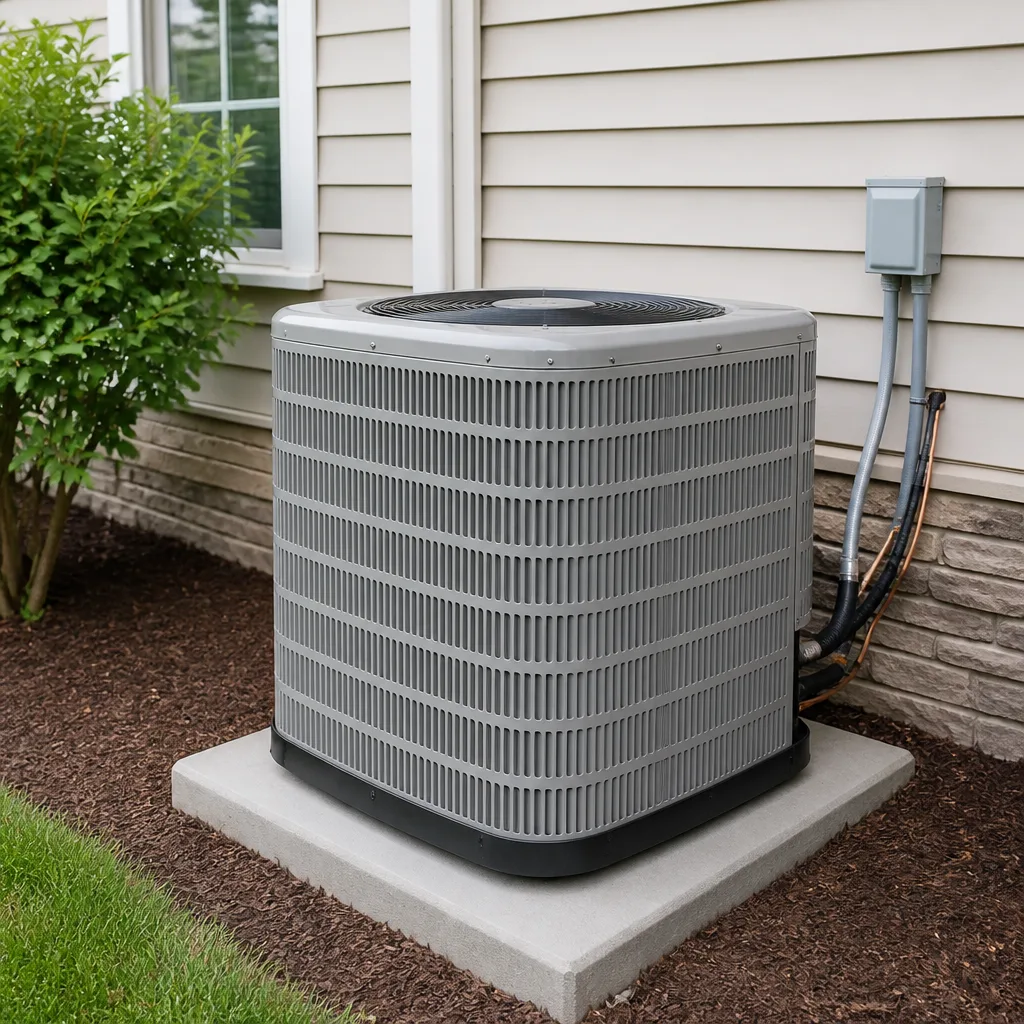 AC repair
 Heat pumps
 Ductless mini splits
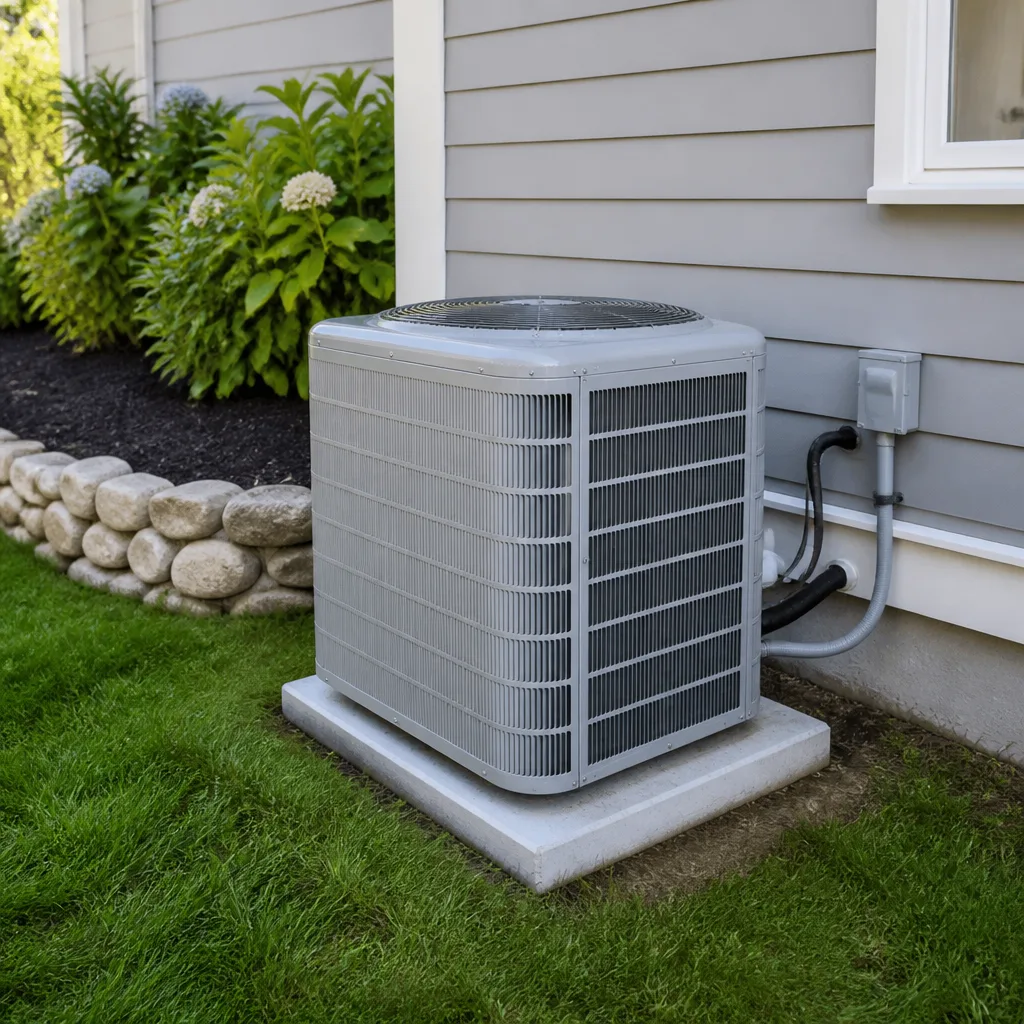 Carrier
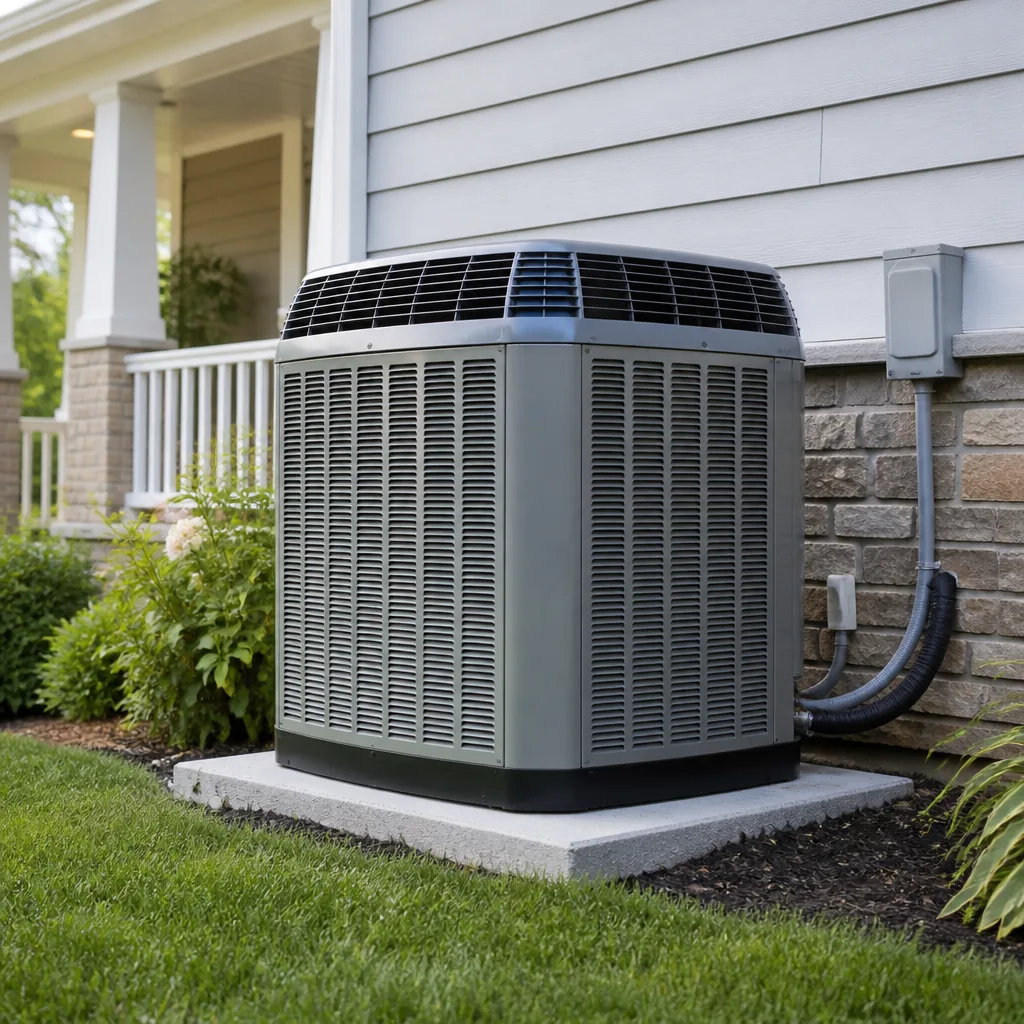 Trane
Trane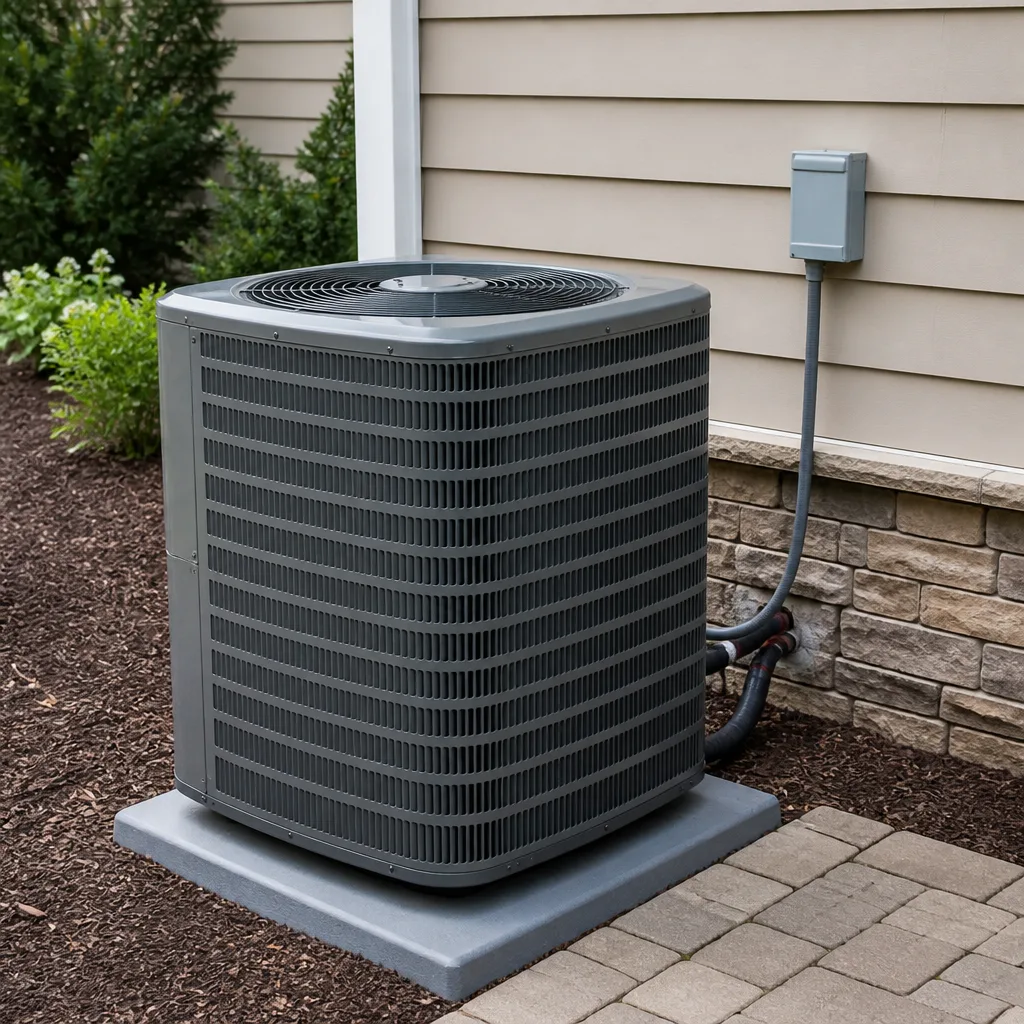 Goodman
Seasonal tune-up and full diagnostic on your Carrier, Trane, or Goodman system - readings shown to you before any repair is proposed
Diagnosis first, numbers second - you approve the repair price before a single part goes in.
Get your free estimateGoodman Capacitor Replacement: The Houston Owner’s Guide
We stock and install Goodman-compatible capacitors across Houston, and most replacements run $120 – $260 installed, depending on the capacitor’s specs and your system’s location. If your Goodman condenser is humming but the fan won’t spin, or the compressor clicks and quits after a few seconds, you’re almost certainly looking at a failed capacitor, and we can usually have it swapped the same day you call. The most common discovery path is a Houston afternoon when the thermostat says 76 but the air coming out of the vents feels like a sigh instead of a breeze.
Capacitors are the single most common electrical failure on Goodman systems in this climate. The heat and humidity in places like Katy, Pearland, and Cypress punish these small cylindrical components harder than the manufacturer’s average lifespan estimate, which is why we keep a range of Goodman-spec capacitors on our trucks when we roll out to service calls.
Which Goodman Models This Applies To
Goodman’s residential line spans the GSX, GSZ, GSX13/14/16, GSZ14/16/18, and the newer Amana-distinct SSX and ASX series (Amana is Goodman’s sister brand under Daikin). The capacitor requirements differ by model, tonnage, and whether we’re talking about the compressor start/run capacitor or the fan motor capacitor. A GSX14 3-ton unit uses different microfarad (μF) ratings than a GSX16 4-ton, and swapping in a capacitor with the wrong μF rating is one of the fastest ways to burn out a compressor motor.
Here’s the compatibility gotcha most homeowners don’t know: the capacitor itself has a label printed with two numbers, like 45/5 μF and 370 or 440 VAC. The first number is for the compressor circuit, the second for the fan. The voltage rating is a minimum, not a target. A 440 VAC capacitor can replace a 370 VAC unit, but never go lower than the original spec. When we replace a Goodman capacitor, we match the μF ratings exactly and use a 440 VAC rating in almost every case because Houston’s grid heat and voltage fluctuations are unforgiving. For OEM vs aftermarket: Goodman’s factory capacitors are made by a handful of suppliers, and quality aftermarket equivalents from AmRad, Titan HD, and Packard routinely outlast the originals. We install what fits your model correctly, and we’ll show you the old part and the new part side by side before we make the swap.
Styles & brands we work with
Signs Your Goodman Capacitor Replacement Is Failing
- Humming condenser, no fan rotation. The compressor or fan motor is trying to start but can’t overcome the locked rotor torque without the electrical jolt the capacitor provides. This is the classic failure signature, and it means the capacitor is dead or badly weakened.
- Compressor starts, runs 5-10 seconds, shuts off. The capacitor can’t sustain the motor through its run cycle. You’ll hear a click, a brief buzz, then silence. This short-cycling behavior also overheats the compressor, so don’t let it ride.
- AC runs but air feels warm. The compressor may be running on the start winding alone, drawing high amperage and delivering weak cooling. This quietly racks up your energy bill while doing almost nothing for comfort.
- Visible bulging or leaking from the capacitor casing. If you open the condenser panel and the capacitor looks swollen, split, or has oily residue around the terminal, it has failed. This is a replace-not-repair situation, and it’s one of the few checks a homeowner can safely do with the power fully off.
- Intermittent starting, especially on hot afternoons. Capacitors don’t always fail all at once. A weakening capacitor may start the motor on a mild morning and fail at 4 p.m. when the attic heat and system load peak. If you’re having “sometimes it works” problems in Houston’s June-through-September stretch, a capacitor on its way out is a prime suspect.
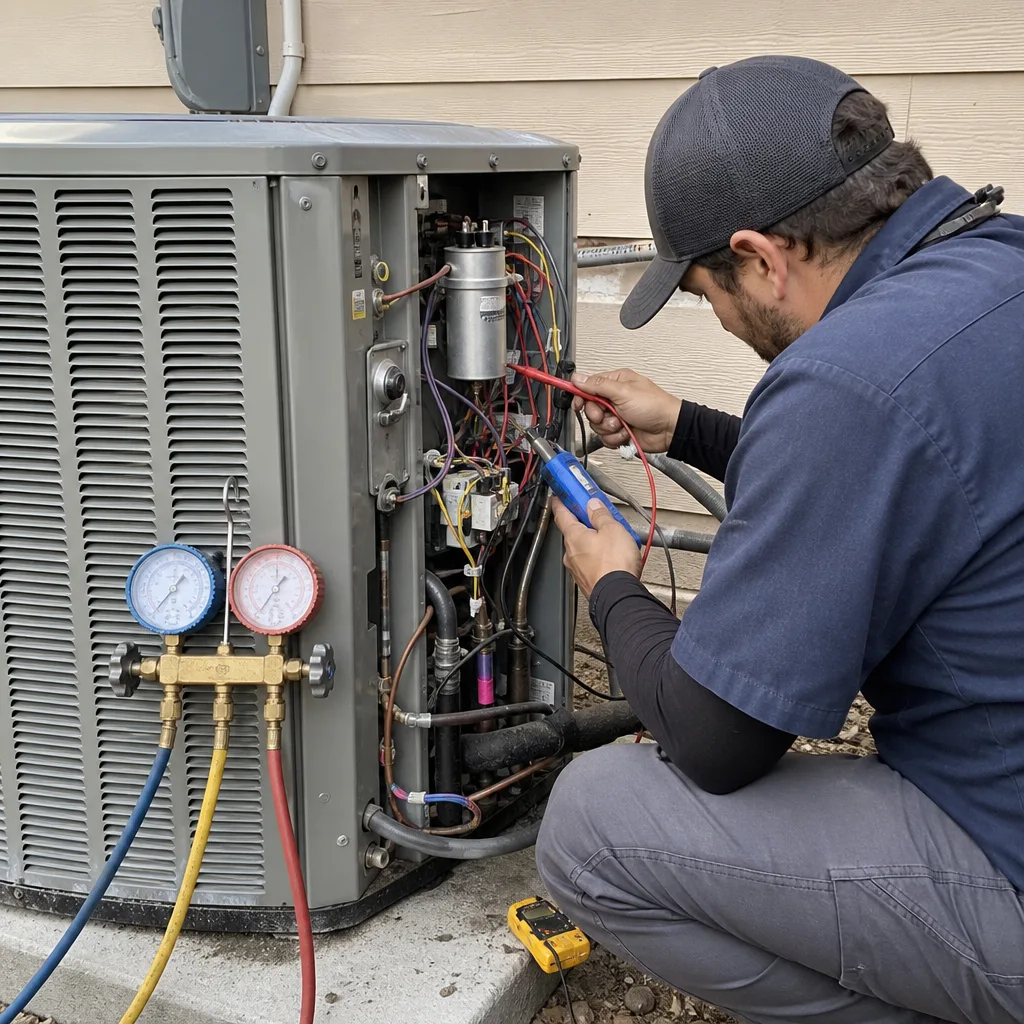
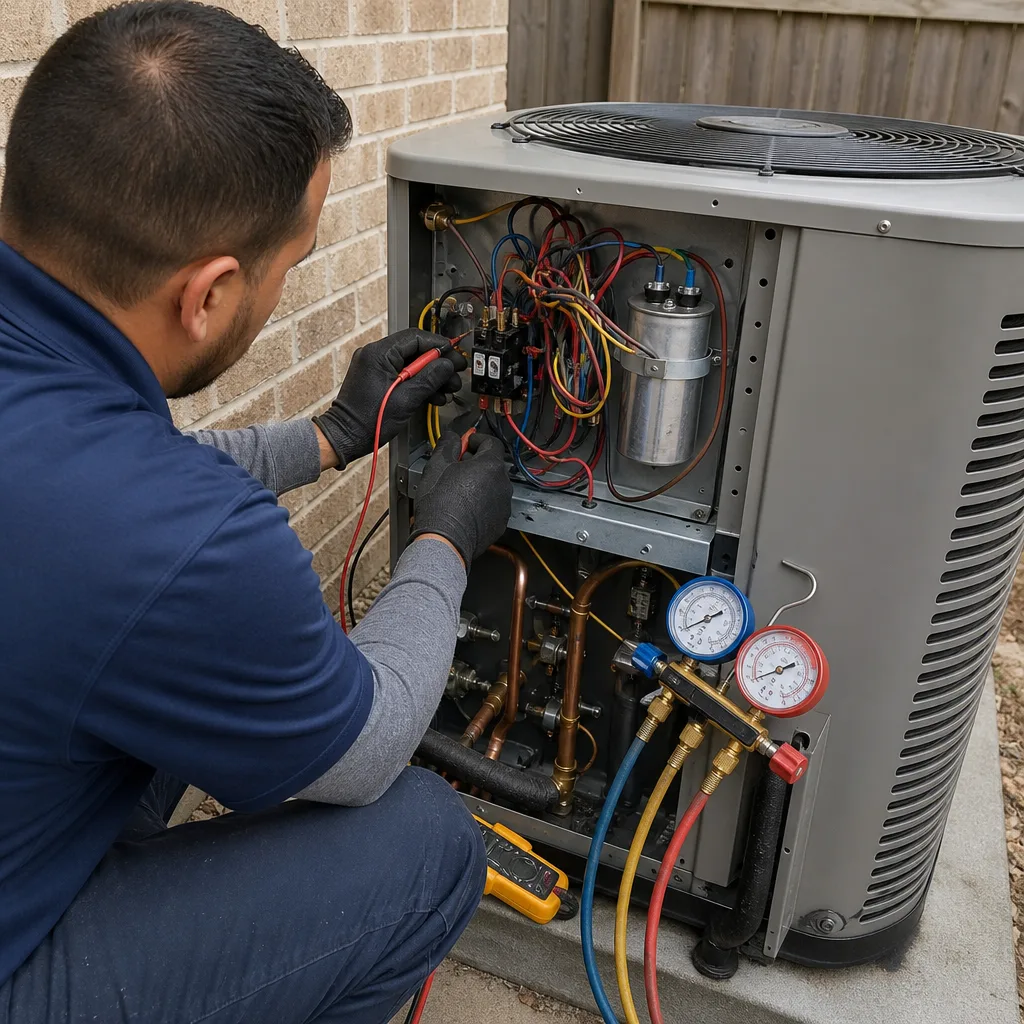
See the difference
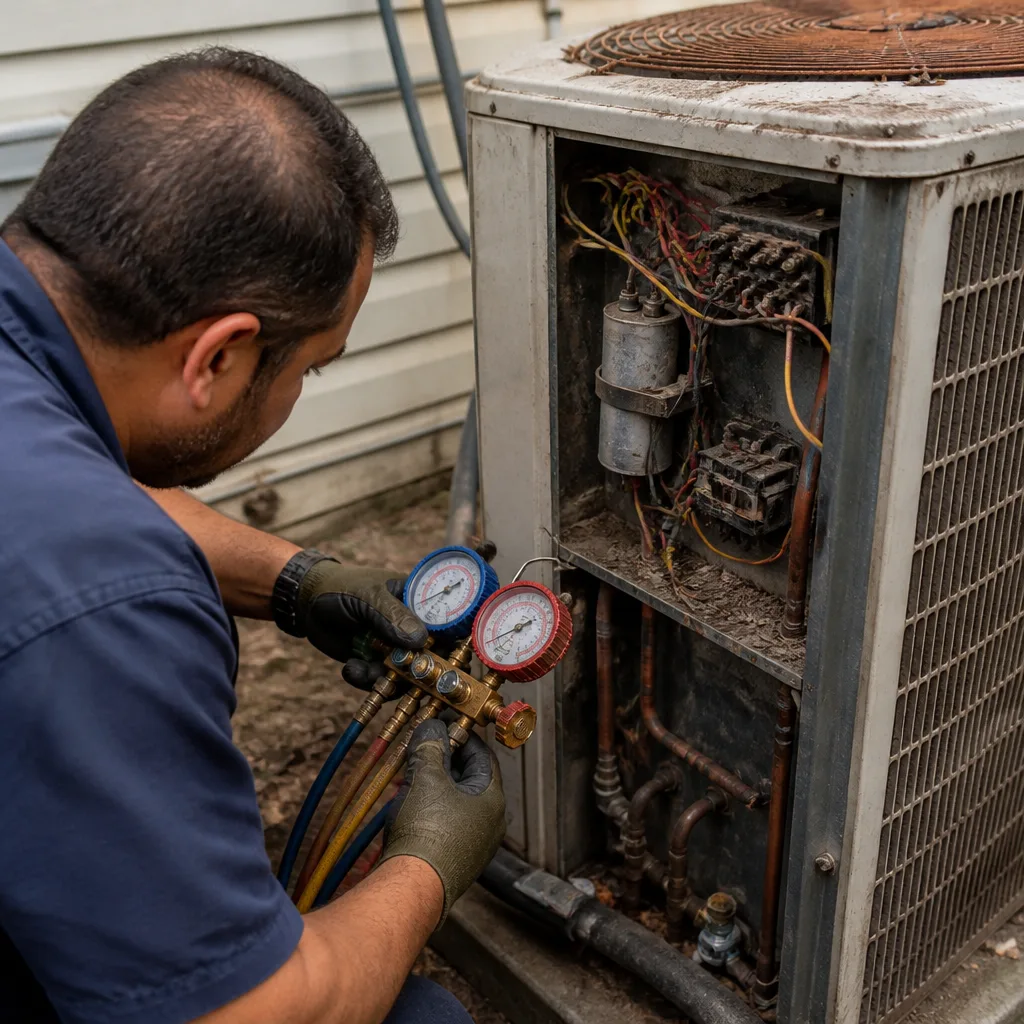 Before
 After
After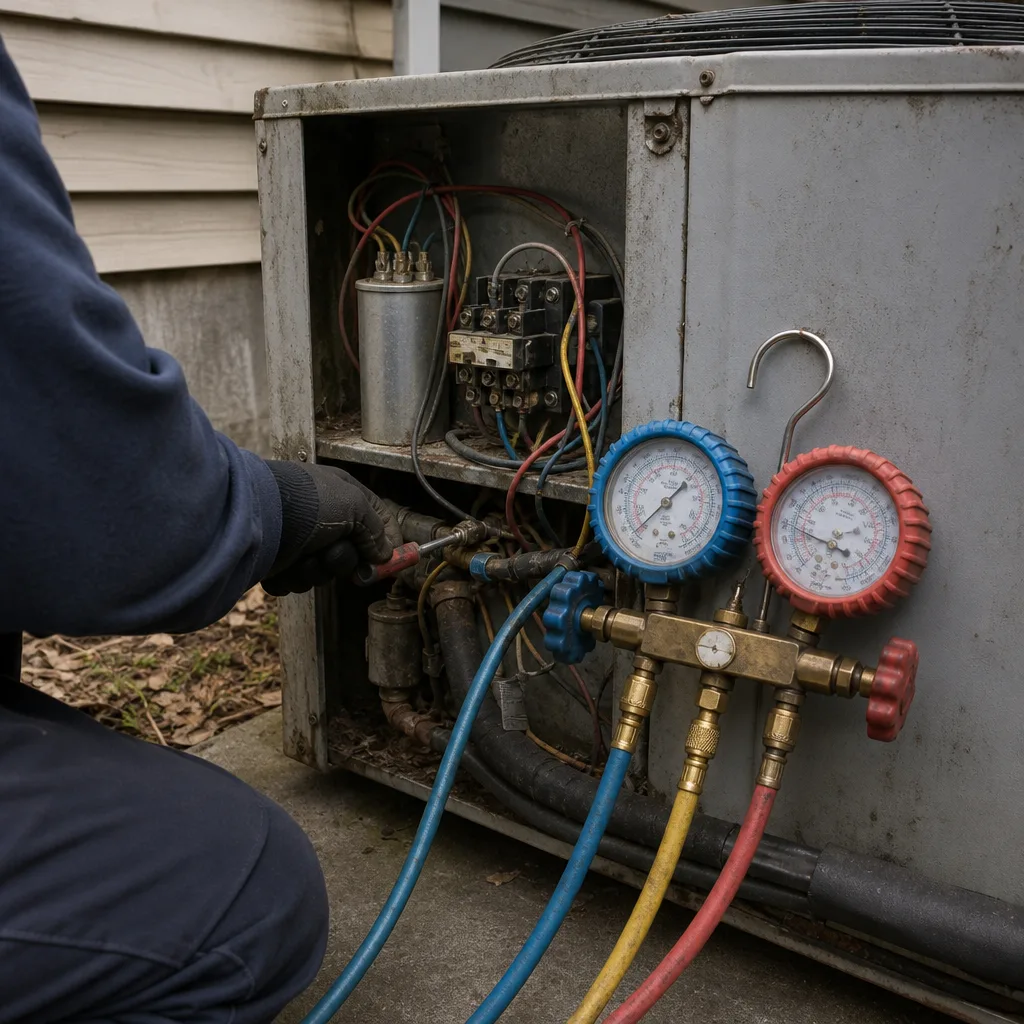 Before
 After
After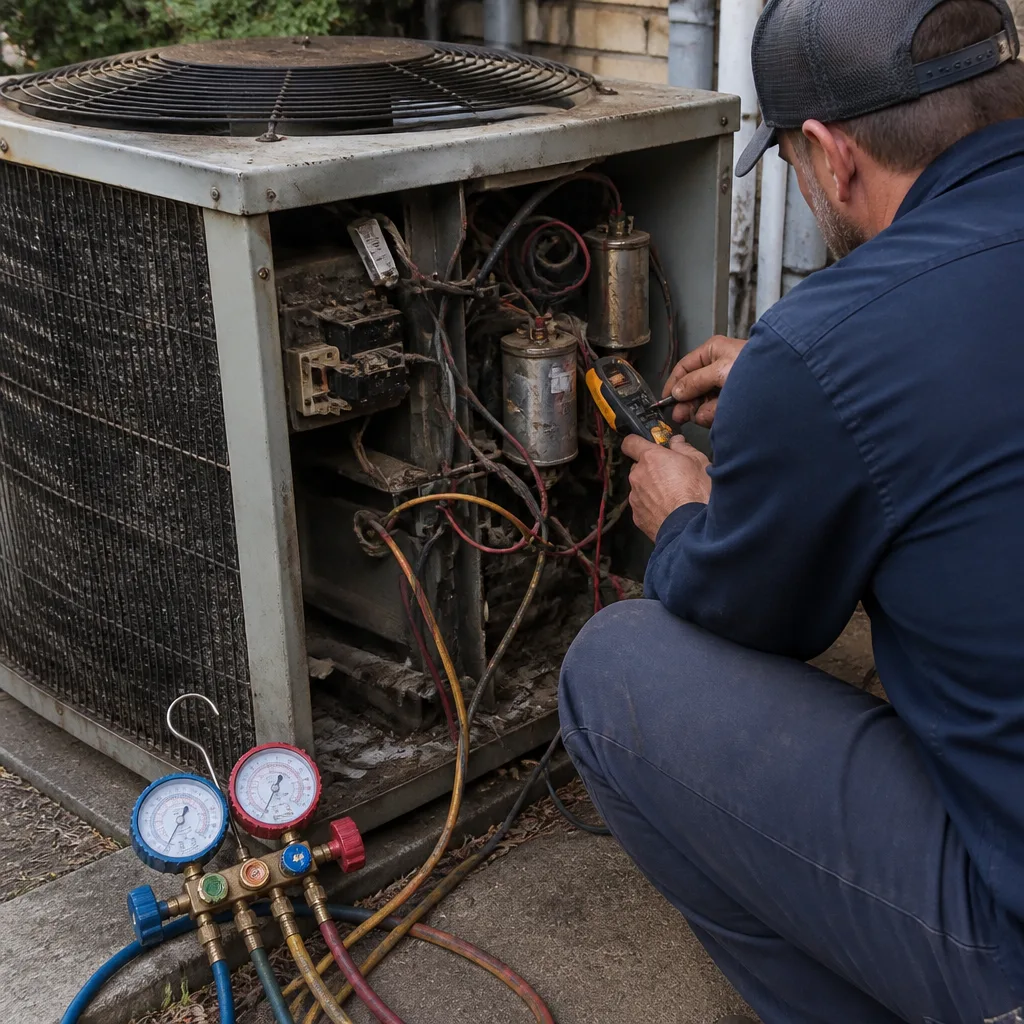 Before
 After
AfterReplacement Cost & What’s Included
A Goodman capacitor replacement in Houston typically runs $120 – $260 for the part and labor together. The spread comes down to a few factors: a single-stage GSX13 with a standard 35/5 μF capacitor sits at the lower end, while a dual-capacitor GSX16 or a system that needs both the compressor capacitor and fan capacitor places near the top. Systems where the capacitor is buried behind a control board or in an awkwardly tight condenser corner take a little more labor time, and that’s reflected honestly in the quote.
Every capacitor replacement we do includes the capacitor itself, the service call, removal and disposal of the failed part, a test of the replacement under load, and a written receipt showing exactly what was installed. The work is covered by our 365-Day Done Right Promise: if the capacitor fails within a full year, we come back and correct it at no charge. Before any tool comes out, you’ll have a written price in hand. It doesn’t change at the door.
DIY or Call Us?
Let’s be direct: capacitors store electrical charge even after the power is off, and a charged capacitor can deliver a shock serious enough to stop your heart or cause a nasty burn. The condenser unit has exposed terminals carrying 240 volts. This is not a “watch a YouTube video and give it a shot” repair. The safe DIY step is diagnosis: with the breaker fully off at the panel and the condenser disconnect pulled, you can look at the capacitor for bulging, leakage, or charred terminals. That tells you it’s likely the problem. It does not make the replacement safe to attempt.
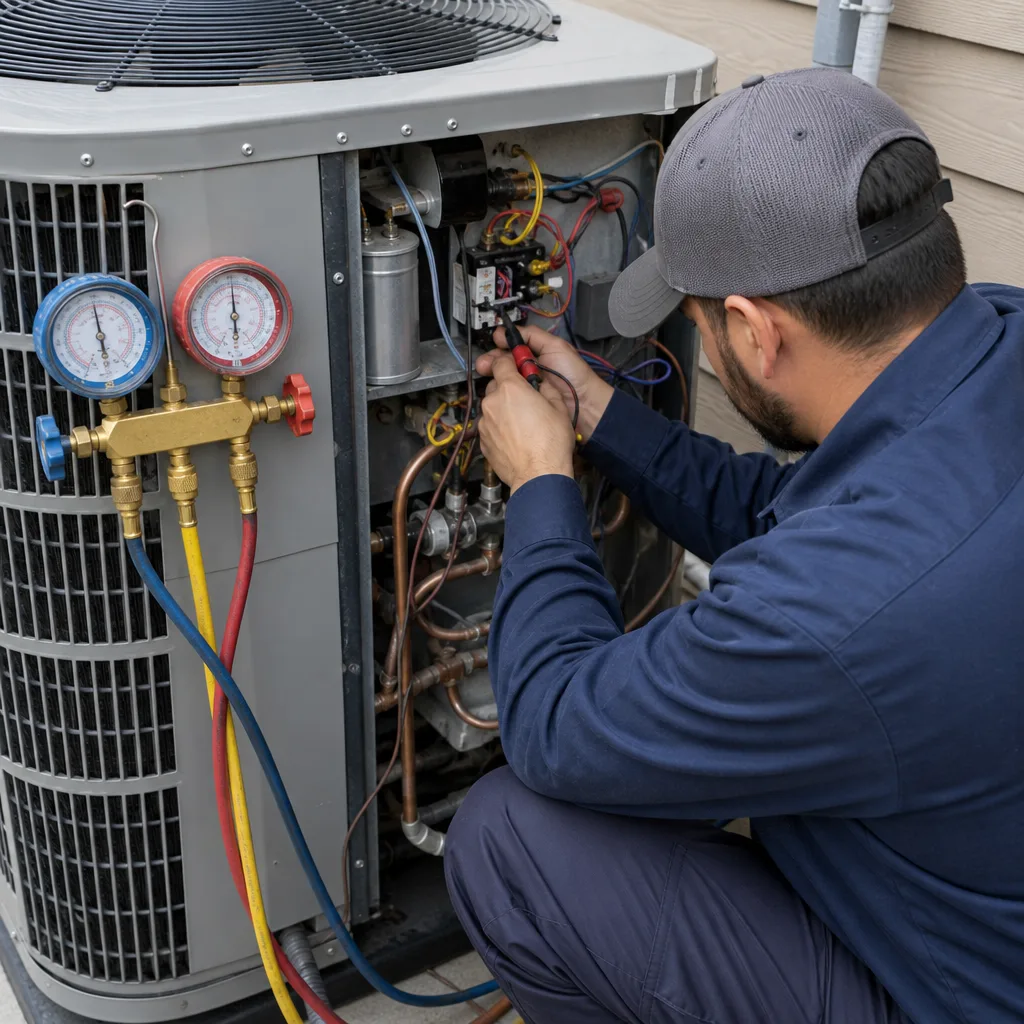
What you can do is call us at (832) 371-9862. A live person answers, not a voicemail tree. We’ll schedule a window, show up in it, and Victor Mancini or one of our background-checked technicians will test the capacitor under load, confirm the failure, and show you the old part before replacing it. The whole swap on a standard Goodman condenser takes about 45 minutes from panel off to panel back on.
FAQs
A Goodman capacitor in Houston typically lasts 5 to 10 years, but our heat and humidity push many failures to the shorter end of that window. Prolonged high ambient temperatures degrade the dielectric material inside the capacitor, and Houston’s summer stretches are exactly that. If your Goodman is over 8 years old and the capacitor hasn’t been replaced, you’re on borrowed time. For an exact quote on your system, call (832) 371-9862 and we’ll check your model’s specs.
No. A capacitor is a sealed, consumable component. Once the dielectric fluid has leaked, the casing has bulged, or the internal resistance has drifted out of spec, there is no field repair. Replacement is the only correct fix. The good news is it’s one of the lowest-cost electrical components on your Goodman system, and a new quality capacitor can extend the life of your compressor and fan motor rather than just restoring function. Call (832) 371-9862 for a free estimate on replacement.
A standard Goodman capacitor replacement takes about 45 minutes to an hour from start to finish. That includes shutting down power, discharging the old capacitor safely, testing the compressor and fan motor terminals, installing the new capacitor, and running the system through a full start-up cycle under load. If we find additional issues during testing, we’ll show you what’s wrong and give you a written price for the extra work before we do it.
Yes. Our trucks carry the most common Goodman capacitor ratings, including 35/5, 40/5, 45/5, and 50/5 μF units in 440 VAC. If you have an unusual model or a less common rating, we source it same-day from HVAC supply houses across Houston, so you’re unlikely to wait more than a few hours. We also stock compatible capacitors for Carrier, Trane, and Lennox systems. Call (832) 371-9862 and we’ll confirm what we’re bringing before we leave the shop.
If your Goodman is acting up, don’t run it hard on a failing capacitor. Every start cycle on a dead capacitor is a strain on the compressor motor, and compressors are the most expensive component in the system. Call (832) 371-9862 for a free estimate. We’ll get a technician to your home with the right capacitor, a written price before the work starts, and a one-year written guarantee on the repair. That’s the Kingswell Way, and it’s how we’ve done business in Houston since 2003.
Written by Victor Mancini, Owner & Lead HVAC Technician, Cold Harbour Heating and Air Houston at Cold Harbour Heating and Air Houston, serving Houston and nearby areas.